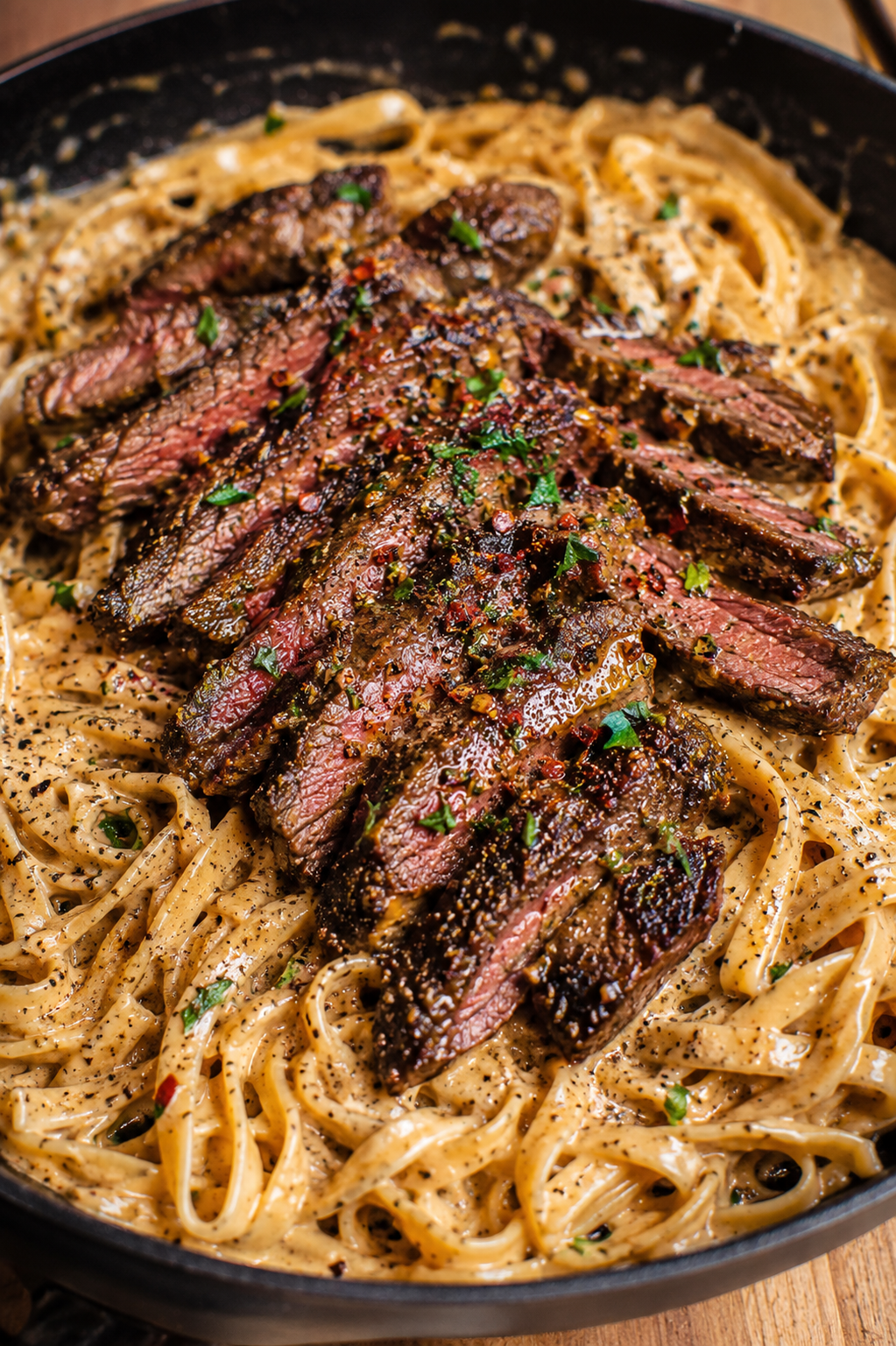
Hey, welcome back! Today we are making something that is going to completely redefine what you thought a pasta dinner could be — Spicy Black Steak Alfredo. Imagine a rich, velvety, deeply savoury Alfredo sauce with a bold, fiery kick running through every single bite, poured over perfectly cooked pasta and topped with juicy, beautifully seared steak sliced thin and fanned across the top. This is not your standard Alfredo. This is Alfredo turned up to full volume with a confidence and swagger that makes it genuinely unforgettable.
The black in the name comes from the bold combination of blackened seasoning and cracked black pepper used on the steak and worked into the sauce — a deep, smoky, slightly charred spice profile that gives the dish its dramatic character and its name. The spicy element runs through both the steak and the Alfredo sauce itself, so every component of the dish carries that warm, building heat rather than the spice being limited to just one part of the plate. Together with the richness of the cream, butter, and Parmesan that form the backbone of any great Alfredo, the result is a pasta dish that is bold and luxurious and deeply satisfying all at once.
This article covers every detail from start to finish — the full recipe with complete ingredient lists for both the blackened steak and the spicy Alfredo sauce, step-by-step cooking instructions, detailed cook tips, storage guidance, serving ideas, and a thorough FAQ section at the end. Let us get right into it.
What Makes This Alfredo Different From The Classic?
Classic Alfredo sauce is one of the most beloved pasta sauces in the world — butter, Parmesan, and pasta water creating a silky, cohesive emulsion that coats every strand of pasta in pure, unapologetic richness. It is beautiful in its simplicity. This Spicy Black Steak Alfredo takes that same beautiful foundation and builds on it with layers of flavour that the classic version never attempts.
The Alfredo sauce here is enriched with heavy cream for extra body and richness. It is seasoned with blackened spices — smoked paprika, cayenne, garlic, onion powder — that give it a depth and warmth that feels more complex and interesting than plain seasoned cream sauce. The heat comes from a combination of red pepper flakes, cayenne, and cracked black pepper that builds gradually and pleasantly throughout the meal. And the steak — seasoned with a proper blackening rub and seared at high heat until the outside is deeply charred and the inside is perfectly cooked — adds a protein element that turns this from a side dish into a genuinely substantial, restaurant-quality main course.
Spicy Black Steak Alfredo Recipe
Ingredients
These quantities serve 4 people generously.
For the blackened steak:
- 2 ribeye steaks or New York strip steaks — about 10 to 12 ounces each and at least 1 inch thick. Thickness matters enormously here — a thin steak will overcook before the outside develops its beautiful blackened crust
- 2 tablespoons of unsalted butter — for basting the steak during the final stage of searing
- 2 cloves of garlic, smashed — for the basting butter
- 1 sprig of fresh thyme or rosemary — for the basting butter
- 1 tablespoon of vegetable oil or avocado oil — for searing. Use a high smoke point oil since you are cooking at very high heat
For the blackening spice rub:
- 1 teaspoon of smoked paprika
- 1 teaspoon of garlic powder
- 1 teaspoon of onion powder
- Half a teaspoon of dried oregano
- Half a teaspoon of dried thyme
- Half a teaspoon of cayenne pepper — this is the primary heat in the rub. Increase to three-quarters of a teaspoon for more heat
- Half a teaspoon of cracked black pepper — coarse, not fine ground
- Half a teaspoon of salt
- Quarter teaspoon of white pepper
- Quarter teaspoon of dried mustard powder — adds a subtle sharpness that elevates the rub
For the spicy black Alfredo sauce:
- 12 ounces of fettuccine or linguine — uncooked. Fettuccine is the traditional Alfredo pasta and its wide, flat shape holds the creamy sauce beautifully
- 4 tablespoons of unsalted butter
- 5 cloves of garlic, minced
- 1 and a half cups of heavy cream — full fat, not light cream or half and half
- 1 cup of freshly grated Parmesan cheese — plus extra for serving. Always grate fresh from a block — pre-grated Parmesan contains anti-caking agents that prevent it from melting smoothly into the sauce
- Half a cup of pasta cooking water — reserved before draining. This starchy water is the emulsifying agent that gives Alfredo its characteristic silky, cohesive texture
- 2 tablespoons of cream cheese — adds extra body and a slight tang that balances the richness of the heavy cream
- 1 teaspoon of smoked paprika — gives the sauce its slightly dark, smoky colour and character
- Half a teaspoon of crushed red pepper flakes — the heat in the sauce
- Half a teaspoon of cayenne pepper
- Half a teaspoon of cracked black pepper — coarse, not fine
- Half a teaspoon of garlic powder — in addition to the fresh garlic for a layered garlic flavour
- Half a teaspoon of onion powder
- Salt to taste — add carefully as the Parmesan and pasta water both bring salt
For garnish and serving:
- Fresh flat-leaf parsley, finely chopped
- Extra freshly grated Parmesan cheese
- Extra cracked black pepper over the top
- A drizzle of good quality olive oil or truffle oil — optional but stunning
- Red pepper flakes scattered over the finished dish
Cooking Equipment You Will Need
- A large cast iron skillet or heavy-bottomed stainless steel pan — for searing the steak. Cast iron is the ideal choice for blackened steak because it reaches and holds extremely high temperatures evenly and creates the best crust
- A large pot for cooking the pasta
- A large, wide saucepan or deep skillet for the Alfredo sauce
- A meat thermometer — non-negotiable for getting the steak to the perfect internal temperature
- A sharp knife and cutting board — a sharp knife is essential for slicing seared steak cleanly without tearing the meat
- Tongs for handling the steak
- A wooden spoon or silicone spatula for the sauce
- A ladle for reserving pasta water
- Measuring cups and spoons
- A fine grater or microplane for the Parmesan and garlic
Step-by-Step Cooking Method
Step 1 — Make the Blackening Spice Rub and Season the Steak
In a small bowl, combine all the blackening spice rub ingredients — smoked paprika, garlic powder, onion powder, dried oregano, dried thyme, cayenne, cracked black pepper, salt, white pepper, and dried mustard powder. Mix them together thoroughly until everything is evenly blended. The colour of the mixed rub should be a deep, rich reddish-brown — that colour tells you the ratio of smoked paprika, cayenne, and black pepper is right.
Take the steaks out of the refrigerator at least 30 minutes before cooking and let them come to room temperature. This is one of the most important steps in cooking a great steak and one that is most commonly skipped. A cold steak placed on a hot pan takes much longer to cook through to the centre, which means the outside is exposed to high heat for a longer period and often overcooks and gets too dark before the inside reaches the right temperature. A room temperature steak cooks more evenly from edge to edge and reaches the right internal temperature at the same time the outside reaches the right colour and crust.
Pat both steaks completely dry with paper towels on all surfaces — top, bottom, and sides. Dry surfaces are essential for a proper blackened crust — any moisture on the surface will create steam in the pan and prevent the spice rub from adhering and blackening properly. Drizzle a very thin coating of oil over both sides of each steak and rub it in with your fingers. Then press the blackening spice rub generously and firmly onto all surfaces of both steaks — the top, the bottom, and the sides. Press firmly with your hands so the rub adheres well and forms an even, thick coating on every surface. Set the steaks aside while you start the pasta water and prepare the sauce ingredients.
Step 2 — Start the Pasta Water
Bring a large pot of water to a boil over high heat. Season it generously with salt — the water should taste pleasantly salty, like a light broth. This is the only opportunity to season the pasta from the inside as it cooks, and properly salted pasta water makes an enormous difference to the flavour of the finished dish. Once boiling, add the fettuccine and cook according to the package instructions until al dente — firm to the bite with just a slight resistance in the centre. Before draining, use a ladle or measuring cup to scoop out at least 1 cup of the cloudy, starchy pasta water and set it aside — this is a crucial ingredient for the Alfredo sauce. Drain the pasta and set aside. Do not rinse the pasta — rinsing washes away the surface starch that helps the sauce cling to the noodles.
Step 3 — Sear the Blackened Steak
Heat your cast iron skillet over the highest heat your stove can produce for a full 3 to 4 minutes until it is genuinely screaming hot — a drop of water should evaporate almost instantly on contact. Add the oil to the hot pan and let it heat for 30 seconds until it shimmers. Carefully place both steaks in the pan — they will sizzle dramatically and a significant amount of smoke will be produced. This smoke is normal and is caused by the spice rub blackening in the intense heat. Make sure your kitchen is well ventilated — turn on the extractor fan and open a window before the steaks go in.
Cook the steaks completely undisturbed for 3 to 4 minutes on the first side. Resist every temptation to move, press, or check the steaks during this time. The blackened crust is forming and it needs uninterrupted contact with the screaming hot pan surface to develop properly. After 3 to 4 minutes, flip both steaks using tongs. Cook for another 2 to 3 minutes on the second side. In the last 2 minutes of cooking, reduce the heat to medium, add the butter, smashed garlic, and thyme sprig to the pan, and tilt the pan slightly so the butter pools at one edge. Use a spoon to continuously baste the steaks with the foaming, herb and garlic-infused butter for the final 2 minutes. This basting adds an extraordinary flavour depth to the crust and keeps the meat moist.
Use a meat thermometer to check the internal temperature. The ideal temperatures for steak doneness are:
- Rare — 125 degrees Fahrenheit
- Medium Rare — 130 to 135 degrees Fahrenheit — the recommended doneness for this recipe
- Medium — 140 to 145 degrees Fahrenheit
- Medium Well — 150 to 155 degrees Fahrenheit
- Well Done — 160 degrees Fahrenheit and above
Remove the steaks from the pan at 5 degrees below your target temperature — they will continue to cook during the resting period and reach the final temperature as they rest.
Step 4 — Rest the Steak
Place both steaks on a wire rack set over a plate or on a clean cutting board. Tent loosely with a piece of aluminium foil and let them rest for a minimum of 8 to 10 minutes. Resting is the most important step in steak cookery and it is the one most commonly skipped in the excitement of wanting to eat immediately. During cooking, the heat of the pan drives the juices toward the centre of the steak. If the steak is cut immediately, those juices run out onto the cutting board and the steak feels dry and less flavourful. Resting gives those juices time to redistribute back evenly through the entire piece of meat, which means every slice from edge to centre is equally juicy and flavourful. A properly rested steak loses only a few drops of juice when cut. An improperly rested steak loses a pool.
While the steak rests, make the Alfredo sauce — the timing works out perfectly.
Step 5 — Make the Spicy Black Alfredo Sauce
In your large wide saucepan over medium heat, melt the butter. Once the butter is melted and beginning to foam slightly, add the minced garlic. Cook for 1 to 2 minutes, stirring constantly, until the garlic is soft, fragrant, and just beginning to turn a very light golden colour. Do not let it brown — golden garlic in cream sauce is perfect, brown or dark garlic will make the sauce taste bitter.
Add the smoked paprika, crushed red pepper flakes, cayenne pepper, cracked black pepper, garlic powder, and onion powder to the butter and garlic. Stir for 30 seconds, allowing the spices to bloom in the hot butter. You will see the butter turn a beautiful deep amber-red colour from the paprika and the pan will smell extraordinary — smoky, garlicky, and deeply spiced. This 30 seconds of blooming the spices in the fat is what gives the Alfredo sauce its deep, complex flavour rather than just tasting like cream with spices added as an afterthought.
Pour in the heavy cream and add the cream cheese. Stir continuously as the cream heats and the cream cheese melts fully into the sauce. Bring to a gentle simmer — not a rolling boil — over medium heat. Let the cream simmer gently for 3 to 4 minutes, stirring frequently, until it has reduced slightly and thickened enough to coat the back of a spoon. Add a quarter cup of the reserved pasta water and stir it through — the starch in the pasta water begins to emulsify the sauce immediately.
Remove the pan from the heat. Add the freshly grated Parmesan in three separate additions, stirring each addition vigorously until completely melted and incorporated before adding the next. Adding the Parmesan off the heat in stages prevents the cheese proteins from seizing and turning grainy — the residual heat in the pan is sufficient to melt it smoothly if added gradually with continuous stirring. Once all the Parmesan is incorporated, the sauce should be thick, glossy, deeply coloured from the spices, and coat a spoon richly.
Step 6 — Combine Pasta and Sauce
Add the cooked, drained fettuccine to the Alfredo sauce. Use tongs to toss the pasta through the sauce, lifting and folding to ensure every strand is evenly coated. If the sauce seems too thick or the pasta starts sticking together, add more of the reserved pasta water — a splash at a time — and toss through. The starchy pasta water thins the sauce while simultaneously emulsifying it further, making it cling even more evenly to every strand of pasta. The goal is a sauce that is thick enough to coat the pasta richly but fluid enough to move as you toss it — not a stiff, clumped mass and not a thin, watery puddle. Taste and adjust the seasoning at this stage — add more salt if needed, more cayenne if it needs more heat, or an extra pinch of red pepper flakes.
Step 7 — Slice the Steak and Plate
After the full 8 to 10 minutes of resting, unwrap the steaks and place them on a clean cutting board. Using your sharpest knife, slice each steak against the grain into thin strips — about half an inch thick. Slicing against the grain means slicing perpendicular to the direction the muscle fibres run in the meat. This shortens the muscle fibres in each slice and makes the meat significantly more tender and easier to chew. Slicing with the grain leaves long, intact muscle fibres that make the steak feel tough and chewy even if it was cooked perfectly. Take a moment to identify the direction of the grain before you cut and slice deliberately across it.
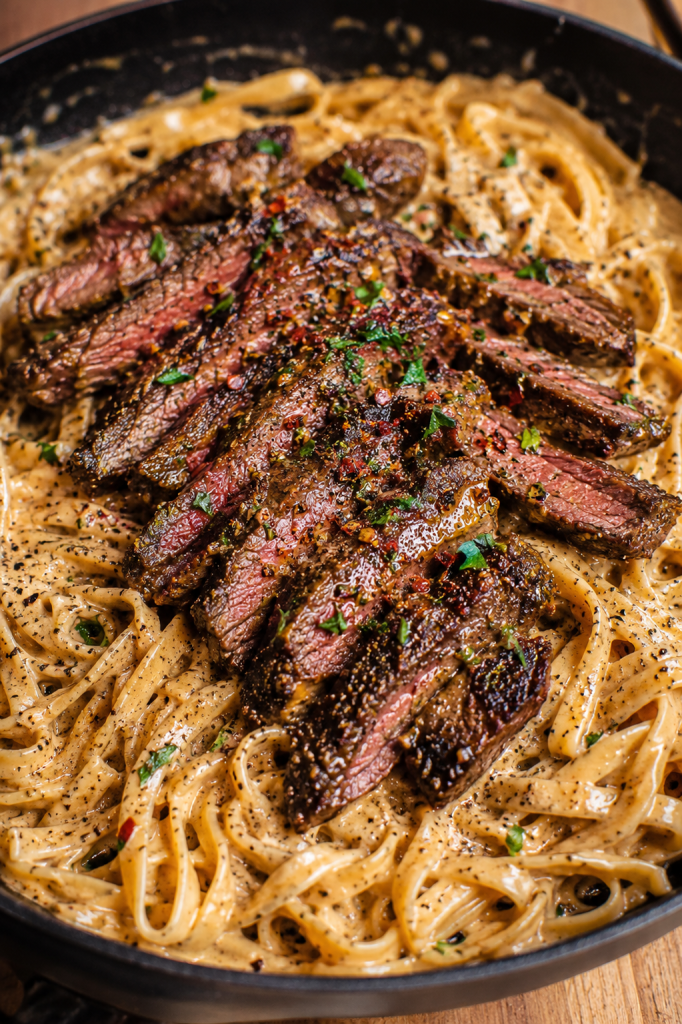
Twirl generous portions of the spicy black Alfredo pasta into bowls or onto plates using tongs or a pasta fork. Fan the sliced blackened steak artfully across the top of each pasta portion — lay the slices in an overlapping, slightly fanned arrangement so the beautiful blackened exterior and the pink, perfectly cooked interior are both visible. This presentation makes the dish look genuinely restaurant-quality and gives each diner the visual confirmation that the steak is perfectly cooked before they have even taken a bite.
Step 8 — Garnish and Serve
Scatter fresh chopped flat-leaf parsley generously over the steak and pasta. Add an extra generous grating of fresh Parmesan over the top. Crack fresh black pepper over everything. Scatter a pinch of red pepper flakes for visual impact and extra heat. Drizzle a small amount of good quality olive oil or truffle oil over the steak slices if using — just enough to add a beautiful sheen and an aromatic richness. Serve immediately while the pasta is hot and creamy, the sauce is at its silkiest, and the steak is still warm from resting.
Cook Tips for the Best Spicy Black Steak Alfredo
1. Bring the steak to room temperature before cooking. Thirty minutes on the counter before the steak goes in the pan is not optional — it is one of the most important steps for achieving an evenly cooked steak with a properly developed blackened crust. Cold steak from the refrigerator placed on a hot pan creates a temperature gradient that is almost impossible to overcome — the outside cooks far faster than the inside can catch up.
2. Use a cast iron pan for the steak. Cast iron is the only pan that truly achieves and sustains the extreme heat needed for a proper blackened crust. It heats slowly but once hot it holds that heat consistently even when cold steak is placed on it. Stainless steel is a reasonable second choice. Non-stick pans should never be used for blackened steak — the extreme heat required damages non-stick coatings and releases harmful fumes.
3. Ventilate your kitchen before searing. Blackening a steak produces substantial smoke from the spice rub charring in the very high heat. Turn on your extractor fan at full power, open a window, and if possible open a back door as well. The smoke is harmless and temporary but it can set off smoke detectors if the kitchen is not properly ventilated. This is not a reason to turn down the heat — the high heat is non-negotiable for a proper blackened crust. It is simply a reason to be prepared.
4. Never press the steak with a spatula during cooking. Pressing a steak forces the juices out of the meat and into the pan where they evaporate. The result is a drier, less flavourful steak. The steak should make contact with the pan through its own weight alone — nothing added.
5. Always rest the steak before slicing. The 8 to 10 minute resting time is not negotiable and is not wasted time. Use it productively to make the Alfredo sauce — the timing is designed so both components are ready at the same moment. A rested steak is dramatically juicier and more flavourful than one cut immediately after the pan.
6. Grate the Parmesan fresh from the block. Pre-grated Parmesan from a bag contains cellulose and anti-caking agents that prevent it from melting smoothly into cream sauces. Fresh Parmesan grated on a fine grater or microplane melts instantly and completely into the hot cream, producing a silky, cohesive sauce rather than a grainy, slightly separated one. This single step makes a more noticeable difference to the quality of the Alfredo sauce than almost anything else.
7. Add Parmesan off the heat in multiple additions. Parmesan added to an actively simmering or boiling cream sauce can seize, clump, and turn the sauce grainy rather than silky. Remove the pan from direct heat before the cheese goes in, add it in three separate additions, and stir vigorously between each. The residual heat in the heavy cream sauce is more than sufficient to melt fresh Parmesan smoothly.
8. Reserve pasta water before draining. The starchy, salted pasta water is one of the most important and most underused ingredients in pasta cooking. It emulsifies the Alfredo sauce, adjusts the consistency without diluting the flavour, and helps the sauce cling to the pasta in a way that plain water or extra cream cannot replicate. Scoop it out before you drain — once the pasta is in the colander it is gone.
9. Slice the steak against the grain. This instruction appears in every steak recipe for a reason — it genuinely makes the difference between tender, satisfying slices and tough, chewy ones regardless of how well the steak was cooked. Spend 10 seconds identifying the direction of the muscle fibres running through the meat and then cut perpendicular to them. Every slice will be noticeably more tender as a result.
10. Bloom the spices in butter before adding the cream. The 30 seconds of cooking the spices in the melted butter with the garlic before the cream goes in is the step that gives the Alfredo sauce its deep, complex, restaurant-quality spice flavour. Spices bloomed in fat release their fat-soluble flavour compounds in a way that spices added directly to liquid cannot achieve. It is a brief step that makes an enormous flavour difference.
How to Store and Reheat Leftovers
Storing the steak and pasta separately: The steak and the pasta Alfredo store much better when kept in separate airtight containers in the refrigerator. The pasta will absorb the sauce as it sits and thicken overnight — this is normal. The steak will keep for up to 3 days in the fridge and the pasta for up to 3 days as well.
Reheating the Alfredo pasta: Add the pasta to a saucepan with 3 to 4 tablespoons of heavy cream or chicken broth. Warm over medium-low heat, stirring gently, until the sauce loosens back to a creamy consistency and the pasta is heated through. Do not rush this over high heat — cream-based sauces can break and become greasy if reheated aggressively. The splash of cream or broth is essential because the pasta will have absorbed most of the sauce overnight.
Reheating the steak: The best method for reheating sliced steak is in a covered skillet over medium-low heat with a very small splash of water or beef broth for 2 to 3 minutes until just warmed through. Do not overheat the steak — it only needs to be warm, not hot, and overheating will take it past the original doneness level and dry it out. You can also enjoy the leftover steak cold, sliced thin over the reheated pasta — many people actually prefer the texture of cold steak slices over warm pasta.
Freezing: The Alfredo pasta does not freeze well — cream-based sauces tend to separate when frozen and thawed. The steak freezes reasonably well for up to 2 months — wrap the slices tightly in plastic wrap and then in foil before freezing.
What to Serve With Spicy Black Steak Alfredo
This is a rich, substantial, complete meal on its own but here are some outstanding accompaniments that complement it beautifully:
- Warm garlic bread or a good crusty sourdough — for mopping up any Alfredo sauce remaining in the bowl, which would be genuinely criminal to leave behind
- A simple rocket or arugula salad dressed with lemon juice, olive oil, shaved Parmesan, and cracked black pepper — the peppery bitterness of the rocket cuts beautifully through the richness of the cream sauce and provides a fresh, light contrast to the bold, heavy main
- Roasted asparagus with lemon and olive oil — the slight bitterness and fresh vegetable flavour pairs naturally with the creamy Alfredo and the blackened steak
- Sautéed mushrooms in butter and garlic — scatter them over or alongside the pasta for an earthy, umami-rich addition that works beautifully with both the steak and the spiced Alfredo sauce
- A glass of bold red wine — a Cabernet Sauvignon, Malbec, or Syrah. The full-bodied tannins and dark fruit notes of a good red wine are the perfect liquid accompaniment to blackened steak and spicy cream pasta
Ways to Customise This Recipe
Make it with shrimp instead of steak: Season large peeled shrimp with the blackening spice rub and sear them in a hot pan with oil and butter for 2 minutes per side until just cooked through. Add them on top of the spicy Alfredo pasta instead of the steak. Blackened shrimp Alfredo is a classic dish in its own right and this version with the spicy black sauce is absolutely outstanding.
Add crispy pancetta or bacon: Render diced pancetta or chopped bacon in the pan before making the Alfredo sauce, remove and set aside, and then scatter the crispy pieces over the finished pasta alongside the steak. The salty, crispy meat adds textural contrast and a smoky pork flavour that works beautifully with the blackened spice profile.
Make it with salmon: Season a thick salmon fillet with the blackening rub and sear in a hot pan for 3 to 4 minutes per side until the outside is deeply charred and the inside is just cooked through. Flake it over the spicy Alfredo pasta in large, generous pieces. Blackened salmon with spicy Alfredo is an extraordinary combination that feels completely luxurious.
Add sun-dried tomatoes and spinach: Stir half a cup of oil-packed sun-dried tomatoes, drained and roughly chopped, into the Alfredo sauce when the cream goes in. Fold two large handfuls of fresh baby spinach into the finished pasta just before serving — the residual heat will wilt it gently. The tomatoes add a sweet, concentrated acidity and the spinach adds freshness and colour that makes the dish feel more balanced and complete.
Make it with a different pasta shape: Pappardelle — wide, flat, ribbon-like pasta — is an outstanding alternative to fettuccine in this recipe and holds the cream sauce beautifully. Rigatoni gives you a more substantial, tubular bite where the spicy Alfredo sauce fills the inside of each tube as well as coating the outside. Tagliatelle is the most traditional pasta for cream sauces in Italian cooking and works magnificently here.
Frequently Asked Questions
1. What cut of steak works best for this recipe and why?
Ribeye is the top recommendation for this recipe for several important reasons. It has a generous amount of intramuscular fat — marbling — that keeps it extraordinarily juicy and flavourful during the high-heat searing required for a blackened crust. It has enough thickness to develop a deep, dark exterior crust while staying perfectly cooked in the centre. And its flavour is rich and beefy enough to stand up to the bold blackening spice rub without being overwhelmed by it. New York strip is a very good second choice — slightly less marbling than ribeye but still well-flavoured and thick enough to blacken properly. Sirloin works on a budget but has less marbling and needs careful timing to avoid drying out. Avoid thin cuts like skirt steak or flank steak for this recipe — they cook too quickly to develop a proper blackened crust without overcooking.
2. My Alfredo sauce turned out grainy rather than smooth. What went wrong?
Grainy Alfredo sauce is almost always caused by one of two things. The first is adding Parmesan to a sauce that is still actively simmering or boiling — the heat is too intense and causes the cheese proteins to seize and clump rather than melt smoothly. Always remove the pan from direct heat before adding the Parmesan. The second cause is using pre-grated Parmesan from a bag — the anti-caking agents in pre-grated cheese prevent it from melting properly. Always grate fresh from a block. If the sauce has already gone grainy, whisk in a splash of warm pasta water vigorously — the starch in the water can sometimes bring a lightly grainy sauce back to a smoother consistency.
3. Can I use a different type of pasta for this recipe?
Absolutely. While fettuccine is the traditional choice for Alfredo and its wide, flat surface holds cream sauce beautifully, this spicy black Alfredo sauce works very well with pappardelle, tagliatelle, linguine, or even rigatoni and penne for a more casual, fork-and-spoon version. Long pasta shapes that hold cream sauce on their flat surfaces are the most natural choice, but short pasta shapes with ridges or tubes also work well because the sauce fills their cavities and clings to their textured surfaces.
4. How do I know when the steak is cooked to medium rare without a thermometer?
While a meat thermometer is the most reliable method, the finger-press test gives a reasonable indication of doneness. Press the centre of the steak with your fingertip. Rare steak feels very soft and yielding, similar to pressing the flesh of your palm below your relaxed thumb. Medium rare has a soft but slightly more resistant give — similar to the flesh below your thumb when you touch your thumb and index finger together lightly. Medium steak feels firmer and more springy. Well done feels very firm with very little give. The thermometer is still the most accurate method and is always recommended for achieving a consistent, repeatable result.
5. Can I make the Alfredo sauce lighter by using half and half instead of heavy cream?
You can, but the result will be noticeably different in both texture and flavour. Heavy cream has a fat content of around 36 percent, which is what allows it to reduce and thicken into a rich, stable Alfredo sauce that coats pasta evenly. Half and half has a fat content of around 12 percent and does not reduce and thicken in the same way — the sauce will be thinner, less rich, and less stable. It is more prone to breaking or curdling when the Parmesan is added and less likely to maintain a cohesive, silky consistency. If you want a lighter version, whole milk with an extra tablespoon of cornstarch mixed in is a more reliable lighter substitute than half and half, though the richness will still be noticeably reduced compared to heavy cream.
Conclusion
Spicy Black Steak Alfredo is the kind of recipe that changes how you think about what a pasta dinner can be. It takes one of the most beloved, most comforting pasta sauces in the culinary world and fills it with confidence, boldness, and a heat that transforms every bite from pleasant to genuinely exciting. And then it pairs that extraordinary sauce with a perfectly seared, perfectly rested, perfectly sliced blackened steak that makes the whole plate feel like an occasion worth dressing up for.
What makes this recipe so deeply rewarding to make is how every component is designed to complement and elevate the others. The blackening rub on the steak does not just season the steak — it echoes the smoked paprika, cayenne, and black pepper already in the Alfredo sauce, creating a cohesive flavour thread that runs through every single element of the dish from the first bite to the last. The spicy Alfredo sauce does not just dress the pasta — the starchy pasta water emulsified into it, the cream cheese adding body, the Parmesan adding sharpness, the spices adding depth — it is a genuinely complex, well-constructed sauce that stands completely on its own. And the pasta ties everything together, providing the neutral, satisfying base that allows the sauce and steak to take centre stage.
Whether you make this for a date night dinner that you want to be genuinely impressive, a special occasion at home where restaurant-quality food is the goal, a weekend treat to yourself because you deserve something extraordinary, or a dinner for friends who love bold flavour and will appreciate every element of this dish, Spicy Black Steak Alfredo will deliver exactly what it promises. Take your time with the steak, grate the Parmesan fresh, reserve that pasta water, rest the meat properly, and slice it against the grain. Do those things and you will produce one of the most satisfying, most memorable, most deeply delicious pasta dinners your kitchen has ever seen. Enjoy every spicy, creamy, perfectly seared, gloriously indulgent bite!