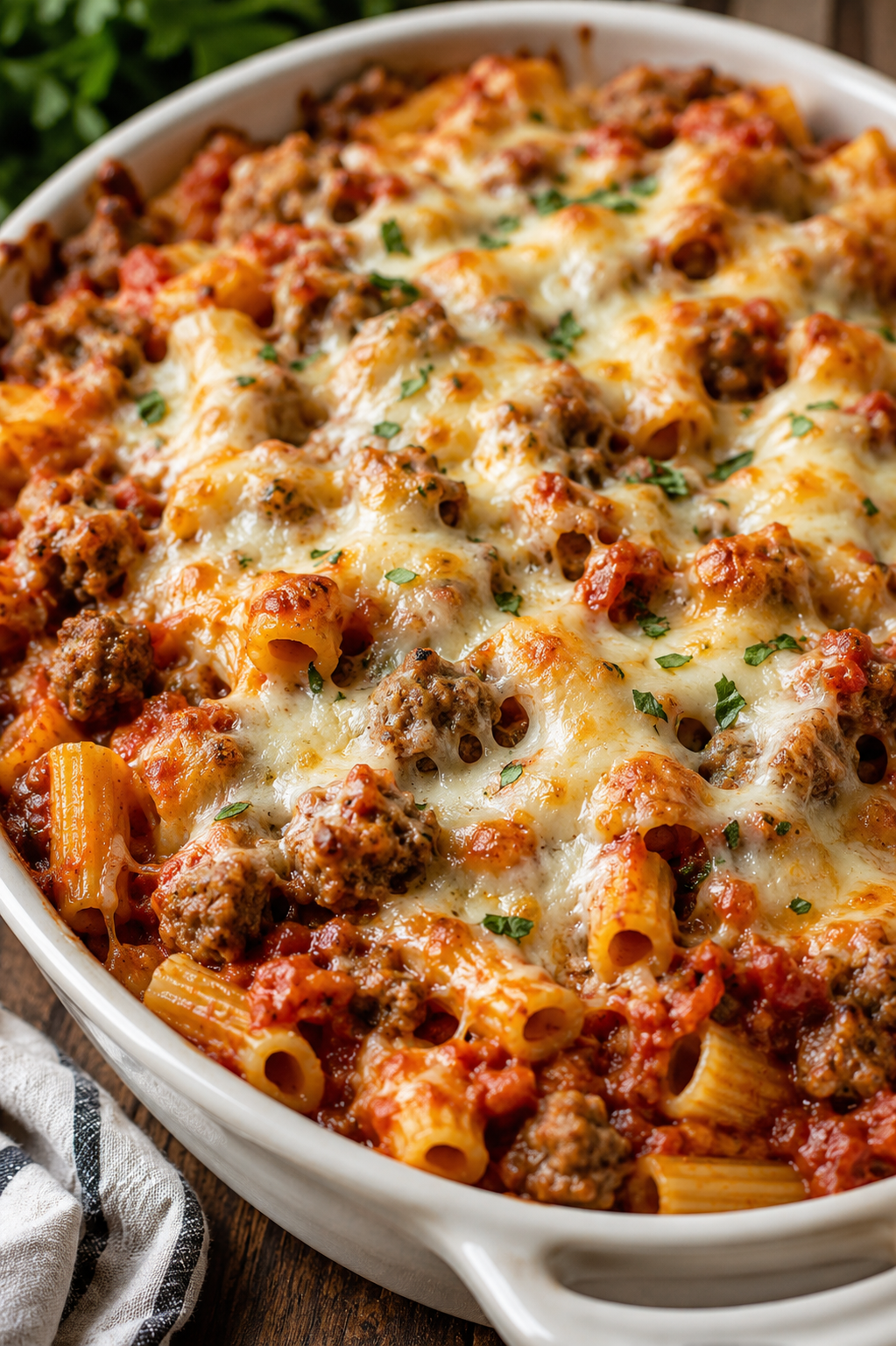
Hey, welcome back! Today we are making something that is going to fill your kitchen with the most incredible smell and fill your family with the kind of deep, lasting satisfaction that only the very best comfort food can deliver — Hearty Italian Sausage Casserole Delight. This is a dish that is bold and rustic and deeply flavourful, the kind of one-dish wonder that brings everyone to the table without being asked twice and leaves nobody wanting anything more when the meal is done.
Picture this — golden, slightly crispy Italian sausage pieces nestled into a rich, herb-laden tomato sauce alongside tender vegetables, creamy white beans, and a golden, bubbling cheese topping that comes out of the oven looking so good it genuinely takes willpower not to dig straight into the pan before it reaches the table. This casserole hits every note that a great comfort food dish should hit. It is hearty without being heavy. It is deeply savoury without being salty. It is warming and satisfying in that specific way that only a properly made baked casserole achieves — the kind of meal that makes cold evenings feel cozy and busy days feel manageable.
Everything you need is covered right here — the full recipe with a complete ingredient list, step-by-step instructions, detailed cook tips, storage guidance, serving ideas, and a thorough FAQ section at the end. Let us get straight into it.
What Makes This Casserole So Special?
Italian sausage is one of the most flavourful proteins you can cook with. It comes already seasoned with fennel, garlic, red pepper flakes, and herbs, which means every piece of sausage contributes not just protein but a whole complex of Italian seasoning to the dish it is cooked in. When Italian sausage is browned properly and then nestled into a slow-cooked tomato sauce and baked, those built-in seasonings bloom and deepen and infuse everything around them with an extraordinary depth that you simply cannot achieve with unseasoned protein and separately added spices.
The addition of white beans to this casserole is what takes it from a simple sausage and tomato bake into something truly substantial and satisfying. White beans — cannellini beans specifically — are creamy, mild, and deeply nutritious. They soak up the tomato sauce and sausage flavour as the casserole bakes and become little pockets of soft, flavourful richness that make the dish feel complete and genuinely filling without needing pasta or rice alongside. The vegetables add colour, nutrition, and texture. And the cheese on top — a combination of mozzarella and Parmesan — melts and bubbles and browns into a golden crust that is the crowning glory of the whole dish.
Hearty Italian Sausage Casserole Delight Recipe
Ingredients
These quantities serve 6 people generously. This recipe is ideal for feeding a family or for batch cooking — it stores and reheats beautifully.
For the sausage and vegetables:
- 1 and a half pounds of Italian sausage — use a mixture of sweet and hot Italian sausage for the best flavour balance. If using links, slice them into 1 inch rounds. If using bulk sausage, break it into large, irregular pieces rather than crumbling it finely — you want substantial pieces that give each bite some real sausage presence
- 1 large onion, diced into medium pieces
- 1 large red bell pepper, cut into 1 inch chunks
- 1 large yellow bell pepper, cut into 1 inch chunks
- 3 stalks of celery, sliced into half-inch pieces
- 4 cloves of garlic, minced
- 1 medium zucchini or courgette, cut into half-inch rounds — adds freshness and absorbs the sauce beautifully during baking
- 1 cup of baby spinach or roughly chopped fresh spinach — stirred in just before the casserole goes into the oven
- 2 tablespoons of olive oil — for browning the sausage and vegetables
For the tomato sauce base:
- 1 can of crushed tomatoes — 28 ounces — San Marzano variety if possible for the sweetest, most flavourful result
- 1 can of diced tomatoes — 14 ounces — drained
- 1 tablespoon of tomato paste — adds concentrated depth and colour to the sauce
- Half a cup of dry red wine — a Chianti or Sangiovese is ideal for the most authentically Italian flavour. Replace with beef broth if you prefer to cook without alcohol
- Half a cup of chicken broth or vegetable broth
- 1 teaspoon of dried Italian seasoning
- 1 teaspoon of dried oregano
- Half a teaspoon of dried basil
- Half a teaspoon of dried thyme
- Half a teaspoon of fennel seeds — echoes the fennel already in the Italian sausage and ties the whole flavour profile together
- Half a teaspoon of crushed red pepper flakes — adjust based on heat preference
- Half a teaspoon of sugar — balances the acidity of the tomatoes
- Salt and black pepper to taste
- 1 bay leaf
For the beans:
- 2 cans of cannellini beans — 15 ounces each — drained and rinsed. Cannellini beans are the classic Italian white bean and their creamy texture and mild flavour is perfect for this casserole. Butter beans or Great Northern beans work well as substitutes
For the cheese topping:
- 1 and a half cups of shredded mozzarella cheese — low-moisture mozzarella melts and browns the best for a casserole topping
- Half a cup of freshly grated Parmesan cheese
- A pinch of dried Italian seasoning scattered over the cheese before baking
- A pinch of red pepper flakes over the cheese — optional but adds a beautiful pop of colour and extra heat
For garnish and serving:
- Fresh basil leaves — scattered over immediately after the casserole comes out of the oven
- Extra freshly grated Parmesan for the table
- Crusty Italian bread or garlic bread for serving alongside
- Fresh flat-leaf parsley, roughly chopped
Cooking Equipment You Will Need
- A large oven-safe skillet, braiser, or Dutch oven — ideally one that can go from stovetop to oven so the entire dish is made in a single vessel. A 12-inch cast iron skillet or a 5 to 6 quart Dutch oven works perfectly
- If your skillet is not oven-safe, you will need a separate 9×13 inch baking dish for the oven stage
- A sharp knife and cutting board
- A wooden spoon or heat-safe spatula for stirring
- Measuring cups and spoons
- A colander for draining the beans
- Aluminium foil for the first stage of baking
Step-by-Step Cooking Method
Step 1 — Brown the Italian Sausage
Preheat your oven to 375 degrees Fahrenheit or 190 degrees Celsius. Heat 1 tablespoon of olive oil in your large oven-safe skillet or Dutch oven over medium-high heat. Add the sausage pieces and cook, turning occasionally, for 5 to 6 minutes until they are deeply golden brown on all sides. Do not rush this browning stage — it is one of the most flavour-building steps in the entire recipe. The sausage fat renders out during browning and the surface caramelises, creating those intensely flavoured, golden-brown drippings that will form the flavour foundation of the entire casserole sauce.
Resist the temptation to stir the sausage constantly. Let each side sit undisturbed for 1 to 2 minutes so it develops proper colour rather than grey, steamed surfaces that lack flavour. Once the sausage is well browned on all sides, remove it from the pan with a spoon or tongs and set it aside on a plate lined with paper towels. Do not discard the fat in the pan — those drippings are packed with flavour and will season everything that cooks in them next.
Step 2 — Cook the Vegetables
In the same pan with the sausage drippings, add the remaining tablespoon of olive oil if the pan looks dry. Add the diced onion, celery, and both bell peppers. Cook over medium heat, stirring occasionally, for 6 to 7 minutes until the vegetables are softened and the onion is translucent and beginning to colour lightly at the edges. The vegetables are cooking in the rendered sausage fat, absorbing every bit of that smoky, spiced, caramelised flavour — this is where the vegetable component goes from being just filler to being a genuinely flavourful and integral part of the casserole.
Add the minced garlic and cook for 1 to 2 minutes, stirring constantly, until fragrant and just starting to turn golden at the edges. Add the zucchini rounds and stir them through the vegetables. Cook for 2 minutes — just enough to start softening the zucchini without making it mushy, since it will continue to cook during the long bake in the oven.
Step 3 — Build the Tomato Sauce Base
Add the tomato paste to the pan and stir it through the vegetables vigorously. Let it cook for 1 to 2 minutes, stirring constantly, until the tomato paste darkens slightly and begins to caramelise against the bottom of the pan. This brief caramelisation of the tomato paste deepens its flavour significantly — raw tomato paste has a sharp, slightly metallic edge that cooking in the hot pan with the vegetables and fat removes completely, turning it into a concentrated, slightly sweet, deeply flavourful tomato base.
Pour in the red wine or beef broth. Stir vigorously and scrape up every single bit stuck to the bottom of the pan — those caramelised bits from the sausage and tomato paste are concentrated flavour and the wine dissolves them back into the sauce where they belong. Let the wine cook for 2 minutes over medium-high heat until the alcohol aroma dissipates and the liquid has reduced by about half.
Add the crushed tomatoes, diced tomatoes, and chicken broth. Stir everything together thoroughly. Add the Italian seasoning, dried oregano, dried basil, dried thyme, fennel seeds, crushed red pepper flakes, sugar, bay leaf, salt, and black pepper. Stir until everything is well combined and the sauce is smooth and fragrant. Bring to a gentle simmer and let the sauce cook for 5 minutes, stirring occasionally, to allow the flavours to begin coming together before the other components are added.
Step 4 — Add the Beans, Sausage, and Spinach
Add the drained and rinsed cannellini beans to the sauce and stir them through gently so they are evenly distributed without being broken up. The beans are going to absorb the tomato sauce and sausage flavours during baking and become deeply seasoned throughout — gently folding them in whole keeps them intact and gives the finished casserole the best texture. Nestle the browned sausage pieces back into the sauce, pressing them down slightly so they are partially submerged. The sausage needs to be in the sauce rather than sitting on top of it for the baking stage — the sauce is what keeps the sausage moist and flavourful during the long time in the oven.
Remove the pan from the heat. Fold the baby spinach through the sauce — the residual heat in the pan will begin wilting it immediately. Give it a gentle fold so the spinach is distributed throughout the casserole rather than sitting in a pile in one area. Taste the sauce at this stage and adjust the seasoning — it should taste bold, herby, slightly sweet from the tomatoes, and well seasoned. The flavours will concentrate and deepen during baking so it should taste just slightly more intensely seasoned than you want the finished dish to taste.
Remove the bay leaf.
Step 5 — Add the Cheese and Bake
If using an oven-safe pan, you can add the cheese directly to the pan at this stage. If transferring to a baking dish, pour the entire contents of the pan into the baking dish now and spread evenly.
Scatter the shredded mozzarella evenly over the entire surface of the casserole, making sure it reaches to the edges of the pan. Scatter the freshly grated Parmesan over the mozzarella. Sprinkle a pinch of dried Italian seasoning and the optional red pepper flakes over the cheese. Cover the pan or baking dish tightly with aluminium foil and place in the preheated oven. Bake covered for 25 minutes — the covered baking allows the casserole to heat through completely and the flavours to meld together while the cheese softens and begins melting beneath the foil.
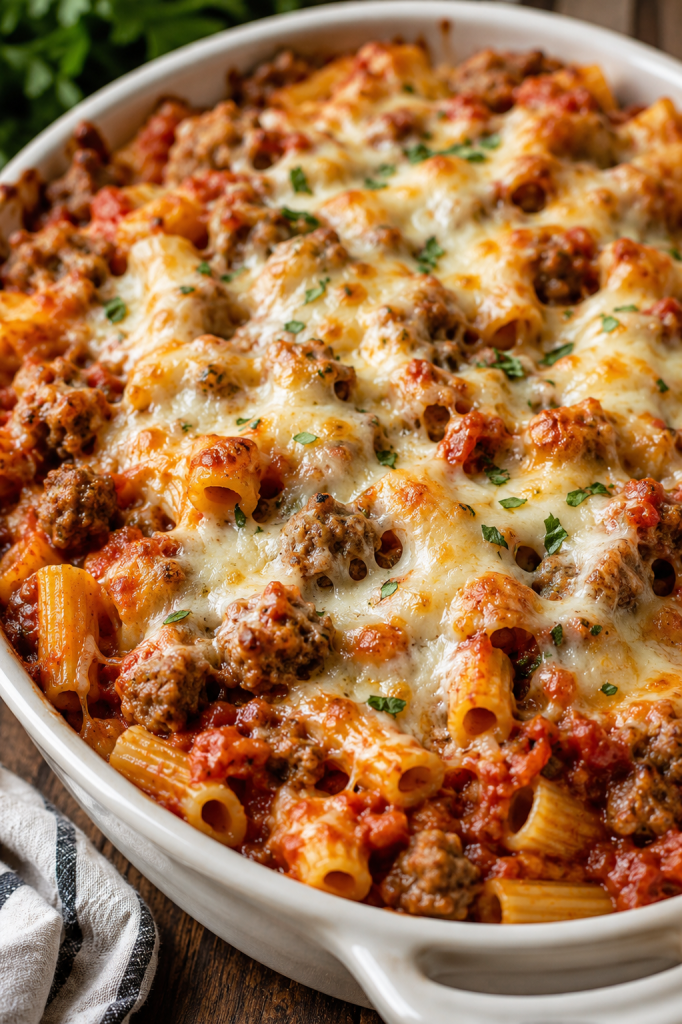
After 25 minutes, carefully remove the foil — watch for the steam that will release when you uncover the dish. Return the casserole to the oven uncovered for another 15 to 20 minutes until the cheese is completely melted, deeply golden brown in patches across the surface, and bubbling energetically around the edges. The cheese should have a mixture of golden and slightly darker spots across it — that variation in colour means different parts of the cheese have reached different stages of caramelisation and browning, which creates a more complex, more interesting cheese topping than a uniformly pale melt would provide.
Step 6 — Rest, Garnish, and Serve
Remove the casserole from the oven and let it rest for 8 to 10 minutes before serving. This resting period is important — a just-baked casserole is extremely hot throughout and the sauce will be too fluid to serve neatly. Resting allows the sauce to settle and thicken slightly, the cheese to firm from a molten liquid to a cohesive, slightly set layer that holds together when served, and the temperature to drop to a level where it is safe and comfortable to eat without burning the roof of your mouth.
Scatter fresh basil leaves generously over the top of the golden cheese crust immediately after the resting period — the heat of the casserole will release the basil’s fragrant oils beautifully without wilting it completely. Add a scattering of fresh flat-leaf parsley if using. Bring the casserole directly to the table in its pan — the presentation of a bubbling, golden-topped casserole carried from the oven to the table in its cooking vessel is one of the most appetising and satisfying things in home cooking. Serve with crusty Italian bread or garlic bread on the side and extra Parmesan at the table for those who want more.
Cook Tips for the Best Hearty Italian Sausage Casserole
1. Brown the sausage deeply before it goes into the casserole. The browning stage is where the majority of the dish’s flavour is built. Golden-brown, slightly caramelised sausage contributes its rendered fat, its caramelised proteins, and its beautifully developed drippings to the entire casserole. Grey, barely-cooked sausage added to the sauce contributes almost none of these things. Take the full 5 to 6 minutes to develop a proper, deep brown on all sides of every piece.
2. Use a mixture of sweet and hot Italian sausage. Sweet Italian sausage brings fennel, garlic, and herb flavour without significant heat. Hot Italian sausage brings all of those things plus a confident spice level. Using them in a 50-50 split gives you the full complexity of Italian sausage seasoning with a pleasant, moderate heat that most people enjoy. If you prefer no heat, use all sweet. If you love heat, use all hot or add extra red pepper flakes to the sauce.
3. Caramelise the tomato paste before adding the liquid. Tomato paste added directly to liquid without first being cooked in the fat contributes a sharp, slightly raw flavour to the sauce. Cooking it in the hot pan with the vegetables for 1 to 2 minutes allows the sugars in the paste to caramelise, which deepens its flavour into something rich, sweet, and complex. This one extra step is what gives the tomato sauce base a depth that goes beyond what tinned tomatoes alone can provide.
4. Use San Marzano tomatoes if you can find them. San Marzano tomatoes are grown in the volcanic soil near Mount Vesuvius in Italy and are recognised as the finest canning tomatoes in the world. They are sweeter, less acidic, and more flavourful than regular canned tomatoes and they make a noticeably better tomato sauce. Look for cans with the DOP certification mark which guarantees authenticity. If unavailable, any good quality crushed tomato works fine.
5. Drain and rinse the cannellini beans thoroughly. The canning liquid in tinned beans contains excess salt and starch that can make the sauce slightly cloudy and alter the seasoning balance. A thorough draining and rinsing under cold water removes this liquid and gives you clean-tasting beans that absorb the casserole sauce purely rather than contributing their own canning liquid flavour.
6. Add the fennel seeds to echo the sausage seasoning. Italian sausage is always seasoned with fennel and adding fennel seeds to the tomato sauce base creates a cohesive flavour thread that runs through every component of the casserole. It is a small addition — just half a teaspoon — but it makes the dish taste more unified and more authentically Italian than it would without it.
7. Bake covered first, then uncovered for the golden cheese crust. The covered baking stage is what ensures the casserole heats through completely and the sauce thickens and melds properly before the cheese topping sets. Adding the uncovered period at the end develops the golden, slightly caramelised cheese crust that is the visual centrepiece of the dish. Baking uncovered for the entire time dries the casserole out and the cheese browns too quickly before the interior is properly cooked through.
8. Use low-moisture mozzarella for the cheese topping. Fresh mozzarella is wonderful on many dishes but it contains a high water content that releases as steam during baking and can make the top of the casserole watery rather than golden and bubbling. Low-moisture mozzarella — the block kind sold for pizza and pasta baking — melts into a smooth, stretchy, beautifully golden layer that is exactly right for a casserole topping. Always shred it yourself from the block for the best melt.
9. Rest the casserole before serving. The 8 to 10 minute rest is genuinely necessary for a casserole of this size and depth. The interior of a large, deep casserole that has just come out of a 375 degree oven is extraordinarily hot and the sauce is at its most fluid at this temperature. Resting allows it to cool to a comfortable eating temperature and allows the sauce to thicken and the cheese to set just enough to give neat, cohesive portions when served.
10. Season the sauce boldly before baking. During the 40 to 45 minutes of covered and uncovered baking, the sauce reduces and concentrates. A sauce that tastes perfectly seasoned before it goes into the oven can taste slightly underseasoned once it has concentrated during baking, and correcting seasoning on a finished, plated casserole is difficult. Season the sauce so it tastes confidently — even slightly boldly — seasoned before the oven, and it will be perfectly balanced by the time it reaches the table.
How to Store and Reheat Leftovers
In the fridge: Italian Sausage Casserole is one of the finest leftover dishes imaginable. The flavours deepen and develop significantly overnight as the sauce continues to absorb into the beans and vegetables. Store cooled leftovers in airtight containers in the refrigerator for up to 4 days. The casserole actually tastes noticeably better on day two and three than it does freshly made.
In the freezer: This casserole freezes exceptionally well and is one of the most practical make-ahead freezer meals available. Cool completely and transfer to freezer-safe containers — portion into individual servings for the most convenient reheating. Freeze for up to 3 months. Thaw overnight in the refrigerator before reheating. Label with the date and contents.
How to reheat individual portions: The best method is in the oven. Place the portion in an oven-safe dish, cover with foil, and reheat at 350 degrees Fahrenheit for 20 to 25 minutes until heated through. Remove the foil for the final 5 minutes to allow the cheese to re-melt and the top to regain some of its golden colour. You can also reheat on the stovetop in a covered saucepan over medium-low heat for 10 to 12 minutes with a small splash of broth to loosen the sauce. Microwave reheating works for quick portions — cover the bowl and heat in 2-minute intervals, stirring between each, until heated through.
Reheating the whole casserole: Cover the entire casserole tightly with fresh aluminium foil and reheat in a 350 degree Fahrenheit oven for 30 to 35 minutes until heated through. Remove the foil for the final 10 minutes and top with a fresh scattering of mozzarella and Parmesan if desired — the fresh cheese layer will melt and brown in those final 10 minutes and make the reheated casserole look and taste almost as good as it did when first made.
What to Serve With Hearty Italian Sausage Casserole
This casserole is a complete, substantial, deeply satisfying meal entirely on its own — the sausage, beans, vegetables, and cheese provide protein, carbohydrate, and fat in a balanced and generous combination. Here are some excellent accompaniments if you want to build out the meal:
- Crusty Italian bread or a good sourdough loaf — absolutely essential for mopping up the rich, herby tomato sauce from the plate. Serve it warm, ideally brushed with olive oil and toasted slightly, for the very best experience alongside this casserole
- Garlic bread — buttery, golden, slightly garlicky bread alongside an Italian-sausage casserole is one of the most naturally satisfying food pairings in existence and needs no further justification
- A simple green salad with a sharp Italian dressing — romaine lettuce, sliced cucumber, black olives, shaved red onion, and a red wine vinegar and olive oil dressing provides the fresh, acidic contrast that cuts through the richness of the casserole beautifully
- Roasted broccolini or roasted asparagus with olive oil and garlic — elegant, simple, and the slight bitterness of green vegetables pairs naturally with the rich, sweet tomato and sausage flavours
- A glass of medium-bodied Italian red wine — a Chianti Classico, Montepulciano d’Abruzzo, or Barbera d’Asti. Italian red wine and Italian sausage in tomato sauce are natural partners and sharing the same wine in the cooking and in the glass creates a beautiful continuity of flavour throughout the meal
Ways to Customise This Recipe
Make it with pasta baked in: Add 2 cups of cooked and drained rigatoni or penne — cooked to just shy of al dente — to the casserole at step 4 alongside the beans. The pasta absorbs the tomato sauce as the casserole bakes and becomes deeply flavourful throughout. Reduce the amount of crushed tomatoes by half a cup to account for the liquid the pasta will absorb. The result is a pasta and sausage bake that is even more substantial and satisfying than the original.
Make it with polenta topping: Instead of the cheese-only topping, spread a layer of freshly made soft polenta over the casserole before the cheese goes on, then top with the mozzarella and Parmesan. Bake as directed. The polenta forms a thick, golden, savoury crust over the sausage and tomato filling that is deeply comforting and makes the casserole feel even more rustic and Italian.
Add mushrooms for extra earthiness: Slice 8 ounces of cremini or portobello mushrooms and add them to the pan with the onion and peppers at step 2. Cook for 3 to 4 extra minutes to allow the mushrooms to release their moisture and begin to colour. Mushrooms and Italian sausage in tomato sauce is a deeply satisfying combination and the mushrooms add an earthy, umami richness that makes the sauce more complex and deeply flavourful.
Make it with chicken sausage for a lighter version: Replace the pork Italian sausage with chicken Italian sausage, which is lower in fat and lighter in texture but still comes fully seasoned with all the classic Italian sausage herbs and spices. The finished casserole will be noticeably lighter in richness and calorie content but still very flavourful and satisfying.
Add olives and capers for a puttanesca-style version: Stir half a cup of pitted Kalamata olives and 2 tablespoons of capers, drained, into the tomato sauce base at step 3. These additions bring a briny, slightly sharp Mediterranean character that transforms the flavour profile of the casserole into something closer to a baked puttanesca — bold, deeply savoury, and completely irresistible.
Frequently Asked Questions
1. Can I use pre-cooked sausage links instead of raw Italian sausage?
Yes, pre-cooked sausage links sliced into rounds work in this recipe. Since they are already cooked, reduce the browning time to 2 to 3 minutes per side — you are just developing colour and flavour on the exterior rather than cooking them through. The flavour contribution of pre-cooked sausage is slightly less complex than raw sausage browned from scratch because less fat renders out during the briefer cooking time, but the finished casserole is still very good. Fresh raw Italian sausage gives the best result if available.
2. Can I make this casserole ahead of time and refrigerate it before baking?
Absolutely, and it is a wonderful strategy for stress-free entertaining. Assemble the entire casserole through step 4 — with the sausage, vegetables, beans, and sauce all combined in the baking dish but without the cheese topping. Cover tightly with plastic wrap and refrigerate for up to 24 hours. When ready to bake, remove from the refrigerator 30 minutes before baking to take the chill off, add the cheese topping, and bake as directed — adding 10 extra minutes to the covered baking time since the casserole is starting from cold.
3. Can I substitute the cannellini beans with something else?
Yes. Butter beans — also called lima beans — have a similarly creamy, mild texture and work beautifully as a direct substitute. Great Northern beans are another excellent option. Chickpeas give a firmer texture and a slightly nuttier flavour that works well in a casserole context. If you are not a fan of beans at all, diced waxy potatoes — cut into 1 inch pieces and added at step 4 — give a similar hearty, starchy element to the casserole and absorb the tomato sauce very nicely during baking.
4. My casserole sauce seems too thin after baking. What went wrong?
Several things can cause a thin sauce in a baked casserole. Not reducing the wine sufficiently before adding the tomatoes — the wine should reduce by half before the tomatoes go in. Not cooking the sauce on the stovetop for the full 5 minutes before baking — this initial reduction is important. Using tomatoes that were not drained before adding — the diced tomatoes in the ingredient list should be drained before going into the sauce. And finally, using fresh mozzarella rather than low-moisture mozzarella — fresh mozzarella releases significant water during baking that dilutes the sauce. Address these points and the sauce will be properly thick and rich.
5. How do I prevent the cheese topping from burning before the casserole is heated through?
Burning cheese on a casserole before the filling is properly hot is always caused by baking uncovered for too long or at too high a temperature. The covered baking period in this recipe — 25 minutes covered at 375 degrees Fahrenheit — ensures the casserole is fully heated through before the foil comes off. The subsequent 15 to 20 minutes uncovered is calibrated specifically to brown and bubble the cheese without burning it at 375 degrees. If your oven runs hot, reduce the temperature to 360 degrees for the uncovered portion or check the cheese at the 10-minute uncovered mark and cover loosely with foil again if it is browning too quickly.
Conclusion
Hearty Italian Sausage Casserole Delight is the kind of recipe that earns its name completely and without exaggeration. It is genuinely hearty — substantial, filling, and built from ingredients that provide real nourishment and real satisfaction. It is genuinely Italian in spirit — built on the classic combination of quality sausage, good olive oil, San Marzano tomatoes, fresh herbs, white beans, and Parmesan that has fed Italian families for generations. And it is genuinely delightful — from the moment it comes out of the oven golden and bubbling and smelling extraordinary, to the first scoop revealing all the layers of sausage, beans, and vegetables in rich tomato sauce beneath that melted cheese crust, to the very last satisfying bite.
What makes this casserole so particularly rewarding as a recipe to make is how it improves at every stage. The browning of the sausage builds flavour that the whole dish benefits from. The caramelisation of the tomato paste deepens the sauce. The long bake melds all the individual components into a unified whole. The resting period lets the sauce settle and the cheese firm into the perfect consistency. And the overnight rest in the fridge takes it from very good to outstanding. This is a recipe that rewards patience and attention at each step and delivers a result that feels genuinely exceptional.
Whether you make it for a Sunday family dinner that you want to be something people talk about afterwards, batch cook it at the start of the week for effortless weeknight meals that feel anything but effortless, bring it to a potluck where it will be the most talked-about dish on the table, or prepare it for the freezer so you always have something genuinely special available on the evenings when cooking from scratch is not an option — this Italian Sausage Casserole delivers every single time. Warm the bread, pour the wine, bring the casserole to the table in its pan, and enjoy every rich, herby, cheesy, deeply satisfying bite!