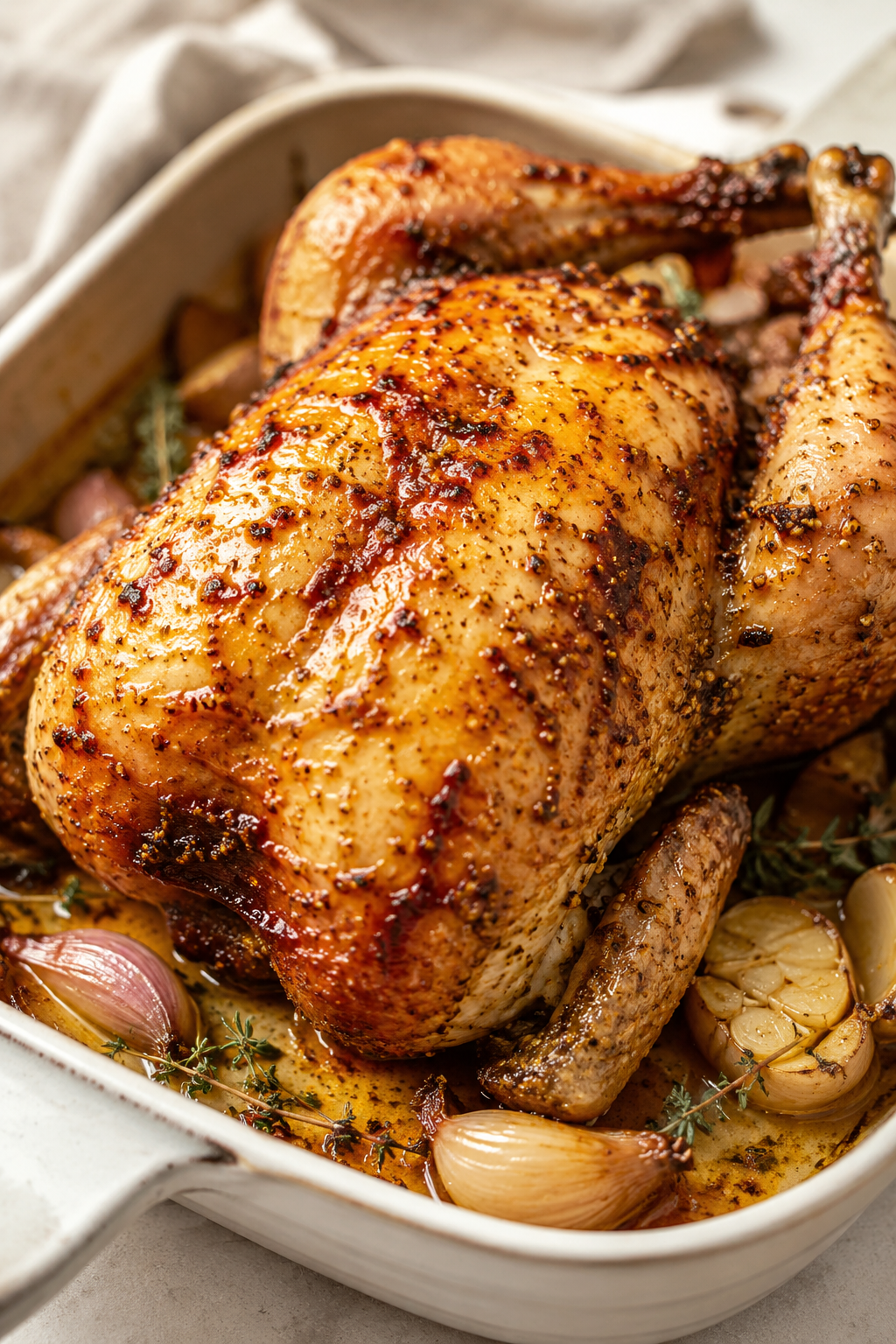
Welcome to another outstanding recipe that is going to make your kitchen smell absolutely incredible and fill your dinner table with the kind of warmth and satisfaction that only a beautifully roasted whole chicken can bring. If you have been looking for a roast chicken recipe that goes beyond the ordinary and delivers something genuinely memorable, then today is your day. We are making Roasted Chicken With Mustard Glaze, and this is the kind of dish that earns a permanent place in your cooking life from the very first time you make it.
The mustard glaze is what takes this chicken from simply good to genuinely extraordinary. It forms a golden, sticky, deeply caramelised crust on the outside of the bird that is tangy from the mustard, sweet from the honey, fragrant from the garlic and fresh herbs, and bright from the lemon. Every single element of that glaze works in harmony to create something so flavourful and so beautiful that even the skin of this chicken is worth savouring slowly. And beneath that incredible crust, the meat is juicy, well-seasoned all the way through, and so tender it practically falls away from the bone.
In this article you will find everything you need to make this recipe perfectly, including the full ingredient list, a clear step-by-step cooking guide, helpful tips, storage advice, and answers to the most common questions about this dish. Let us get right into it.
Roasted Chicken With Mustard Glaze
What Makes This Recipe So Special
Roasting a whole chicken is already one of the most satisfying and impressive things you can do in a home kitchen. But what a proper mustard glaze does to that chicken changes the entire experience. The mustard acts as a binding agent that helps all the herbs, garlic, and aromatics cling to the surface of the skin during the long roasting time rather than falling away. The honey in the glaze caramelises beautifully in the oven heat and creates that signature golden crust. And pushing the glaze directly beneath the skin and onto the breast meat keeps the flesh moist and deeply flavoured throughout, which is the difference between a roasted chicken that is merely good and one that is truly outstanding.
The combination of Dijon mustard, wholegrain mustard, honey, garlic, lemon, and fresh herbs in this glaze creates a flavour that is complex, rounded, and deeply satisfying. It is tangy and sharp from the two mustards, sweet and slightly floral from the honey, deeply aromatic from the garlic and herbs, and bright and citrusy from the lemon. All of that together on a beautifully roasted chicken is one of the most wonderful things you will ever pull from your oven.
Ingredients You Will Need
This recipe serves 4 to 6 people generously depending on the size of the chicken and appetites at the table. Read through the entire recipe before you begin and allow the chicken to come to room temperature before roasting.
For the Chicken:
- 1 whole chicken, about 1.8 to 2 kilograms or 4 to 4 and a half pounds
- 1 teaspoon of salt for seasoning the cavity
- Half a teaspoon of black pepper for the cavity
- 1 whole lemon, halved
- 1 whole head of garlic, sliced in half horizontally through the middle
- A small bunch of fresh thyme, about 6 to 8 sprigs
- A small bunch of fresh rosemary, about 3 to 4 sprigs
For the Mustard Glaze:
- 3 tablespoons of Dijon mustard
- 2 tablespoons of wholegrain mustard
- 2 tablespoons of honey or maple syrup
- 3 tablespoons of extra virgin olive oil
- 4 garlic cloves, very finely minced or grated into a paste
- Zest of one lemon
- 1 tablespoon of fresh lemon juice
- 1 tablespoon of fresh thyme leaves, stripped from the stems
- 1 tablespoon of fresh rosemary, very finely chopped
- Half a teaspoon of smoked paprika
- Half a teaspoon of salt
- Half a teaspoon of black pepper
For the Roasting Pan:
- 2 medium onions, cut into thick wedges
- 3 medium carrots, cut into large chunks
- 3 celery stalks, cut into large pieces
- 1 whole head of garlic, sliced in half horizontally
- A few extra sprigs of fresh thyme and rosemary
- Half a cup of dry white wine or chicken broth for the base of the pan
For Serving:
- Fresh thyme sprigs and rosemary for garnish
- Lemon wedges on the side
- Flaky sea salt for finishing
- Pan juices or a simple pan gravy
Step-by-Step Cooking Method
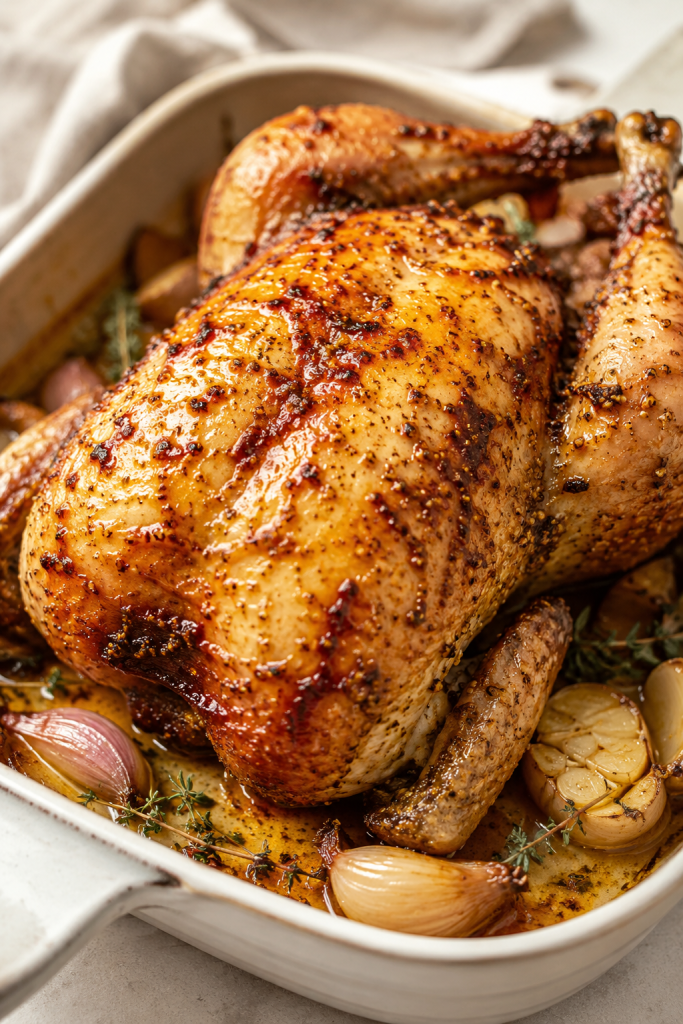
Here are the step by step method in preparing this wonderful recipe, without mistakes.
Step 1: Bring the Chicken to Room Temperature and Pat It Dry
Remove the chicken from the refrigerator a full one hour before you plan to put it in the oven. This is one of the most important steps for achieving even cooking throughout the entire bird. A cold chicken placed directly into a hot oven cooks unevenly, with the outside drying out and overcooking before the cold centre of the thickest parts of the bird has had enough time to reach a safe internal temperature.
Once you are ready to prepare the chicken, pat it completely dry on all surfaces including inside the cavity using paper towels. Take your time with this step and make sure every part of the skin is as dry as possible before anything else goes on. Dry skin is absolutely essential for achieving a crispy, golden result. Excess moisture on the skin creates steam inside the oven, and steam is what prevents the skin from crisping up and developing that beautiful, caramelised colour.
Step 2: Season the Cavity and Fill It With Aromatics
Season the inside of the cavity generously with salt and black pepper. Squeeze one of the lemon halves into the cavity and then tuck both lemon halves, the halved garlic head, the thyme sprigs, and the rosemary sprigs inside. These aromatics placed inside the cavity do not season the meat dramatically, but they fill the interior of the chicken with fragrant steam during roasting that subtly perfumes the meat from the inside out, adding a quiet but meaningful depth to the overall flavour of the finished bird.
Step 3: Make the Mustard Glaze
In a small bowl, combine the Dijon mustard, wholegrain mustard, honey, extra virgin olive oil, minced garlic, lemon zest, lemon juice, fresh thyme leaves, finely chopped rosemary, smoked paprika, salt, and black pepper. Mix everything together thoroughly until the glaze is smooth, fragrant, and very well combined. The glaze should smell absolutely incredible at this stage, with the sharpness of the mustard, the floral sweetness of the honey, the punch of the garlic, and the brightness of the lemon all coming through clearly together.
Taste the glaze before it goes anywhere near the chicken. It should taste tangy, herby, slightly sweet, and deeply savoury. If you want more heat, add a small pinch of cayenne pepper or an extra teaspoon of Dijon. If you want more sweetness, add a little extra honey. If it needs more brightness, add a few extra drops of lemon juice and adjust until the balance feels right to you.
Step 4: Apply the Glaze Under and Over the Skin
This is the step that makes the biggest difference to the juiciness and depth of flavour in the finished chicken, and it is well worth taking your time with. Using your fingers, gently loosen the skin from the breast meat by carefully sliding your fingers between the skin and the flesh, working from the neck end of the bird. Work carefully so you do not tear the skin. You should be able to create a good-sized pocket between the skin and the flesh over both breast portions and above the thigh meat on each side.
Take about half of the mustard glaze and push it directly underneath the loosened skin. Use your fingers to spread it as evenly as possible over the breast meat and the thigh meat beneath the skin. This direct contact between the glaze and the meat means the flavours penetrate the flesh deeply during roasting rather than just sitting on the outside surface. It also acts as a protective layer that keeps the breast meat incredibly moist and juicy throughout the long cooking time.
Spread the remaining mustard glaze generously all over the outside surface of the chicken, coating every part of the skin thoroughly including the wings, the back, and the legs. Use a pastry brush or your hands to ensure every surface is evenly covered with a thick, generous coating. Be especially thorough on the breast and leg areas.
Step 5: Prepare the Roasting Pan
Scatter the onion wedges, carrot chunks, celery pieces, and the halved head of garlic across the bottom of a large roasting pan. Tuck the extra thyme and rosemary sprigs among the vegetables and pour the white wine or chicken broth into the base of the pan. These vegetables serve several purposes at once. They act as a natural rack that keeps the chicken elevated above the base of the pan so heat circulates evenly around the entire bird. They fill the pan with aromatic steam during roasting. And they become the deeply flavoured base for the pan juices and gravy once the chicken is done.
Place the glazed chicken breast side up on top of the vegetables. Tie the legs together loosely with kitchen twine if you want a neat, compact presentation. This also helps the thigh meat cook more evenly by keeping the legs in a consistent position throughout the roasting time.
Step 6: Roast the Chicken
Preheat your oven to 200 degrees Celsius or 400 degrees Fahrenheit. Place the roasting pan in the centre of the preheated oven and roast at this high temperature for 20 minutes. This initial burst of high heat starts the caramelisation of the mustard glaze and begins to crisp up the skin dramatically. After 20 minutes, reduce the oven temperature to 180 degrees Celsius or 350 degrees Fahrenheit for the remainder of the cooking time.
Continue roasting at the lower temperature, basting the chicken every 20 to 25 minutes by spooning the pan juices from the bottom of the roasting pan over the surface of the chicken. Basting keeps the glaze moist and glossy, prevents the skin from drying out, and builds up beautiful layers of caramelised flavour on the outside of the bird with every spoonful.
As a general guide, roast the chicken for approximately 20 minutes per 500 grams of weight, plus an additional 20 minutes at the end. A 1.8 kilogram chicken will need approximately 92 minutes of total roasting time. A 2 kilogram chicken will need approximately 100 minutes. These are guides only, and the only truly reliable way to confirm doneness is a meat thermometer.
Step 7: Check for Doneness
The chicken is fully and safely cooked when a meat thermometer inserted into the thickest part of the thigh, making sure to avoid the bone, reads 74 degrees Celsius or 165 degrees Fahrenheit. This is the single most reliable indicator of doneness and removes all the guesswork from the process. If you do not have a meat thermometer, pierce the thickest part of the thigh with a sharp skewer. The juices that run out should be completely clear with absolutely no trace of pink. If they run pink, return the chicken to the oven for another 15 minutes and check again.
In the final 15 minutes of cooking, if the skin needs more colour and intensity, increase the oven temperature back to 200 degrees Celsius or switch the oven to grill mode very briefly. Watch it closely during this final stage to ensure the glaze does not burn.
Step 8: Rest the Chicken Before Carving
Remove the chicken from the oven and transfer it to a clean cutting board or a warm serving platter. Cover it loosely with a tent of foil and allow it to rest for a minimum of 15 to 20 minutes before carving. For a larger chicken, 25 minutes of resting is even better.
During this resting time, the juices that have been pushed toward the centre of the chicken by the heat of the oven redistribute evenly back throughout the entire bird. Cutting into the chicken immediately after it comes out of the oven causes those juices to flood out onto the board rather than staying inside the meat where they belong. The difference between a rested and an unrested chicken is very noticeable, and this step is not optional if you want a genuinely juicy result.
Step 9: Make the Pan Gravy
While the chicken rests, make the pan gravy from the incredible roasting juices left in the pan. Carefully pour all the liquid and softened vegetables from the roasting pan through a fine sieve into a saucepan, pressing on the cooked vegetables firmly to extract every last drop of flavour. Skim any excess fat from the surface of the strained liquid using a spoon or a fat separator.
Place the saucepan over medium heat and bring the liquid to a gentle simmer. If you want a thicker gravy, whisk one tablespoon of cornstarch into two tablespoons of cold water until completely smooth, then stir this mixture into the simmering liquid and cook for two to three minutes until the gravy thickens and becomes glossy. Taste and adjust the seasoning with salt and black pepper. The gravy will be deeply flavoured from the mustard glaze drippings and the roasted vegetables and will taste extraordinary poured generously over the carved chicken.
Step 10: Carve and Serve
Carve the rested chicken by first removing the legs and thighs by cutting through the joint where they connect to the body. Then remove the wings. Finally, carve the breast meat by slicing downward from the breastbone with a long, sharp carving knife, following the curve of the bone and slicing into clean, even pieces.
Arrange the carved chicken pieces on a warm serving platter. Garnish with fresh thyme sprigs, fresh rosemary, and lemon wedges arranged around the chicken. Finish with a light sprinkle of flaky sea salt over the carved meat. Pour the pan gravy into a warm jug and serve it alongside so everyone can help themselves to as much as they want.
Helpful Tips to Make It Perfect Every Time
Always dry the skin thoroughly before glazing. Crispy skin on a roasted chicken begins with completely dry skin. Pat every surface of the chicken with paper towels until there is no visible moisture remaining. For the crispiest possible result, you can leave the chicken uncovered on a rack in the refrigerator overnight after patting it dry. The cold, dry air of the refrigerator draws out even more surface moisture from the skin and produces a spectacularly crispy result after roasting.
Get the glaze under the skin without fail. Applying the mustard glaze directly under the loosened skin onto the breast and thigh meat is the single most effective step you can take for a deeply flavoured and juicy chicken. The glaze beneath the skin protects the meat from direct oven heat and keeps it moist and perfectly seasoned throughout the entire roasting time. Do not skip this step under any circumstances.
Use a meat thermometer every single time. There is no reliable substitute for a meat thermometer when cooking a whole chicken. Visual cues and timing guidelines are useful reference points but they cannot account for variations in the size and shape of individual birds, differences between ovens, or the starting temperature of the chicken. A reading of 74 degrees Celsius in the thickest part of the thigh is the only true guarantee that the chicken is both safely cooked and not overcooked.
Baste regularly and generously. Setting a timer to remind yourself to baste every 20 to 25 minutes makes a genuine difference to the final appearance and flavour of the chicken. Each round of basting builds another layer of caramelised, flavourful glaze on the outside of the skin and keeps everything moist and glossy throughout the long cooking time.
Rest the chicken properly and patiently. The resting period is not something you can shorten or skip. Fifteen to twenty minutes minimum is required for a chicken of this size, and twenty-five minutes is better. Use the time productively to make the pan gravy, prepare the side dishes, and set the table. The chicken stays perfectly warm under its foil tent for this entire period.
Always choose good quality mustard. The mustard is the star of the glaze and its quality matters significantly. A good Dijon should be sharp, creamy, and deeply flavoured. A good wholegrain should have visible whole seeds and a robust, slightly tangy character. Using both together gives you the smooth, even coverage of Dijon combined with the textural interest and more complex flavour of wholegrain, and the result is a glaze that is far superior to either one used alone.
Save the roasting vegetables. The vegetables from the bottom of the roasting pan have absorbed all the drippings from the mustard-glazed chicken during roasting and are packed with extraordinary flavour. They form the base of the pan gravy, but any leftover vegetables are also wonderful served alongside the chicken or used to enrich a soup the following day.
Storage Tips
Refrigerating the leftover chicken: Allow any leftover roasted chicken to cool completely before removing the meat from the carcass and storing it in airtight containers in the refrigerator for up to three days. Do not discard the carcass. It is the foundation of a beautiful homemade chicken stock made by simmering it with fresh vegetables, herbs, and water for several hours.
Storing the gravy: The pan gravy keeps well in a sealed container in the refrigerator for up to three days. It thickens significantly as it chills. Reheat it gently in a small saucepan over low heat with a small splash of water or chicken broth to loosen it back to the right pourable consistency.
Freezing leftover chicken: Leftover roasted chicken meat freezes very well in airtight containers or zip-lock bags for up to two months. Shredded or diced leftover mustard chicken is wonderful stirred through pasta with a little cream, tossed over a green salad with a Dijon vinaigrette, added to a creamy soup, or used as a sandwich filling with fresh greens and extra mustard. Thaw overnight in the refrigerator before using in any of these applications.
What to Serve With Roasted Chicken With Mustard Glaze
This roasted chicken is a versatile centrepiece that pairs beautifully with a wide range of classic and comforting accompaniments:
- Creamy mashed potatoes that soak up the pan gravy in the most deeply satisfying way imaginable
- Roasted root vegetables like carrots, parsnips, and Brussels sprouts that echo the golden, herby character of the dish
- A simple green salad dressed with a light Dijon vinaigrette that echoes the mustard flavours in the chicken
- Steamed green beans or tenderstem broccoli for a fresh, simple green side that balances the richness of the glazed chicken beautifully
- Warm crusty bread or buttered dinner rolls for mopping up every last drop of the incredible pan gravy
- Creamy dauphinoise potatoes or a golden potato gratin for a more indulgent and celebratory accompaniment
- Buttered egg noodles tossed with a little fresh parsley as a simple, comforting base for the carved chicken and gravy
Frequently Asked Questions
Can I use chicken pieces instead of a whole bird?
Yes, and this is a brilliant option when you want the same incredible mustard glaze flavours with a shorter cooking time. Bone-in, skin-on chicken pieces like thighs, drumsticks, or bone-in breasts all work beautifully. Apply the glaze all over each piece and under the skin wherever possible, then roast at 200 degrees Celsius for 35 to 45 minutes until the skin is deeply golden and the thickest piece reads 74 degrees Celsius internally. The result is just as delicious as the whole bird with significantly less time in the oven.
Can I apply the glaze the night before?
Yes, and doing so is highly recommended. Applying the mustard glaze to the prepared chicken and leaving it uncovered on a rack in the refrigerator overnight allows the glaze to penetrate deeper into the skin and flesh, allows the skin to dry out further which results in even crisper skin after roasting, and gives the garlic, herbs, and mustard more time to develop their flavours fully throughout the bird. Take the glazed chicken out one hour before roasting to bring it to room temperature as instructed.
The glaze is burning before the chicken is fully cooked. What should I do?
If the mustard glaze is darkening too quickly before the chicken has reached the correct internal temperature, tent a piece of foil loosely over the bird and continue roasting until the thermometer reads 74 degrees Celsius in the thigh. The foil protects the glaze from the direct oven heat while allowing the chicken to continue cooking through safely. Remove the foil in the final ten minutes if you want to re-crisp and add a little more colour to the surface before serving.
Is this recipe dairy-free?
Yes, this recipe is completely dairy-free as written. Neither the mustard glaze nor any other component of the recipe contains any dairy products. The olive oil in the glaze provides all the richness and fat needed without any butter or cream.
What is the difference between Dijon mustard and wholegrain mustard and why does this recipe use both?
Dijon mustard is smooth and creamy with a sharp, clean, intense flavour that disperses evenly through the glaze and provides the primary tangy kick. Wholegrain mustard contains whole mustard seeds that pop slightly as they cook and release more intense bursts of flavour in certain bites, while also adding a beautiful texture and a more rustic, complex character to the glaze. Using both together gives you the smooth, even coverage of Dijon combined with the textural interest and depth of wholegrain, and the combination produces a far more interesting and satisfying glaze than either one alone could achieve.
Final Thoughts
Roasted Chicken With Mustard Glaze is one of those recipes that belongs permanently in every home cook’s collection. It is simple enough to make on a Sunday evening without stress, yet impressive enough to serve confidently at any gathering or special occasion. The golden, caramelised, herb-flecked mustard crust on the outside is visually beautiful and deeply flavourful. The meat beneath it is everything a perfectly roasted chicken should be, juicy, well-seasoned all the way through, and tender enough to fall beautifully from the bone.
The pan gravy made from the drippings is liquid gold that elevates every accompaniment on the plate. And the leftovers are so versatile and so delicious that making this chicken almost feels like two meals in one. The next day’s shredded mustard chicken in a salad, a sandwich, or a creamy pasta is genuinely something to look forward to.
Whether you are making it for a relaxed Sunday family dinner, a special occasion that deserves something truly memorable, or simply because you want the most delicious roasted chicken you have ever made in your own kitchen, this Roasted Chicken With Mustard Glaze is going to deliver a result so beautiful, so deeply satisfying, and so full of incredible flavour that it will become one of the most treasured and most repeated recipes in your entire cooking life. Enjoy every golden, juicy, herb-scented, perfectly glazed bite.