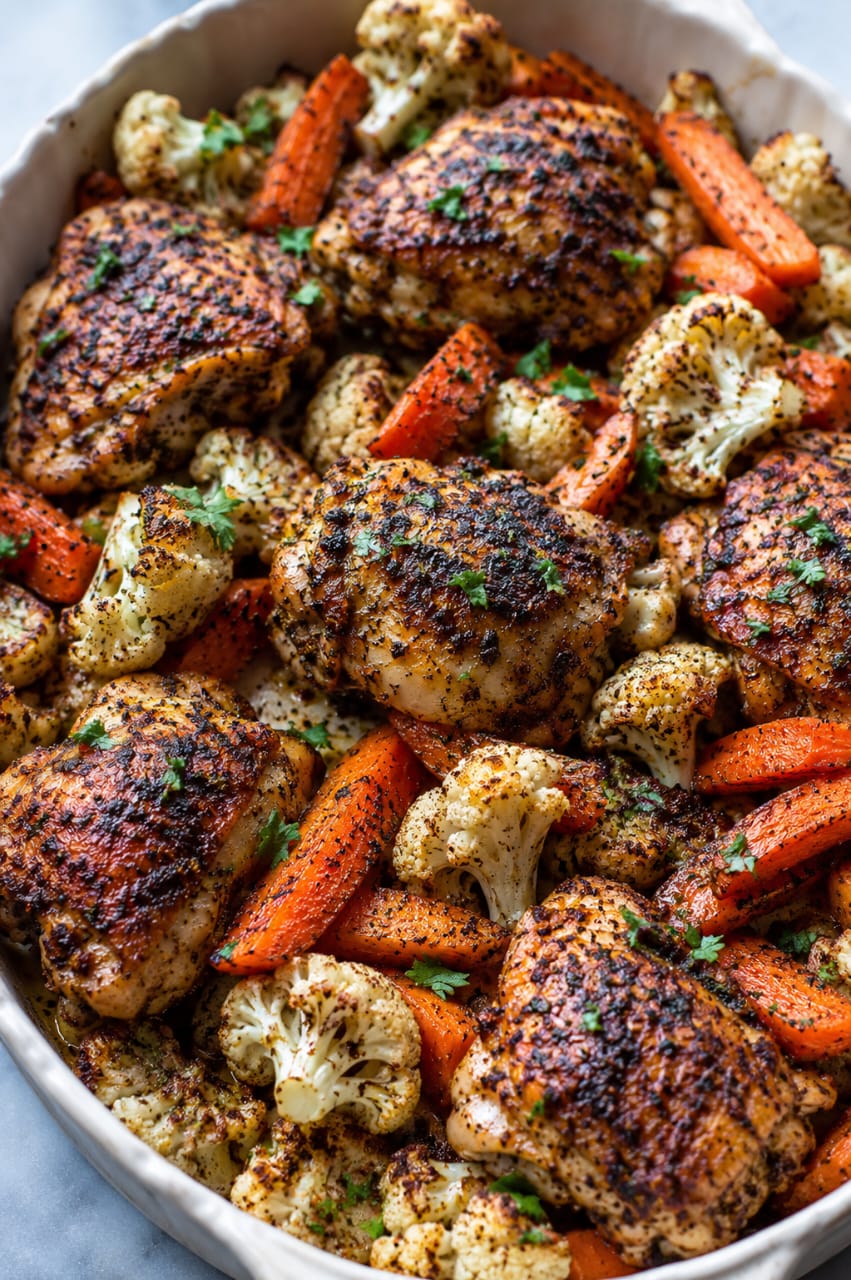
Welcome to another beautiful recipe that is going to introduce you to one of the most exciting and underappreciated spices in the culinary world and show you exactly what it can do to a simple roasted chicken and vegetable dish. If you have never cooked with sumac before, today is a genuinely important and exciting day in your kitchen. And if you already know and love this extraordinary spice, then you know exactly why we are celebrating it today. We are making Sumac Chicken With Cauliflower And Carrots, and this dish is fragrant, vibrant, deeply flavoured, and so incredibly satisfying that it is going to become one of your most loved and most repeated recipes.
Sumac is a deep burgundy-red spice ground from the dried berries of the sumac plant, which grows abundantly across the Middle East and Mediterranean regions. It has a flavour that is completely unique in the spice world, tangy and slightly fruity, bright and lemony without actually containing any citrus, with a gentle astringency that makes food taste more alive and more vibrant without adding any heat. It is one of the great secret weapons of Middle Eastern cooking and once you start cooking with it you will want to add it to everything.
In this article you will find the complete ingredient list, a clear step-by-step cooking guide, helpful tips to make it perfectly, storage advice, and answers to common questions about this recipe. Let us get right into it.
Sumac Chicken With Cauliflower And Carrots
What Makes This Recipe So Special
The brilliance of this dish lies in how the sumac works on multiple levels simultaneously throughout every element of the recipe. It seasons the chicken deeply when used as part of the spice rub, creating a beautifully coloured, deeply aromatic crust on the outside of the meat during roasting. It flavours the vegetables as they roast alongside the chicken, coating the cauliflower florets and carrot pieces in a tangy, warmly spiced marinade that caramelises into something extraordinary in the oven heat. And it appears again in the yogurt sauce drizzled over everything at the end, where its bright, tangy character creates a cool, creamy contrast to the warm, roasted components beneath.
The combination of roasted cauliflower and carrots with this chicken is also a genuinely inspired pairing. Cauliflower caramelises magnificently in a hot oven, developing golden, slightly nutty edges that absorb the sumac and spice marinade beautifully. Carrots become sweet and tender and slightly charred at the tips, which creates a wonderful contrast to the tangy brightness of the sumac that flavours them. Together these two vegetables create a roasted vegetable component so deeply flavoured and so satisfying that they are as much of a draw as the chicken itself.
Ingredients You Will Need
This recipe serves 4 people generously as a complete meal. Read through the full recipe before you begin and allow time for marinating the chicken for maximum flavour.
For the Sumac Chicken:
- 1 and a half kilograms or about 3 pounds of bone-in, skin-on chicken pieces, thighs and drumsticks work best, or a spatchcocked whole chicken
- 3 tablespoons of sumac, the star spice of the entire dish
- 2 teaspoons of ground cumin
- 1 teaspoon of ground coriander
- 1 teaspoon of smoked paprika
- 1 teaspoon of garlic powder
- 1 teaspoon of onion powder
- Half a teaspoon of ground cinnamon
- Half a teaspoon of ground allspice
- Half a teaspoon of black pepper
- 1 and a half teaspoons of salt
- 4 tablespoons of extra virgin olive oil
- Juice of one large lemon
- Zest of one lemon
- 4 garlic cloves, very finely minced or grated
For the Roasted Cauliflower And Carrots:
- 1 medium head of cauliflower, cut into medium-sized florets
- 4 large carrots, peeled and cut into thick diagonal slices or batons
- 1 medium red onion, cut into thick wedges
- 3 tablespoons of extra virgin olive oil
- 1 and a half teaspoons of sumac
- 1 teaspoon of ground cumin
- Half a teaspoon of smoked paprika
- Half a teaspoon of garlic powder
- Half a teaspoon of salt
- Quarter of a teaspoon of black pepper
- 1 tablespoon of honey or maple syrup, drizzled over the vegetables before roasting
For the Sumac Yogurt Sauce:
- 1 cup or about 240 grams of full-fat plain Greek yogurt
- 1 teaspoon of sumac
- 1 garlic clove, very finely minced or grated
- 1 tablespoon of fresh lemon juice
- 1 tablespoon of extra virgin olive oil
- A pinch of salt
- A small handful of fresh mint leaves, very finely chopped (optional but wonderful)
For Garnish and Serving:
- A generous handful of fresh flat-leaf parsley, roughly chopped
- A small handful of fresh mint leaves
- A few sprigs of fresh thyme
- A handful of toasted pine nuts or toasted slivered almonds for crunch
- A light drizzle of pomegranate molasses over the finished dish (optional but adds incredible depth and sweetness)
- Seeds from half a pomegranate scattered over the top for colour, crunch, and a jewel-like visual beauty
- Warm flatbread or pita bread for serving alongside
- Lemon wedges for squeezing
Step-by-Step Cooking Method
Step 1: Make the Sumac Marinade and Marinate the Chicken
In a small bowl, combine the sumac, ground cumin, ground coriander, smoked paprika, garlic powder, onion powder, ground cinnamon, ground allspice, black pepper, and salt. Mix the spice blend together until completely uniform. Add the extra virgin olive oil, fresh lemon juice, lemon zest, and minced garlic to the spice blend and mix everything together into a thick, richly aromatic paste. The paste will be a deep, beautiful burgundy-red colour from the sumac and it will smell absolutely extraordinary even at this raw stage.
Place the chicken pieces in a large zip-lock bag or a deep dish and pour the sumac marinade over them. Use your hands to massage the marinade into every surface of every piece of chicken, making sure the paste gets underneath the skin wherever possible by gently sliding your fingers between the skin and the flesh and pushing some of the marinade directly onto the meat beneath. Direct contact between the marinade and the meat produces the most deeply flavoured and most beautifully coloured result after roasting.
Seal the bag or cover the dish tightly with plastic wrap and refrigerate for a minimum of two hours. Four to six hours gives a significantly better result. Overnight marinating produces the most deeply flavoured, most tender, most spectacularly coloured chicken you will ever pull from your oven. If you are pressed for time, even thirty minutes of marinating at room temperature makes a noticeable difference.
Step 2: Make the Sumac Yogurt Sauce
The yogurt sauce can be made up to two days ahead and stored covered in the refrigerator, where the flavours develop and deepen beautifully as it sits. In a small bowl, combine the Greek yogurt, sumac, minced garlic, fresh lemon juice, olive oil, salt, and finely chopped fresh mint if you are using it. Stir everything together until completely smooth and well combined. The sauce will take on a beautiful pale pink colour from the sumac and will smell wonderfully fragrant and fresh. Taste and adjust the seasoning with a little more salt, more lemon juice for brightness, or more sumac for a more pronounced tangy character. Cover and refrigerate until ready to serve.
Step 3: Prepare the Vegetables
Preheat your oven to 210 degrees Celsius or 410 degrees Fahrenheit. This high temperature is what achieves the deep caramelisation on both the chicken skin and the vegetables that makes this dish so visually beautiful and so intensely flavoured.
Place the cauliflower florets, carrot slices, and red onion wedges in a large bowl. Drizzle the olive oil over them and then add the sumac, ground cumin, smoked paprika, garlic powder, salt, and black pepper. Toss everything together very thoroughly until every piece of cauliflower and every carrot slice is evenly coated in the spiced oil. Drizzle the honey or maple syrup over the seasoned vegetables and toss once more. The honey encourages deeper caramelisation on the edges of the vegetables during roasting and adds a subtle sweetness that balances the tangy sumac beautifully.
Step 4: Arrange Everything in the Roasting Pan
Take the marinated chicken from the refrigerator about thirty minutes before cooking to bring it slightly toward room temperature. This helps the chicken cook more evenly. Scatter the seasoned vegetables in a generous, even layer across the base of a very large, deep roasting pan or a large rimmed baking tray. If you are using two trays rather than one, spread the vegetables across both to avoid overcrowding, which is critical for proper roasting rather than steaming.
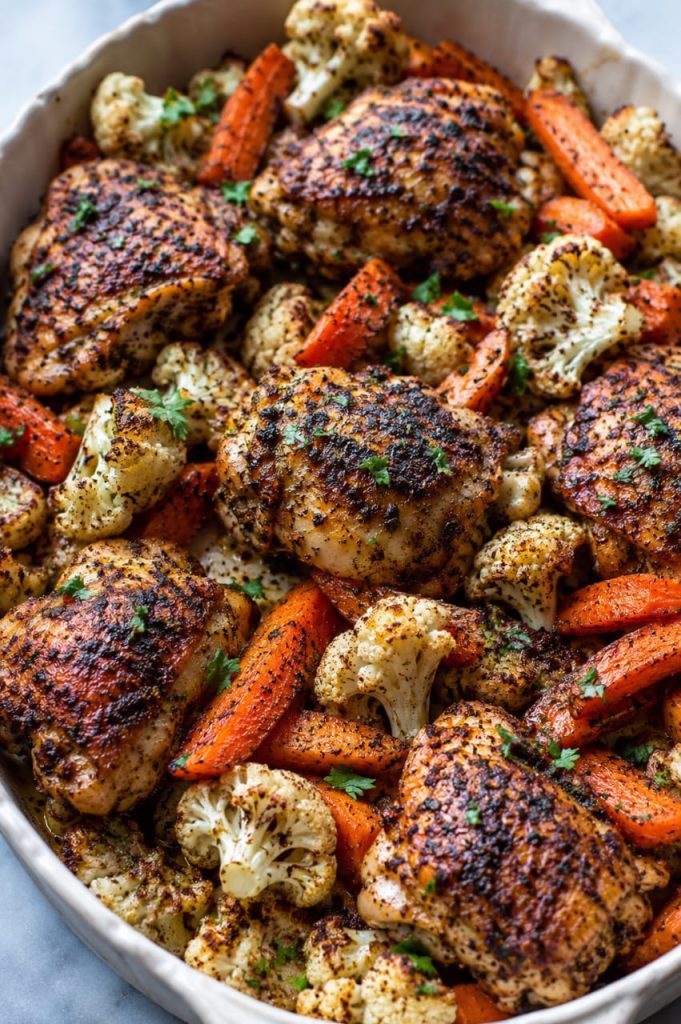
Place the marinated chicken pieces skin side up on top of the vegetables, arranging them so they are not touching each other. The chicken sitting on top of the vegetables as they roast means the chicken juices and the marinade that drips from the chicken during cooking baste the vegetables from above, infusing them with incredible flavour as everything cooks together in the oven. This is one of the most important reasons why the vegetables in this dish taste so extraordinary.
Pour any remaining marinade from the bag or dish over the chicken pieces. Drizzle an extra thread of olive oil over everything.
Step 5: Roast the Chicken and Vegetables
Place the roasting pan in the centre of the preheated oven. Roast at 210 degrees Celsius for the first 20 minutes without opening the oven, which allows the chicken skin to begin developing that deep, beautiful golden colour and the vegetables to start caramelising properly.
After 20 minutes, reduce the oven temperature to 190 degrees Celsius or 375 degrees Fahrenheit and continue roasting for a further 25 to 30 minutes, checking the chicken every fifteen minutes. Turn the vegetables gently with a spatula at the 25-minute mark to expose fresh surfaces to the oven heat and encourage even caramelisation on multiple sides. The chicken is fully cooked when a meat thermometer inserted into the thickest part of the largest thigh, keeping clear of the bone, reads 74 degrees Celsius or 165 degrees Fahrenheit. The skin should be deeply golden, slightly crispy, and beautifully coloured with that distinctive dark burgundy-red from the sumac marinade.
In the final five minutes of cooking, if the skin needs more colour and intensity, increase the oven temperature back to 210 degrees Celsius or switch to grill mode briefly. Watch closely during this final stage to ensure the sumac marinade on the skin does not burn. The honey and the sugars in the sumac can caramelise quickly under high heat so keep a very close eye on the chicken during any grill stage.
Step 6: Rest the Chicken
Remove the roasting pan from the oven and allow the chicken pieces to rest on top of the vegetables for eight to ten minutes before serving. Cover the pan very loosely with a sheet of foil during resting. This resting time allows the juices inside the chicken to redistribute evenly throughout the meat, which makes the finished chicken significantly more juicy and satisfying. It also allows the vegetables to absorb some of the cooking juices that have pooled in the bottom of the pan during roasting, making them even more deeply flavoured and delicious.
Step 7: Toast the Nuts
While the chicken rests, toast the pine nuts or slivered almonds in a small dry pan over medium heat for about two to three minutes, stirring constantly, until they are golden and fragrant. Watch them extremely closely as nuts go from perfectly toasted to burnt in a matter of seconds. Remove them from the heat immediately once golden and set aside. Toasted nuts add a beautiful crunch, a rich, nutty flavour, and a visual elegance to the finished dish that makes it look genuinely impressive and restaurant-quality.
Step 8: Assemble and Serve
Arrange the roasted vegetables on a large, beautiful serving platter. Place the rested chicken pieces on top of the vegetables, overlapping them slightly for a generous, abundant presentation. Spoon the sumac yogurt sauce generously over the top of the chicken and vegetables in wide, dramatic strokes, or serve it alongside in a small bowl and let everyone help themselves. Scatter the toasted pine nuts or almonds over everything. Add a generous handful of roughly chopped fresh parsley and fresh mint leaves, a few sprigs of fresh thyme, and the pomegranate seeds if you are using them.
Drizzle a light thread of pomegranate molasses over the entire platter if you have it. The pomegranate molasses adds a beautiful, glossy, dark sweetness and depth that is one of the most wonderful flavour companions to sumac in all of Middle Eastern cooking. Finish with a final light dusting of sumac over the whole platter for colour and a last burst of that tangy, vibrant flavour. Serve immediately with warm flatbread or pita and lemon wedges alongside.
Helpful Tips to Make It Perfect Every Time
Buy good quality sumac. Sumac quality varies significantly between brands and sources. Good quality sumac should be a deep, vibrant burgundy-red colour with a strong, tangy, slightly fruity aroma. Pale, faded, or dull-coloured sumac has usually lost most of its flavour and will produce a significantly less vibrant and less flavourful result. Look for sumac at Middle Eastern grocery stores, specialty spice shops, or reputable online spice retailers where the turnover is high and the spice is fresh.
Marinate overnight whenever possible. The difference between a two-hour marinade and an overnight marinade in this recipe is dramatic and immediately noticeable in the finished dish. The sumac, lemon, and spice paste penetrates the chicken much more deeply with extended marinating time, producing meat that is flavoured all the way through rather than just on the surface. If you are planning this dish for dinner, prepare and marinate the chicken the morning before or the previous evening for the best result.
Do not overcrowd the roasting pan. Overcrowding is the most common mistake in sheet pan and roasting pan cooking and it is particularly detrimental here where you are relying on the oven heat to caramelise and roast rather than steam the vegetables. Every piece of vegetable needs exposure to the hot oven air to caramelise properly. Use the largest pan you have or divide the vegetables and chicken between two pans if necessary.
Get the marinade under the chicken skin. Pushing some of the sumac marinade directly under the skin onto the breast and thigh meat dramatically increases the depth of flavour in the chicken meat itself. The marinade on the surface of the skin seasons the skin and creates the beautiful crust, but the marinade under the skin seasons the meat throughout and keeps it more moist and more flavourful throughout the roasting time.
Use a meat thermometer to confirm doneness. Bone-in chicken pieces vary in size and thickness and cooking times can vary between ovens. A meat thermometer reading of 74 degrees Celsius in the thickest part of the thigh is the only reliable way to confirm the chicken is perfectly cooked without guessing. This is a recipe worth getting exactly right every time.
Serve the yogurt sauce at room temperature. Cold yogurt sauce straight from the refrigerator can feel jarring against the warm, roasted chicken and vegetables. Take the sauce out of the fridge about fifteen minutes before serving so it loses its refrigerator chill and feels more pleasantly cool rather than cold against the warm components of the dish.
Add the pomegranate molasses. If you can find pomegranate molasses at your local Middle Eastern grocery store, do not skip it as a finishing drizzle over this dish. It is one of the most extraordinary condiments in all of cooking and its combination of intense sweetness, deep fruity richness, and slight tartness is an almost perfect companion to the tangy, warmly spiced sumac chicken. A very little goes a long way and a light drizzle over the finished platter transforms the dish visually and flavour-wise in the most spectacular way.
Storage Tips
Refrigerating: Allow the chicken and vegetables to cool completely before storing them in airtight containers in the refrigerator for up to three days. Store the sumac yogurt sauce separately in a covered container. The chicken and vegetables reheat very well. Spread them on a baking tray and warm in an oven preheated to 180 degrees Celsius for about twelve to fifteen minutes until heated through and the chicken skin has crisped back up. Alternatively, reheat individual portions in the microwave for two to three minutes though the skin will lose its crispiness in the microwave.
Storing the yogurt sauce: The sumac yogurt sauce keeps very well in a sealed container in the refrigerator for up to four days. The flavours of the garlic, sumac, and lemon actually develop and deepen slightly as the sauce sits, making it taste even better on day two than day one.
Freezing: The roasted chicken and vegetables freeze well in airtight containers for up to two months. The yogurt sauce does not freeze well as Greek yogurt separates upon thawing. Thaw the chicken and vegetables overnight in the refrigerator and reheat in the oven as described above. Make the yogurt sauce fresh when serving reheated leftovers.
Leftover ideas: Leftover sumac chicken and vegetables are incredibly versatile. Shred the leftover chicken and toss it with the roasted vegetables through warm couscous or rice with a drizzle of olive oil and extra lemon juice for a deeply satisfying leftover grain bowl. Use the shredded chicken as a filling for warm pita wraps with the yogurt sauce, fresh tomatoes, and cucumber for an extraordinarily delicious Middle Eastern-inspired wrap. Add the leftover chicken and vegetables to a simple soup with chickpeas and lemon for a wonderfully warming leftover dinner.
What to Serve With Sumac Chicken With Cauliflower And Carrots
This dish is a generous and complete meal on its own but these accompaniments make the spread even more beautiful and satisfying:
- Warm pita bread or flatbread for tearing and using to scoop up pieces of chicken, vegetables, and generous amounts of the sumac yogurt sauce
- A simple Lebanese-style fattoush salad with fresh tomatoes, cucumber, radish, fresh herbs, crispy pita chips, and a sumac and lemon dressing for a bright, crunchy side that echoes the sumac theme beautifully
- Fluffy couscous or warm saffron rice alongside for a more substantial and thoroughly satisfying accompaniment that soaks up the beautiful cooking juices from the pan
- Hummus served alongside with a drizzle of olive oil and a sprinkle of sumac for a classic Middle Eastern accompaniment that complements this dish in the most natural and beautiful way
- A simple cucumber and yogurt salad with fresh dill and garlic for a cool, refreshing side that pairs wonderfully with the warm, aromatic spices in the chicken
- Tabbouleh for a bright, herb-packed, lemony grain salad that brings freshness and contrast to the rich, warmly spiced roasted components of the main dish
Frequently Asked Questions
Where can I buy sumac and what should it look and taste like?
Sumac is available at Middle Eastern grocery stores, Turkish supermarkets, specialty spice shops, and a growing number of mainstream supermarkets in the international or spice aisles. Online spice retailers are also an excellent and reliable source. Good quality sumac should be a deep, vibrant burgundy-red colour, almost like dried cranberry powder, with a strong, tangy, slightly fruity aroma that you can smell clearly just by opening the jar. If the sumac you find is pale pink, faded, or has very little aroma, it has likely been stored for too long and will not deliver the characteristic tangy, vibrant flavour that makes this dish so special. Choose sumac that looks and smells intensely vibrant for the best possible result.
Can I make this recipe with boneless chicken pieces?
Yes. Boneless, skinless chicken thighs work very well with this marinade and produce a slightly lighter, faster-cooking result that is very delicious. The main difference is the absence of the crispy, caramelised skin that makes bone-in, skin-on pieces so visually impressive and flavourful. If using boneless thighs, reduce the roasting time to approximately 20 to 25 minutes at 190 degrees Celsius and check for doneness with a thermometer, as boneless pieces cook significantly faster than bone-in ones. Boneless chicken breasts can also be used but require even more careful timing to avoid drying out, which bone-in thighs are naturally more forgiving about.
Can I make this dish vegetarian by removing the chicken?
Absolutely. The sumac-spiced cauliflower and carrots are so deeply flavoured and so satisfying on their own that they make a genuinely excellent vegetarian main course when the chicken is removed. You can also add other roasted vegetables such as chickpeas tossed in the same sumac spice blend, roasted sweet potato cubes, halved cherry tomatoes, or sliced zucchini to make the vegetarian version even more substantial and varied. Serve everything with generous amounts of the sumac yogurt sauce, warm flatbread, and all the garnishes for a complete and deeply satisfying plant-based meal.
What can I substitute for sumac if I cannot find it?
If sumac is genuinely unavailable to you, the closest flavour substitute is a combination of lemon zest, a small amount of lemon juice, and a tiny pinch of mild paprika used together to replicate some of the tangy, slightly fruity, fruity red character of sumac. However it is important to note that sumac is a completely unique spice and no combination of other ingredients fully replicates its distinctive flavour profile. If you are seriously interested in Middle Eastern cooking, sourcing genuine sumac is worth the effort because once you have it, you will use it constantly in dressings, marinades, salads, dips, and roasted dishes.
Can I roast everything at once from the beginning rather than starting with higher heat?
You can roast everything at a consistent 190 degrees Celsius throughout if you prefer a simpler approach, though the initial blast of higher heat at 210 degrees Celsius for the first 20 minutes produces noticeably better caramelisation on both the chicken skin and the vegetables. The higher starting temperature triggers more rapid and more intense caramelisation that creates deeper colour and more complex flavour than a consistent lower temperature achieves. If your oven runs hot or you prefer a simpler approach, 190 degrees Celsius throughout for approximately 50 to 55 minutes total works well and still produces a beautifully roasted result.
Final Thoughts
Sumac Chicken With Cauliflower And Carrots is a dish that delivers something genuinely rare in everyday home cooking. It is visually spectacular in that deep, jewel-bright way that makes a platter look like something from a restaurant. It is deeply, complexly flavoured in a way that takes you on an actual sensory journey with every forkful. It is warmly aromatic and comforting in the way that properly spiced, properly roasted food always is. And it introduces sumac, one of the most extraordinary and most underused spices in the Western kitchen, in a way that makes you immediately and completely understand why it has been treasured in Middle Eastern cooking for thousands of years.
The combination of the tangy, warmly spiced sumac chicken, the beautifully caramelised vegetables, and the cool, creamy sumac yogurt sauce creates a dish that has real balance, real depth, and real beauty on every level. Every element supports and enhances the others, and the result is a platter that looks as though it took considerably more skill and effort to produce than it actually did, which is always one of the most satisfying qualities a recipe can have.
Whether you are making it for a special family dinner where you want to put something genuinely impressive and deeply flavourful on the table, a dinner party where you want to introduce your guests to the extraordinary flavour of sumac in the most delicious possible way, a weekend cooking session when you have time to marinate the chicken overnight and give the dish the attention it deserves, or simply because you want to cook something that is beautiful, nourishing, vibrant, and deeply satisfying in every possible way, this Sumac Chicken With Cauliflower And Carrots is going to deliver one of the most memorable and most deeply enjoyable meals you have ever made in your own kitchen. Make it with care, marinate generously, roast boldly, and enjoy every tangy, fragrant, beautifully spiced and completely extraordinary bite.