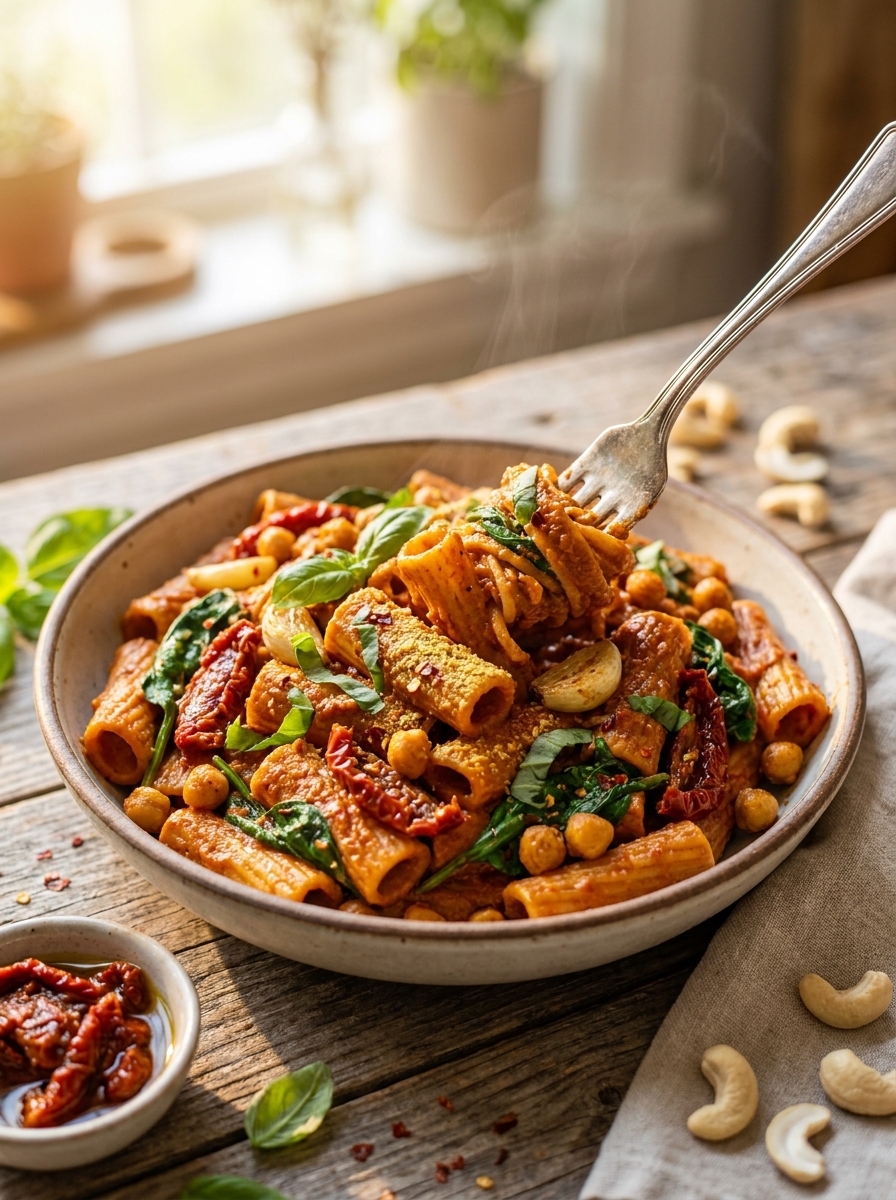
If you thought Marry Me Pasta was only for people who eat meat and dairy, this recipe is about to completely change your mind. Creamy High Protein Vegan Marry Me Pasta delivers every single thing that makes the original so beloved — the rich, indulgent sauce, the bold sun-dried tomatoes, the deep savoury flavour, the kind of creaminess that makes you close your eyes after the first bite — but it is entirely plant-based and packed with protein that will keep you full and satisfied long after the meal is done.
This is not a compromise recipe. It is not a version of something that tastes like it is missing its main ingredients. It is a genuinely outstanding pasta dish that happens to be vegan — and one that is so good it has the same effect on people as the original. One bite and people want to know what is in it, how you made it, and when you are making it again.
Whether you are fully plant-based, cooking for someone who is, or simply looking for a high protein meal that does not rely on meat or dairy — this pasta is going to surprise you, impress you, and earn a permanent spot in your recipe collection.
What Makes This Pasta High Protein And Vegan?
The original Marry Me Pasta gets its creaminess from heavy cream and Parmesan cheese and its protein from chicken. This vegan version replaces all of those with plant-based alternatives that do an equally impressive job.
The sauce is built on a base of full-fat coconut milk or cashew cream which gives it a rich, velvety body that is genuinely indulgent. Nutritional yeast replaces the Parmesan and delivers that same savoury, slightly cheesy, umami depth that makes the sauce taste complex and satisfying. The protein comes from white beans or chickpeas which are stirred into the sauce and provide a hearty, filling element that replaces the chicken completely — not by pretending to be chicken but by being exactly what they are and doing it brilliantly.
Sun-dried tomatoes, garlic, Italian seasoning, and vegetable broth round out the sauce into something that is bold, layered, and deeply flavourful from the very first taste to the very last forkful.
Ingredients You Will Need
For the Pasta and Protein:
- 350g penne, rigatoni, or fusilli pasta
- 1 can (400g) white beans or chickpeas, drained and rinsed
- 1 tablespoon olive oil
- ½ teaspoon garlic powder
- ½ teaspoon smoked paprika
- ½ teaspoon salt
- ¼ teaspoon black pepper
For the Creamy Vegan Sauce:
- 1 can (400ml) full-fat coconut milk or 1 cup cashew cream
- ¾ cup vegetable broth
- 1 cup sun-dried tomatoes in oil, drained and roughly chopped
- 5 cloves garlic, minced
- 1 medium onion, finely diced
- 3 tablespoons nutritional yeast
- 2 tablespoons tomato paste
- 1 teaspoon Italian seasoning
- 1 teaspoon smoked paprika
- ½ teaspoon chilli flakes (optional)
- 1 teaspoon sugar or maple syrup (balances acidity)
- 2 tablespoons olive oil
- Salt and pepper to taste
To Finish:
- 2 large handfuls of fresh spinach
- Juice of half a lemon
- Extra nutritional yeast for serving
- Fresh basil leaves for garnish
- Toasted pine nuts or walnuts (optional but adds wonderful texture)
How to Make Creamy High Protein Vegan Marry Me Pasta

Step 1 — Season and Pan-Fry the Beans
Drain and rinse the white beans or chickpeas thoroughly and pat them as dry as you can with a paper towel. Removing the surface moisture is important because dry beans will crisp up and develop a golden exterior in the pan while wet beans will steam and stay soft throughout.
Heat the olive oil in a wide pan over medium-high heat. Add the beans and spread them into a single layer. Season with the garlic powder, smoked paprika, salt, and black pepper. Let them cook without stirring for 2 to 3 minutes until the bottom side turns golden and slightly crispy, then toss and cook for another 2 minutes on the other side.
This step transforms plain canned beans into something with genuine texture, flavour, and presence in the dish. The slightly crispy, well-seasoned beans give you a protein element that is not just nutritionally valuable but actually delicious to eat — something that has its own character and contributes meaningfully to the finished pasta rather than just sitting there passively. Set the cooked beans aside once done.
Step 2 — Cook the Pasta
Bring a large pot of generously salted water to a boil and cook the pasta according to the pack instructions until it is just al dente — slightly firm when you bite through it. Before draining, scoop out about half a cup of the starchy pasta water and keep it to one side. This cloudy, starchy water is one of the most useful tools in pasta cooking and will help you adjust the consistency of the sauce perfectly later.
Drain the pasta and set it aside.
Step 3 — Build the Sauce Base
In the same pan you used for the beans, lower the heat to medium and add the olive oil. Add the diced onion and cook for about 3 to 4 minutes until soft, translucent, and just starting to turn lightly golden at the edges. Add the minced garlic and stir for another minute until it becomes wonderfully fragrant.
Add the tomato paste and stir it into the onion and garlic. Cook it for 2 full minutes, stirring constantly, until it darkens slightly and smells rich and deep. This step is called cooking out the paste and it removes the raw, slightly sour flavour that uncooked tomato paste carries while developing a deeper, more rounded tomato flavour that becomes the backbone of the sauce.
Add the chopped sun-dried tomatoes and stir them around in the pan for 1 to 2 minutes. They will release a little of their oil which adds a concentrated, intensely sweet tomato flavour to the base of the sauce.
Step 4 — Make the Creamy Sauce
Pour in the vegetable broth and stir, scraping up any bits from the bottom of the pan as you go. Let it bubble gently for 2 minutes. Then pour in the coconut milk or cashew cream and stir everything together until the sauce is smooth and well combined.
Add the nutritional yeast, Italian seasoning, smoked paprika, chilli flakes if using, sugar or maple syrup, salt, and pepper. Stir everything together and let the sauce simmer gently over medium-low heat for about 5 to 6 minutes until it thickens slightly and the flavours come together and deepen.
Taste the sauce at this point and adjust the seasoning. It should be creamy, savoury, slightly tangy from the tomatoes, and have a deep, cheesy-like depth from the nutritional yeast. If it needs more richness, add another tablespoon of nutritional yeast. If it needs more brightness, add a small squeeze of lemon. If it needs more depth, a splash more vegetable broth and another minute of simmering usually does it.
Step 5 — Bring Everything Together
Add the drained pasta to the sauce and toss well so every piece is thoroughly coated. If the sauce feels too thick, add a splash of the reserved pasta water and stir until you reach the consistency you want. The pasta water will loosen the sauce while the starch in it helps it cling to the pasta beautifully rather than sliding off.
Add the fresh spinach and stir it through — it will wilt down into the sauce within 1 to 2 minutes from the heat. Once the spinach has wilted, add the pan-fried beans and fold them gently into the pasta. Be gentle at this stage — you want to keep as many of the beans whole and intact as possible so they maintain their texture in the finished dish rather than breaking down and disappearing into the sauce.
Squeeze the lemon juice over everything, give it one final stir, and taste one last time before serving.
Step 6 — Serve
Spoon the pasta into bowls and scatter fresh basil leaves generously over the top. Add a sprinkle of nutritional yeast in place of Parmesan, a handful of toasted pine nuts or walnuts if using, a drizzle of good olive oil, and a pinch of chilli flakes if you want extra heat. Serve immediately while the sauce is at its creamiest and everything is perfectly warm.
Helpful Cooking Tips

Make cashew cream for the richest possible sauce. If you want the most luxurious, genuinely creamy sauce, soak one cup of raw cashews in cold water for 4 hours or in boiling water for 30 minutes, then drain and blend them with half a cup of fresh water until completely smooth. This cashew cream is remarkably similar in richness and body to heavy cream and produces a sauce that is silkier and more indulgent than coconut milk. If you have a high-powered blender, this is absolutely worth doing.
Do not skip frying the beans. It might be tempting to simply drain the beans and stir them straight into the sauce but taking the 5 minutes to pan-fry them first makes a significant difference. The golden, slightly crispy exterior gives them a texture and flavour that makes them genuinely satisfying as a protein element rather than soft and bland additions to the dish.
Nutritional yeast is non-negotiable. It is the ingredient that gives this vegan sauce its savoury, cheesy, umami depth and it cannot be replaced with anything else in the same way. It is available in most health food stores and many supermarkets. If you have never cooked with it before, this recipe is an excellent introduction because the results will show you exactly what it is capable of.
Use sun-dried tomatoes in oil. The oil-packed variety are softer, more intensely flavoured, and blend into the sauce more harmoniously than the dry-packed kind. They also contribute a little of their flavoured oil to the sauce when you chop and add them which adds another layer of depth. If you only have dry-packed, rehydrate them in warm water for 10 to 15 minutes before using.
Save the pasta water every time. This is a golden rule in pasta cooking and it applies here just as much as in any other pasta recipe. The starchy pasta water helps loosen a thick sauce, helps it cling to the pasta, and emulsifies everything into a cohesive, restaurant-quality dish. Get in the habit of scooping out a cup before you drain the pasta — you may not always need it but when you do, it is invaluable.
Variations You Can Try
- Add tofu for extra protein — Press a block of firm tofu, cube it, and pan-fry it in olive oil with garlic powder, smoked paprika, salt, and pepper until golden and crispy on all sides. Add it to the pasta alongside or instead of the beans for an additional high-protein element with a completely different texture.
- Use lentils instead of beans — Cooked green or brown lentils stirred through the sauce add a hearty, earthy protein element that works beautifully in the creamy tomato sauce. They break down slightly as they cook which thickens the sauce naturally and adds a lovely body to the dish.
- Add roasted red peppers — Blend a jar of roasted red peppers into the sauce along with the coconut milk for a sweeter, more vibrant sauce with a beautiful deep orange-red colour. It adds another layer of sweetness and depth that pairs wonderfully with the sun-dried tomatoes.
- Make it spicier — Double the chilli flakes or add a tablespoon of harissa paste to the sauce for a version with a proper, sustained heat that works beautifully against the creaminess of the coconut milk or cashew cream.
- Add roasted cherry tomatoes — Roast a punnet of cherry tomatoes in the oven at 200°C (400°F) with olive oil, salt, and garlic for 20 minutes until blistered and jammy. Stir them through the finished pasta for bursts of intense, sweet tomato flavour in every few bites.
Storage Tips
Fridge: Store leftover pasta in an airtight container in the refrigerator for up to 4 days. The pasta will absorb some of the sauce as it sits and the dish may look thicker when you take it out — this is completely normal and easily fixed when reheating.
Freezer: The sauce freezes very well on its own. If you plan to freeze this dish, freeze the sauce separately without the pasta and cook fresh pasta when you are ready to eat. Coconut milk-based sauces can sometimes separate slightly after freezing but a good stir over low heat as it reheats will bring it back together. Store for up to 3 months.
Reheating: Warm leftovers gently in a pan over medium-low heat. Add a splash of vegetable broth, coconut milk, or even plain water to loosen the sauce back to the right consistency and stir as it heats through. You can also reheat in the microwave in a covered bowl in short bursts, stirring between each one. Avoid high heat as it can cause the coconut milk sauce to separate and turn grainy.
Frequently Asked Questions
How much protein does this pasta actually contain? A serving of this pasta made with white beans or chickpeas and pasta contains approximately 20 to 25 grams of protein per portion depending on the exact quantities and the type of pasta used. Using a high protein pasta made from chickpea flour, lentil flour, or edamame can push this number significantly higher — some high protein pastas contain up to 25 grams of protein per serving on their own before you even add the beans.
What is the best pasta to use for maximum protein? If maximising protein is a priority, use a legume-based pasta such as chickpea pasta, red lentil pasta, edamame pasta, or black bean pasta. These are made entirely or mostly from legume flour and have a significantly higher protein content than regular wheat pasta. They also have a slightly nuttier, more robust flavour that pairs very well with a bold, creamy sauce like this one.
Can I make this nut-free? Yes. Use full-fat coconut milk instead of cashew cream for the sauce — it gives you a slightly different flavour profile with a gentle tropical note but the sauce is still beautifully creamy and rich. Make sure your nutritional yeast is also nut-free certified if you have a severe nut allergy as some brands are processed in facilities that handle nuts.
Does this pasta taste like coconut? When made with full-fat coconut milk, there is a very subtle coconut note in the background but it is by no means dominant. The strong flavours of the sun-dried tomatoes, garlic, nutritional yeast, and Italian seasoning largely mask the coconut flavour. If you are sensitive to it or simply do not want any coconut flavour at all, cashew cream is the better choice — it is completely neutral in flavour and gives you pure creaminess without any other taste.
Can I use a different type of bean? Absolutely. White beans — also called cannellini beans — are the first choice because they are mild in flavour, creamy in texture, and absorb the seasoning beautifully. Chickpeas are a great alternative with a slightly firmer texture and nuttier flavour. Butter beans work wonderfully too and have a large, satisfying size that gives you a substantial protein element in every spoonful. Avoid kidney beans in this recipe as their strong flavour can overpower the delicate balance of the sauce.
Conclusion
Creamy High Protein Vegan Marry Me Pasta proves something that anyone who loves good food already suspects — that plant-based cooking, done thoughtfully and with the right ingredients, can produce results that are every bit as satisfying, indulgent, and impressive as anything made with meat and dairy.
The sauce is rich and creamy, the sun-dried tomatoes are bold and sweet, the nutritional yeast adds that savoury depth that makes the whole thing taste complete, and the pan-fried beans give you a protein element that is genuinely satisfying rather than an afterthought. Every element of this dish is doing exactly what it should, and the result is a pasta that earns the Marry Me name in every bite.
Whether you make it for yourself, for someone you are cooking to impress, or for a table full of guests with different dietary needs — this pasta is going to be the recipe that changes how everyone at that table thinks about vegan food. It is that good, it is that satisfying, and it is absolutely worth making tonight.