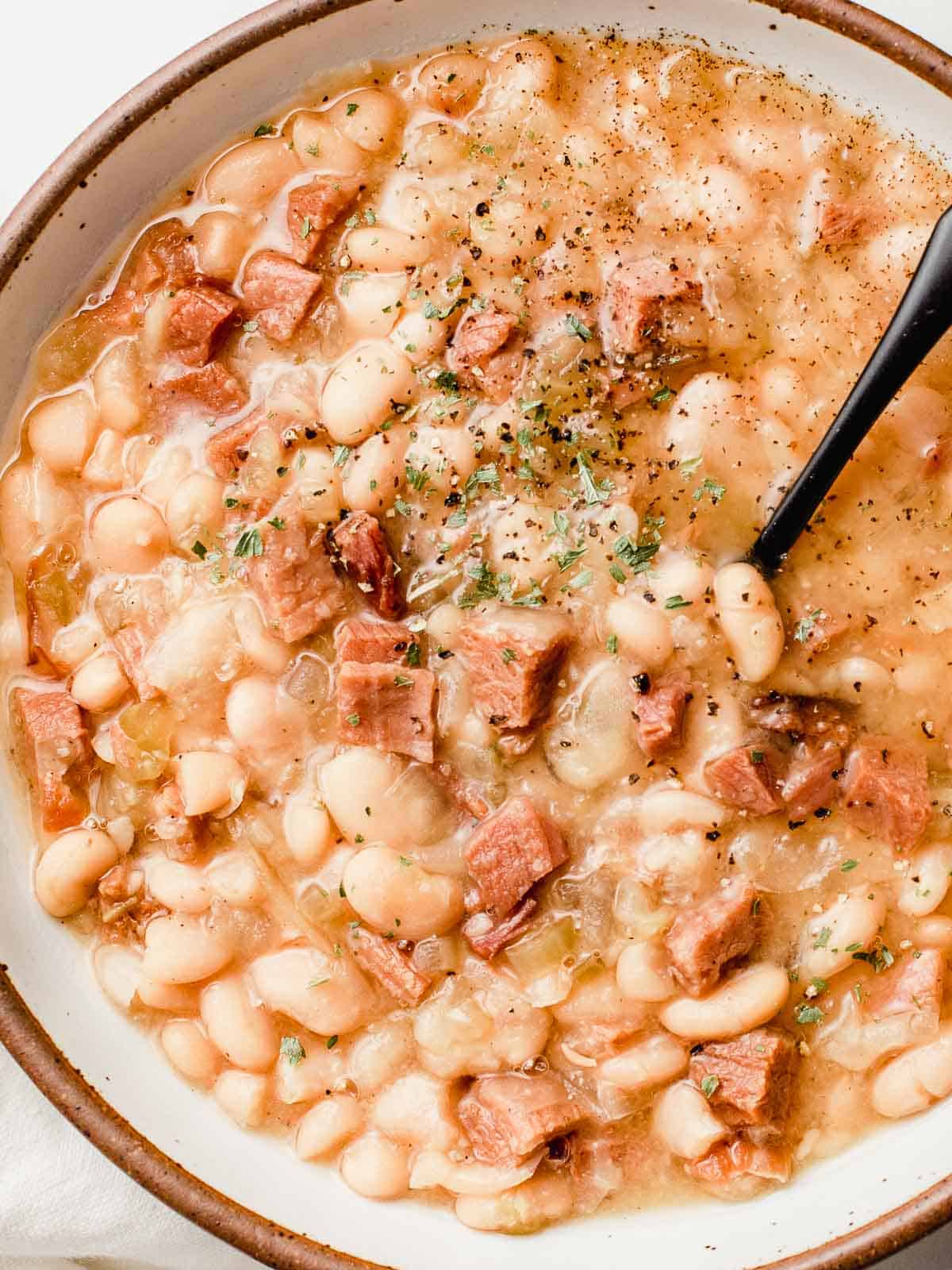
Hey dear, welcome back to kiekie’s place! Oh friend, today I am sharing a recipe that is pure, honest, deeply satisfying comfort food in the most beautiful and unpretentious way possible. This is the kind of soup that has been made in home kitchens for generations — the kind that uses simple, humble ingredients and turns them into something that is far greater, far more nourishing, and far more deeply flavourful than anything about the ingredient list would suggest. Today we are making Crockpot White Bean and Ham Soup and I am genuinely thrilled to walk you through every single detail of this incredible recipe.
This soup is everything. It is creamy without any cream. It is hearty without being heavy. It is deeply savoury and smoky from the ham, silky and substantial from the white beans, fragrant with garlic and herbs, and finished with a richness that develops over hours of slow cooking into something that tastes like it has been lovingly tended all day — because it has, just without you having to do anything after the first 10 minutes of prep. You put everything in the crockpot in the morning and you come home to a kitchen that smells absolutely extraordinary and a soup that is completely ready to serve.
What I love most about this recipe beyond how delicious it is, is what it represents. This is the kind of cooking that wastes nothing and celebrates everything. A leftover ham bone from a holiday dinner becomes the foundation of one of the most flavourful soups you have ever tasted. Simple dried or canned white beans become silky, creamy, protein-rich stars that give the soup its characteristic body and heartiness. Pantry aromatics and dried herbs do the quiet work of building a broth that is deeply complex and satisfying. This is resourceful, economical, deeply nourishing cooking and it is something worth celebrating.
Whether you are using a leftover ham bone from the holiday table, a ham hock from the butcher, or simply diced smoked ham from the supermarket, this recipe is going to produce a soup that is genuinely extraordinary. Let us get into every single detail.
What Makes This Soup So Special?
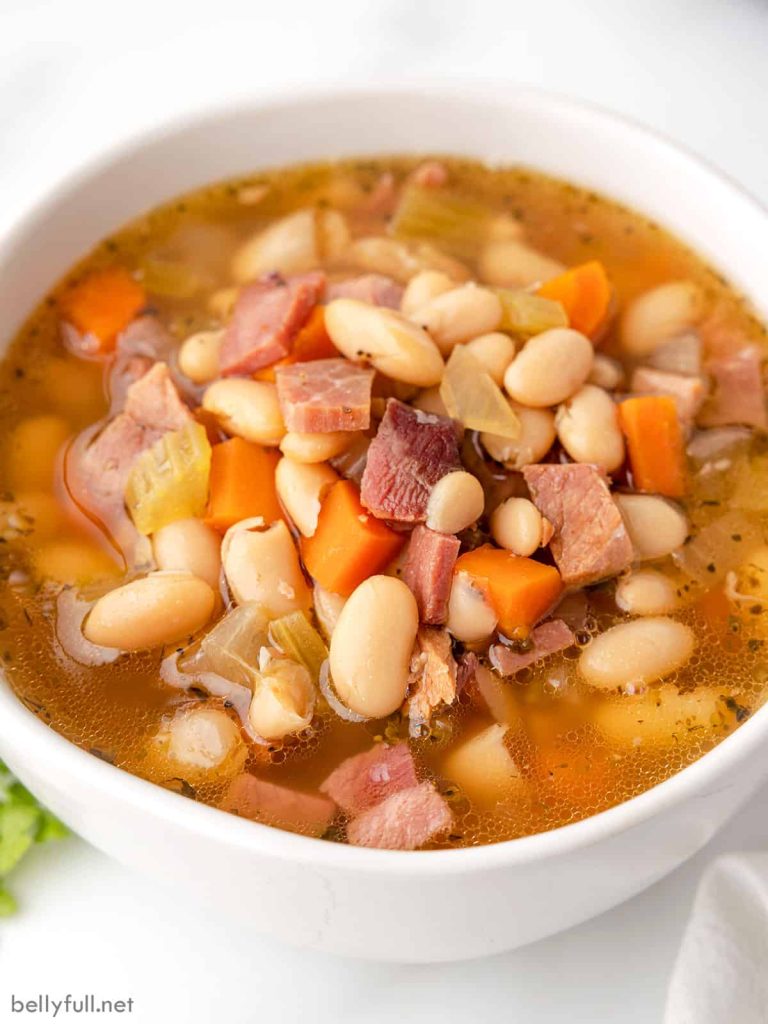
Credits: Bellyfull Blog
White bean and ham soup is a classic for a very good reason and understanding what makes it so good helps you cook it with more intention and appreciation.
The ham is the flavour backbone of the entire soup. Smoked ham — whether from a bone, a hock, or simply diced smoked ham — provides an incredible depth of smoky, savoury, slightly sweet flavour that permeates every drop of the broth during the long, slow cooking time. The smokiness of cured ham is one of the most warming, most deeply satisfying flavour notes in all of cooking and it pairs with white beans in a way that feels completely natural and completely right.
The white beans do something extraordinary in this soup over the long cooking time. They soften completely and some of them begin to break down at the edges, releasing their starch into the broth. This released starch naturally thickens the soup into something creamy, slightly silky, and wonderfully substantial — without any added cream, butter, or flour. The beans also absorb the smoky ham flavour as they cook, so every single bean tastes deeply of the broth surrounding it. This is what gives white bean and ham soup its characteristic, deeply satisfying, naturally creamy texture.
The low and slow cooking allows every element of the soup to give its best to the broth over many hours. The ham bone releases gelatin that makes the broth silky. The aromatics soften completely and meld into the background, adding depth without being individually identifiable. The beans become perfect — creamy inside, intact on the outside, fully flavoured by everything around them. This level of development simply cannot be rushed.
The simplicity is itself a virtue. This soup does not need a lot of ingredients because the few it has are perfectly chosen and work together with extraordinary effectiveness. Restraint is sometimes the most sophisticated approach in cooking.
Ham Options — Choosing What Works Best for You
The type of ham you use has a significant impact on the flavour of the finished soup, so let us talk through the options.
A leftover ham bone is the most prized option for this soup and the one that produces the most extraordinary result. After the holiday roast or a large glazed ham dinner, the bone that is left over is not waste — it is treasure. The marrow inside the bone, the collagen in the connective tissue around the bone, and the remaining meat clinging to the bone all dissolve into the broth during the long cooking time and create a stock that is deeply rich, silky, and complex. If you have a ham bone, use it for this soup and you will not be disappointed.
To store a leftover ham bone for future soup, wrap it tightly in cling film and refrigerate for up to a week, or freeze for up to 3 months. Thaw overnight in the fridge before using.
Ham hocks are smoked, cured pork knuckles that are widely available from butchers and many supermarkets. They contain a lot of collagen and connective tissue that renders into the broth during cooking and creates an incredibly rich, silky result. Ham hocks are often heavily smoked and quite salty, so use them carefully and reduce the additional salt in the recipe accordingly. One large ham hock or two smaller ones is sufficient for this recipe.
Diced smoked ham — the kind sold in cubes or pieces at the supermarket — is the most convenient option and works very well. It is already cooked and ready to add directly to the crockpot without any preparation. Look for ham that is genuinely smoked rather than smoke-flavoured for the deepest, most authentic flavour. If using diced ham, add a teaspoon of liquid smoke to the broth to compensate for the lack of a bone in the recipe.
A combination of diced ham for meat and a ham bone or hock for flavour is the ideal approach when you have both available. The bone provides the rich, silky broth foundation while the diced ham provides plenty of tender, meaty pieces throughout the soup.
Dried Beans vs Canned Beans
Both dried beans and canned beans work in this recipe and each has its advantages.
Dried beans require soaking overnight before cooking but produce a superior result in terms of texture and flavour. Dried beans cooked from scratch in the crockpot become perfectly creamy inside while holding their shape outside — they absorb more of the soup’s flavour as they cook from raw and become deeply seasoned throughout. They are also significantly more economical than canned beans. If using dried beans, soak them overnight in plenty of cold water, drain and rinse well before adding to the crockpot.
Canned beans are a wonderful convenience option that requires no advance preparation. They are already cooked and simply need to be drained, rinsed, and added to the crockpot. Because they are already fully cooked, the cooking time can be slightly reduced and they are much more likely to break down and partially dissolve into the broth, which can actually be a wonderful thing for the creamy texture of the soup. If using canned beans, drain and rinse them very thoroughly before adding.
The recommended approach for this recipe is to use dried beans when you have the time and inclination, and canned beans when you need convenience. Both produce excellent results.
Ingredients You Will Need
For the soup:
- 500 grams of dried white beans — cannellini, Great Northern, or navy beans (soaked overnight and drained) OR 3 cans of white beans (1200 grams total, drained and rinsed)
- 1 meaty ham bone, 2 ham hocks, or 400 grams of diced smoked ham (or a combination)
- 1 large onion (finely diced)
- 4 stalks of celery (finely diced)
- 3 large carrots (peeled and diced into small cubes)
- 5 cloves of garlic (minced)
- 6 cups of chicken broth or ham broth (low sodium — if using a very salty ham, use low sodium broth to balance)
- 1 cup of water (adjust based on desired thickness)
- 2 tablespoons of tomato paste
- 1 tablespoon of Worcestershire sauce
- 2 bay leaves
- 1 teaspoon of dried thyme
- 1 teaspoon of dried rosemary (finely crumbled)
- Half a teaspoon of dried sage
- Half a teaspoon of smoked paprika
- Quarter of a teaspoon of black pepper
- Salt to taste — add carefully and only after tasting since ham is already very salty
- A pinch of red pepper flakes (optional — adds a subtle warmth)
Optional additions for extra flavour and substance:
- 2 large handfuls of fresh kale or baby spinach (added in the last hour of cooking)
- 2 medium potatoes (peeled and diced — added in the last 3 hours for texture)
- 1 teaspoon of liquid smoke (particularly useful if using diced ham without a bone)
- 1 tablespoon of apple cider vinegar (added at the very end for brightness)
- Half a teaspoon of Dijon mustard (added at the end — adds wonderful depth)
For serving and garnish:
- Fresh flat-leaf parsley (generously chopped)
- Freshly cracked black pepper
- A drizzle of good extra virgin olive oil
- Crusty bread or warm cornbread for serving
- Extra flaky sea salt if needed after tasting
Step-by-Step Cooking Method
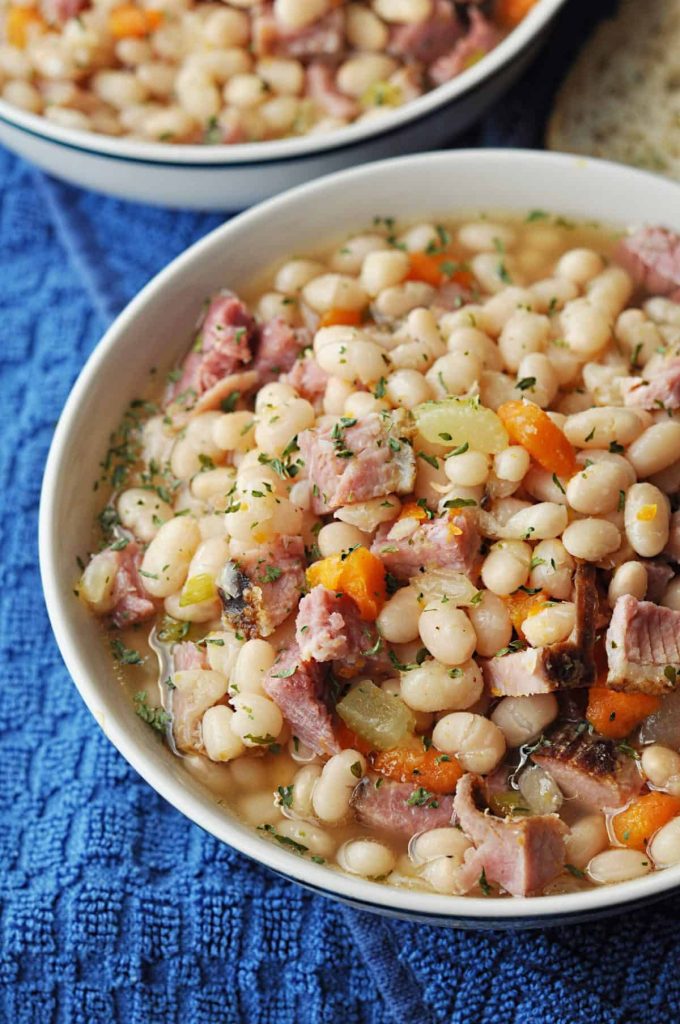
Step 1 — Soak the Dried Beans (If Using Dried)
If you are using dried beans, start this step the night before you plan to make the soup. Place the dried beans in a large bowl and cover with at least 3 times their volume in cold water. Let them soak at room temperature overnight or for at least 8 hours. The beans will absorb water and approximately double in size during soaking.
After soaking, drain the beans completely and rinse them thoroughly under cold running water. Discard the soaking water — it contains some of the compounds that can cause digestive discomfort and rinsing the soaked beans helps the soup be more easily digestible.
If you forgot to soak the beans overnight, you can do a quick soak — place the beans in a large pot, cover with plenty of cold water, bring to a boil and boil for 2 minutes, then remove from the heat and let them soak in the hot water for 1 hour. Drain, rinse, and use as directed.
Step 2 — Prepare the Ham
The preparation of the ham depends on which type you are using.
If using a ham bone, inspect it and trim away any very large pieces of fat if there are any. Leave all the remaining meat on the bone — this will fall off during the long cooking and add wonderful meaty pieces to the soup.
If using ham hocks, place them directly in the crockpot without any additional preparation.
If using diced smoked ham, taste a small piece to assess the saltiness. Very salty ham means you should be much more cautious about adding additional salt to the soup. Set the diced ham aside to add to the crockpot.
Step 3 — Build the Base in the Crockpot
Place the soaked and rinsed dried beans — or the drained and rinsed canned beans — in the bottom of the crockpot. Add the finely diced onion, diced celery, diced carrots, and minced garlic directly on top. These aromatics will cook down over the long cooking time and completely dissolve into the broth, adding sweetness, depth, and fragrance.
Add the tomato paste, Worcestershire sauce, dried thyme, dried rosemary, dried sage, smoked paprika, black pepper, red pepper flakes if using, and bay leaves. Stir everything together to distribute the seasonings and tomato paste evenly among the beans and vegetables.
Place the ham bone, ham hocks, or diced ham on top of everything. If using both a bone and diced ham, place the bone in the centre and scatter the diced ham around it.
Step 4 — Add the Liquid
Pour the chicken broth and water over everything in the crockpot. The liquid should come to about 2 centimetres below the top of the crockpot insert — do not overfill. Give everything a gentle stir to make sure the beans and vegetables are submerged in the liquid and the seasonings are distributed.
Do not add salt at this stage. Ham is already heavily seasoned and quite salty and the long cooking time will concentrate the flavours. Always taste and adjust the salt only near the end of the cooking time, after the soup has developed its full flavour.
Step 5 — Cook Low and Slow
Place the lid on the crockpot and set it to cook on LOW for 8 to 10 hours. This long, gentle cooking time is what develops the extraordinary depth of flavour and the perfectly creamy texture that makes this soup so special.
During the cooking time the ham bone or hocks will release their collagen and fat into the broth, making it silky and rich. The beans will soften completely and some will begin to dissolve, naturally thickening the soup. The aromatics will melt into the background, contributing sweetness and depth. The smoked ham flavour will permeate every drop of the broth and every bean in the pot.
If you are using the HIGH setting — which gives a good but less developed result than LOW — cook for 5 to 6 hours and check the beans for tenderness. With dried beans, always use LOW for the most reliable, most evenly cooked result.
Do not lift the lid during the cooking time unless necessary. Maintaining the temperature inside is essential for even cooking.
Step 6 — Finish the Soup
After 8 hours on LOW, lift the lid and assess the soup. The beans should be completely tender and creamy inside when pressed between your fingers. The ham meat should be falling off the bone if using a bone or hock.
If using a ham bone or hocks, carefully remove them from the crockpot using tongs and place on a cutting board. Let them cool for a few minutes until comfortable to handle. Remove all the meat from the bone or hocks — there will be more than you expect, tucked into all the crevices around the bone. Discard the bone and any cartilage. Shred or dice the meat into bite-sized pieces and return it to the soup. Discard the bay leaves.
If the soup seems too thin for your preference, use a potato masher to roughly mash some of the beans directly in the crockpot. Press down and mash about a quarter to a third of the beans — this releases their starch and creates an immediately thicker, creamier soup. Alternatively, ladle about 2 cups of the soup into a blender, blend until smooth, and stir the blended portion back into the crockpot. Either technique gives the soup a lovely body and creaminess.
If adding kale or spinach, add it now and stir it through. Replace the lid and cook for another 15 to 20 minutes on HIGH until the greens are tender and wilted.
Taste the soup very carefully and adjust the seasoning now. This is the first time you should add salt because you can now taste exactly what the soup needs after all the ham salt has dissolved into the broth. Add salt very carefully and in small amounts — a little goes a long way at this stage. Add a splash of apple cider vinegar if the soup seems to need brightness. Add the Dijon mustard if using — stir it through and it will add a wonderful subtle depth and complexity.
Taste again. The soup should be deeply smoky, rich, savoury, slightly creamy from the beans, fragrant with herbs, and completely, perfectly satisfying.
Step 7 — Serve
Ladle the hot soup generously into deep, wide bowls. Make sure every bowl has a good amount of ham pieces, whole beans, and vegetables. Scatter a generous amount of freshly chopped flat-leaf parsley over each bowl — the fresh herb adds colour, brightness, and a lovely fresh note that contrasts the smoky richness of the soup beautifully.
Add a crack of fresh black pepper over each bowl and a thin drizzle of good extra virgin olive oil. Serve immediately with crusty bread, warm cornbread, or warm dinner rolls alongside for dunking and mopping. Do not serve this soup without good bread — the bread is essential.
Helpful Cooking Tips for the Best Results
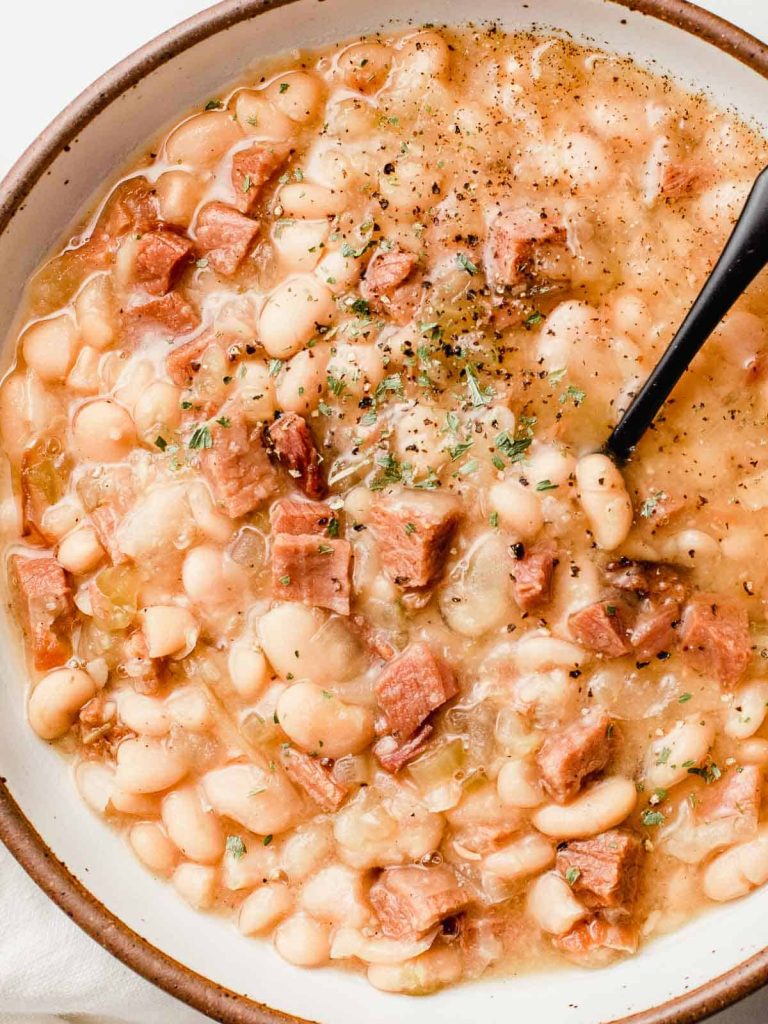
Use a ham bone whenever you have one available. A leftover ham bone produces a broth that is so deeply flavourful and silky from the collagen and marrow that it is genuinely in a different league from a soup made without a bone. If you roast a ham for any reason — whether for a holiday dinner or just a regular family meal — save the bone in the freezer specifically for this soup. The bone makes the soup exceptional.
Do not add salt until the very end. Ham is extremely salty and that salt dissolves into the broth during the long cooking time. Adding salt at the beginning almost guarantees an over-salted soup. Always taste and season only after the soup has fully developed, which is near the end of the cooking time.
Soak dried beans properly. Unsoaked or improperly soaked dried beans can remain hard in the centre even after hours of slow cooking, which is deeply disappointing. Always soak for the full overnight period and rinse thoroughly before using.
Mash some beans for a creamier texture. This is the simplest and most effective technique for creating a naturally creamy soup without any added cream. Mashing a quarter to a third of the beans releases their starch and immediately transforms the texture of the soup into something much more substantial and satisfying.
Add greens at the end. Kale, spinach, or Swiss chard added in the last 15 to 30 minutes of cooking stay vibrant and tender rather than becoming overcooked and khaki-coloured from hours in the crockpot.
Use smoked paprika even if you have a smoked ham. The smoked paprika in the broth adds a layer of smokiness that complements and deepens the smokiness from the ham and creates a more complex, rounded smoky flavour profile throughout the soup.
Taste after adding the apple cider vinegar. A splash of acid — apple cider vinegar, lemon juice, or white wine vinegar — added at the very end brightens all the deep, rich, slightly heavy flavours of the soup and makes everything taste more vivid and alive. Start with a teaspoon and taste — you may be surprised by how much difference this small addition makes.
Leave the soup slightly thinner than you want. This soup continues to thicken as it cools and as the beans continue to absorb liquid. A soup that is at the perfect consistency in the crockpot may be very thick by the time it reaches the table. Aim for slightly thinner than perfect in the pot and it will be perfect in the bowl.
Make a large batch. This soup doubles beautifully and keeps very well in both the fridge and freezer. Making a large batch means you have one of the most satisfying, most nourishing, most economical meals ready to go throughout the week.
Common Mistakes to Avoid
Adding salt at the beginning. This is the most common and most damaging mistake with ham-based soups. Ham is very heavily salted and adds enormous amounts of salt to the broth during cooking. Always hold all additional salt until the very end of the cooking time after tasting the finished soup.
Not soaking the dried beans. Unsoaked beans can remain firm or unevenly cooked even after many hours in the crockpot. They can also cause more digestive discomfort than properly soaked and rinsed beans. Always soak overnight and rinse thoroughly.
Using too much liquid. The beans release starch into the broth as they cook and the soup naturally thickens significantly over the cooking time. Starting with too much liquid results in a very thin soup at the end. Start with the amount specified and add more only if needed.
Discarding the ham bone liquid. Every drop of liquid in the crockpot at the end of cooking is extraordinary, deeply flavoured broth. Never discard it. If you have more liquid than soup, this is a wonderful problem — serve it as broth alongside or save it for another use.
Not removing the bay leaves before serving. Bay leaves remain tough and inedible even after hours of cooking. Always fish them out before serving.
Cooking on HIGH with dried beans. Dried beans can sometimes remain firm when cooked on the HIGH setting because the vigorous boiling temperature can actually toughen their outer skin in some cases. Always cook dried beans on LOW for the most reliably perfect, creamy result.
Skipping the fresh herbs at the end. Fresh parsley scattered generously over the finished soup makes a very noticeable difference. The bright, herbaceous freshness contrasts the rich, smoky, heavy broth in a way that makes the soup taste more complete and more balanced.
What to Serve With White Bean and Ham Soup
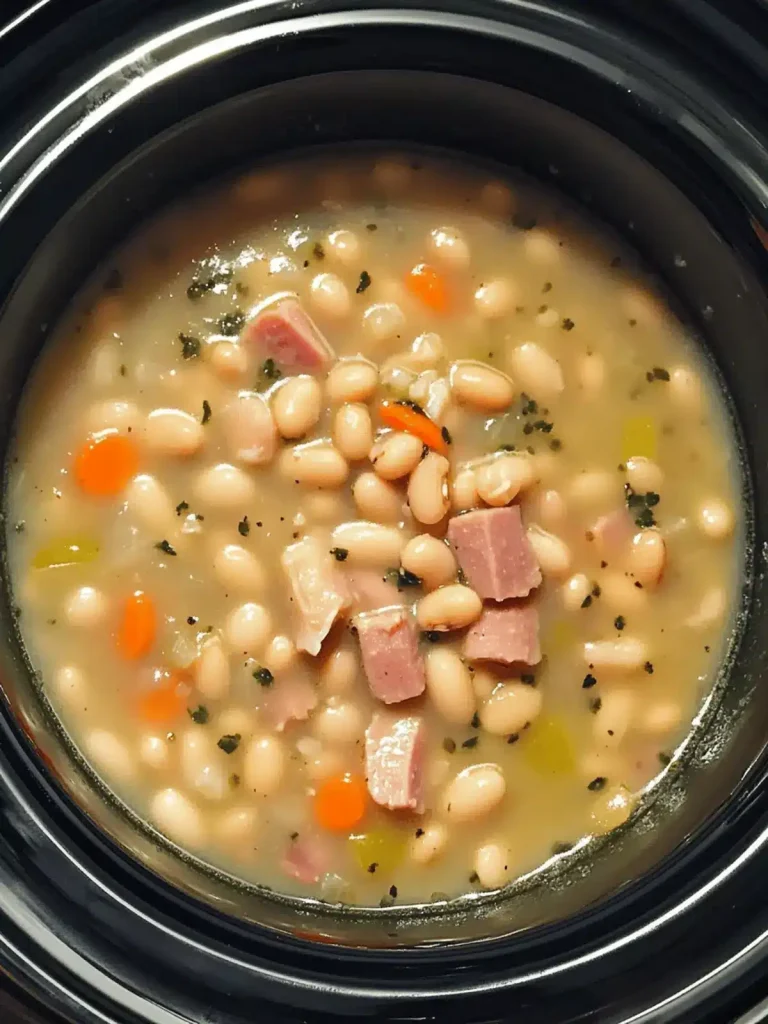
Crusty sourdough bread or a baguette is the most essential and most perfect accompaniment for this soup. Thick slices of good bread dunked into the rich, smoky broth or used to mop up the last drops from the bowl is one of the great simple pleasures of eating.
Warm cornbread — slightly sweet, crumbly, and golden — is a wonderful Southern-inspired pairing that pairs beautifully with the smoky, savoury flavours of the ham and bean soup.
Warm dinner rolls with butter are a comforting, crowd-pleasing accompaniment that makes the meal feel very generous and satisfying.
A simple green salad with a sharp vinaigrette provides a fresh, slightly acidic contrast to the rich, heavy soup and makes the meal feel more balanced and complete.
Grilled cheese sandwiches alongside this soup are one of the greatest simple meal combinations — the melted, toasty cheese and buttery bread against the smoky, creamy soup is pure comfort food heaven.
Sautéed greens — wilted kale or Swiss chard with garlic and olive oil — are a very natural accompaniment that echoes the flavours in the soup while adding freshness and nutrition.
Pickles or pickled vegetables on the side add a sharp, acidic contrast that cuts through the richness of the broth beautifully and refreshes the palate between spoonfuls.
How to Store Leftovers
In the fridge: Allow the soup to cool completely before transferring to airtight containers. Store in the refrigerator for up to 5 days. The soup will thicken significantly overnight as the beans continue to absorb liquid. To reheat, place in a pot over medium-low heat and add a splash of broth or water to loosen it back to the right consistency. Stir frequently as it heats. You can also reheat in the microwave covered in short intervals, stirring between each and adding liquid as needed. Taste and re-season after reheating — the flavours may need a touch more pepper or a squeeze of lemon juice to brighten after reheating.
In the freezer: White bean and ham soup freezes exceptionally well — it is genuinely one of the best soups to batch cook and freeze. Cool completely and portion into freezer-safe containers in meal-sized amounts. Label with the date and freeze for up to 3 months. Thaw overnight in the fridge before reheating gently on the stovetop with added broth to loosen. The soup may look slightly different after freezing — the beans may have broken down more — but the flavour will be just as wonderful.
Meal prep strategy: This is one of the absolute best recipes for meal prepping at the start of the week. Make a very large batch on Sunday, portion into individual containers, and you have one of the most nourishing, most satisfying, most economical lunches and dinners available throughout the week. It improves as it sits, making day-two and day-three soup arguably even better than it was freshly made.
Creative Ways to Use Leftover Soup
Thicken it into a dip: Blend the leftover soup until completely smooth using an immersion blender and serve it as a thick, smoky white bean dip with crusty bread, crackers, or vegetable sticks. Drizzle with olive oil and scatter with fresh herbs.
Use it as a pasta sauce: Blend part of the soup until smooth and toss it through cooked pasta with a drizzle of olive oil, a squeeze of lemon juice, and plenty of Parmesan. The smoky, creamy white bean sauce is extraordinary on pasta.
Make white bean and ham hash: Drain some of the leftover soup, roughly mash the beans and ham together, and fry in a pan with a little butter until crispy on the bottom. Serve with fried eggs on top for an extraordinary breakfast or brunch.
Stuff it into burritos: Use the drained beans and ham as a filling for flour tortillas with shredded cheese, sour cream, and salsa. The smoky ham and creamy beans make an extraordinary burrito filling.
Add more vegetables and make it into a stew: Return the leftover soup to a pot, add diced potatoes, chopped kale, and extra broth, and simmer until the potatoes are tender. Season with fresh herbs and serve as a hearty stew rather than a soup.
Variations You Can Try
Tuscan white bean and ham soup: Add a can of diced tomatoes, a Parmesan rind to the crockpot during cooking, and a generous amount of fresh basil stirred through at the end. Serve with a drizzle of very good olive oil and shaved Parmesan. This Italian-inspired version is extraordinary.
Spicy white bean and ham soup: Double the red pepper flakes, add a tablespoon of chipotle in adobo sauce to the broth, and use a spicy smoked sausage alongside the ham. The heat contrasts beautifully with the creamy beans and smoky ham.
White bean and sausage soup: Replace some or all of the ham with sliced smoked sausage — andouille, kielbasa, or Italian sausage. The sausage adds a different but equally wonderful smoky, savoury character to the soup.
Add potatoes: Dice 2 to 3 medium potatoes into large cubes and add them to the crockpot in the last 3 hours of cooking. They add heartiness and absorb the smoky ham flavour beautifully.
Lemon and herb version: Add the zest of 1 lemon to the broth and finish the soup with a generous squeeze of fresh lemon juice and extra fresh herbs — thyme, rosemary, and parsley. The bright, citrusy finish is a wonderful contrast to the smoky, rich broth.
Creamy version: Stir in half a cup of heavy cream or coconut cream in the last 30 minutes of cooking for a richer, more indulgent version of the soup.
Frequently Asked Questions
Can I make this recipe without soaking the dried beans overnight?
You can try but the results are less reliable. Unsoaked beans sometimes remain firm even after many hours in the crockpot. If you forgot to soak, do the quick-soak method — cover the beans with cold water in a large pot, bring to a boil, boil for 2 minutes, remove from heat, and soak for 1 hour. Drain, rinse, and use as directed. This is not as effective as overnight soaking but is much better than no soaking at all. Alternatively, switch to canned beans if you have no time to soak.
My soup turned out too salty. How do I fix it?
Over-salted soup from the ham is a common issue and there are several ways to address it. Adding more unsalted liquid — water or low-sodium broth — dilutes the saltiness while increasing the volume of soup. Adding more drained, rinsed canned beans dilutes the saltiness and adds more substance. Adding diced raw potatoes and cooking until tender draws some salt out of the broth — remove the potatoes before serving. A splash of apple cider vinegar or lemon juice can help balance saltiness by adding brightness. Going forward, always use low-sodium broth with salty ham and never add any additional salt until you have tasted the finished soup.
Can I use split peas instead of white beans?
Yes, split pea and ham soup is a different but equally wonderful classic made using the same basic technique. Split peas do not need soaking and break down completely during cooking into a thick, creamy, naturally pureed consistency that is very different from the bean version. If using split peas, rinse them thoroughly but do not soak, and add them directly to the crockpot. The resulting soup will be thick and uniform in texture rather than having distinct whole beans.
How do I make the soup thicker without blending?
The most effective technique is mashing some of the beans directly in the crockpot using a potato masher. Press down and mash about a quarter to a third of the beans — this releases their starch immediately and thickens the soup significantly. You can also remove a cup of beans, mash them in a small bowl, and stir the mashed beans back into the soup. Another option is to make a simple cornstarch slurry — 1 tablespoon of cornstarch mixed with 2 tablespoons of cold water — and stir it into the simmering soup, which will thicken it within 1 to 2 minutes.
Can I add other vegetables to this soup?
Absolutely, and this soup is very forgiving and adaptable. Root vegetables like parsnips, turnips, and sweet potatoes work beautifully and can be added at the beginning of cooking with the other vegetables. Diced potato added in the last 3 hours keeps its shape while absorbing all the smoky flavours. Leafy greens like kale, spinach, and Swiss chard should be added only in the last 15 to 30 minutes. Corn kernels — frozen or fresh — added in the last hour add a sweet, slightly chewy element that is very pleasant. Diced zucchini added in the last 2 hours is a lovely addition as well.
Conclusion
Crockpot White Bean and Ham Soup is the kind of recipe that makes you appreciate the slow cooker as one of the most wonderful kitchen tools ever invented. It is the kind of recipe that proves expensive, complicated, or time-intensive cooking is not necessary for food that is deeply, profoundly satisfying. And it is the kind of recipe that represents the very best of home cooking — resourceful, nourishing, economical, warming, and made with ingredients that are humble in price but extraordinary in flavour when treated with the right technique and given the time they deserve
What makes this soup so genuinely special is everything that happens during those long, quiet hours in the crockpot while you go about your day. The ham bone surrenders its collagen and marrow and meat into the broth, creating a richness and silkiness that no store-bought broth can replicate. The beans soften gradually from the outside in, absorbing the smoky ham flavour as they go, becoming perfectly creamy without losing their shape. The aromatics dissolve into the background, contributing sweetness and depth. The herbs infuse the broth with their fragrance. By the time you lift that lid, everything in the pot has given its very best to create something unified, complete, and extraordinarily satisfying.
Make this soup when you want to feed people in the most complete and generous way possible. Make it when you have a leftover ham bone and want to use every last bit of value from it. Make it for a cold winter evening when you want to come home to warmth and comfort waiting for you. Make it in a big batch and enjoy it all week in multiple wonderful forms. However and whenever you make it, this Crockpot White Bean and Ham Soup is going to be one of the most nourishing, most satisfying, and most deeply comforting recipes you have ever made. Happy cooking!