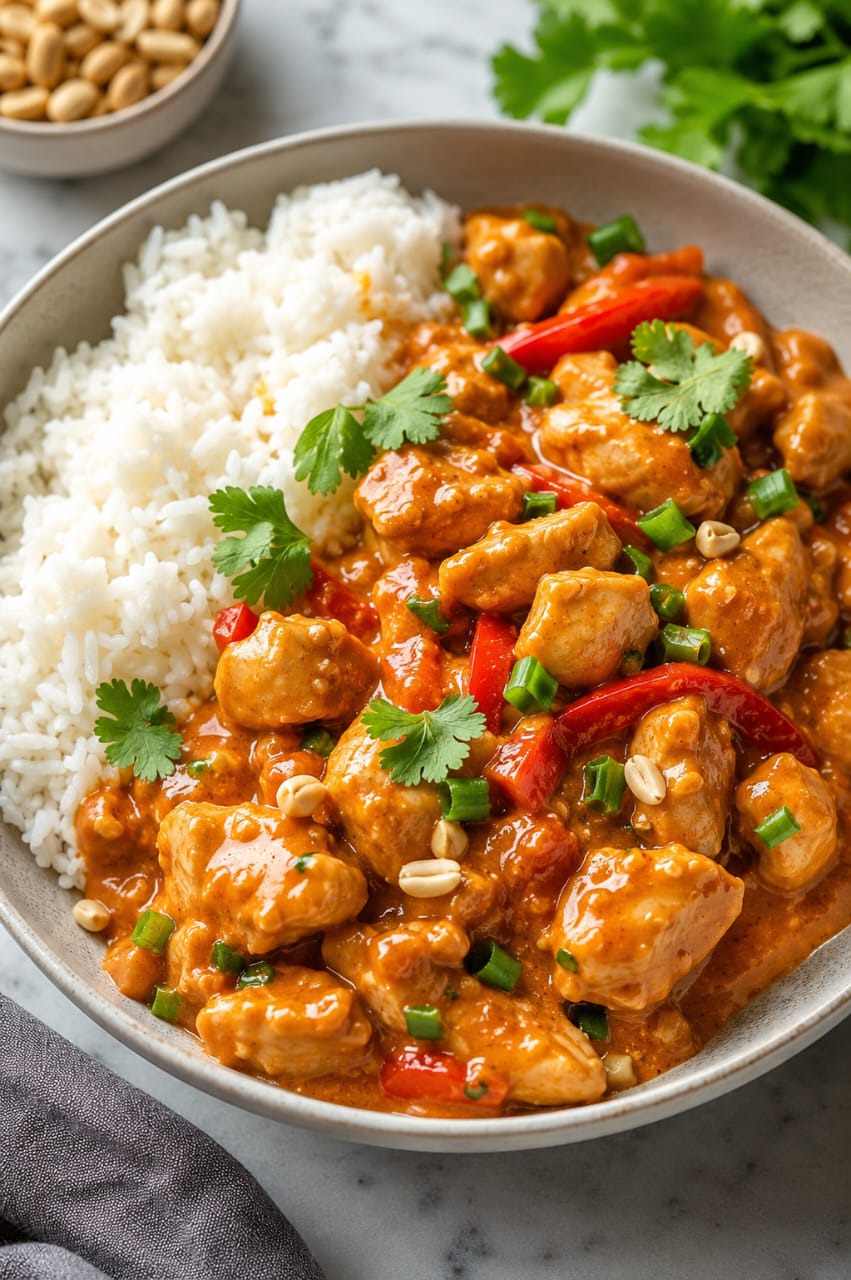
Welcome to another absolutely incredible recipe that is going to bring the bold, vibrant, deeply satisfying flavours of Thai cooking straight into your home kitchen tonight. If you love food that is rich, slightly spicy, beautifully aromatic, and packed with that unmistakable combination of sweet, salty, tangy, and nutty that makes Thai cuisine so universally beloved and so completely addictive, then today is going to be a very exciting cooking day for you. We are making Thai Peanut Chicken, and this dish is one of those recipes that tastes so good and comes together so beautifully that you will genuinely wonder why you ever ordered takeout when you could have been making this at home all along.
Thai Peanut Chicken is built around one of the most irresistible sauces in all of Asian cooking. A rich, creamy, deeply savoury peanut sauce made with coconut milk, peanut butter, garlic, ginger, lime, and Thai seasonings that coats every piece of tender, golden chicken in the most luxurious, flavour-packed way imaginable. The sauce is simultaneously rich and bright, sweet and salty, slightly spicy and deeply nutty, and it brings together all of those contrasting flavours in perfect harmony in a way that keeps every single bite interesting and keeps you coming back for more until the pan is completely empty.
In this article you will find the complete ingredient list, a clear step-by-step cooking guide, helpful tips to make it perfectly, storage advice, and answers to the most common questions about this dish. Let us get right into it.
Thai Peanut Chicken
What Makes This Recipe So Incredibly Good
The peanut sauce is the undeniable star of this recipe and it deserves to be talked about properly before we get into the cooking. A great Thai peanut sauce is not simply peanut butter thinned out with some liquid. It is a carefully balanced combination of flavours where each ingredient contributes something essential to the whole. The peanut butter brings richness, nuttiness, and body. The coconut milk adds creaminess and a subtle sweetness that softens the intensity of the peanut. The soy sauce and fish sauce together create a deeply savoury, slightly funky umami depth. The lime juice provides acidity and brightness. The honey or brown sugar balances everything with sweetness. The ginger and garlic add warmth and aromatic complexity. And the chili brings the heat that makes it genuinely exciting.
When all of these elements are combined in the right proportions and cooked together with golden, well-seasoned chicken, the result is a dish that is profoundly satisfying on every level. It is the kind of food that makes you genuinely happy while you are eating it, and that is a quality worth seeking out and holding onto.
Ingredients You Will Need
This recipe serves 4 people generously. Prepare everything before you start cooking as this dish comes together quickly once the heat is on.
For the Chicken:
- 700 grams or about 1 and a half pounds of boneless, skinless chicken thighs or chicken breasts, cut into bite-sized pieces
- 1 tablespoon of soy sauce
- 1 tablespoon of sesame oil
- 1 teaspoon of garlic powder
- 1 teaspoon of ground ginger
- Half a teaspoon of black pepper
- 1 tablespoon of vegetable oil or coconut oil for cooking
For the Thai Peanut Sauce:
- Three quarters of a cup or about 200 grams of natural smooth peanut butter, unsweetened
- 1 can of full-fat coconut milk, about 400 millilitres or 14 ounces
- 3 tablespoons of soy sauce or tamari for a gluten-free option
- 2 tablespoons of fish sauce, this is essential for authentic Thai flavour
- 2 tablespoons of fresh lime juice, from about 2 limes
- 2 tablespoons of honey or light brown sugar
- 4 garlic cloves, very finely minced or grated
- 1 tablespoon of fresh ginger, finely grated on a microplane
- 1 to 2 tablespoons of Thai red curry paste, depending on how much heat and depth you want
- 1 tablespoon of rice vinegar
- 1 teaspoon of sesame oil
- Half a teaspoon of red chili flakes or one fresh red chili, finely sliced, adjusted to your heat preference
For the Vegetables (Optional but Recommended):
- 1 red bell pepper, thinly sliced
- 1 medium zucchini or courgette, cut into half moons
- 1 cup of snap peas or snow peas
- 2 spring onions, sliced, white and green parts separated
For Serving and Garnish:
- Steamed jasmine rice or rice noodles
- A generous handful of roasted unsalted peanuts, roughly chopped
- Fresh cilantro leaves
- Sliced spring onions
- Fresh red chili slices
- Lime wedges for squeezing
- Toasted sesame seeds
- A drizzle of chili oil for heat lovers
Step-by-Step Cooking Method
Step 1: Marinate the Chicken
Place the chicken pieces in a bowl and add the soy sauce, sesame oil, garlic powder, ground ginger, and black pepper. Toss everything together until every piece of chicken is well coated in the marinade. Allow the chicken to marinate for a minimum of fifteen minutes at room temperature while you prepare the peanut sauce and any vegetables. If you have more time, marinate for thirty minutes to one hour in the refrigerator for a more deeply flavoured result. Even this brief marinating time makes a meaningful difference to the flavour of the chicken in the finished dish.
Step 2: Make the Thai Peanut Sauce
Making the sauce before cooking the chicken means it is ready to go the moment the chicken is done, which keeps the whole cooking process flowing smoothly and efficiently. In a medium bowl or large jug, combine the peanut butter, coconut milk, soy sauce, fish sauce, fresh lime juice, honey or brown sugar, minced garlic, grated ginger, Thai red curry paste, rice vinegar, sesame oil, and chili flakes or fresh chili. Whisk everything together vigorously until the sauce is completely smooth and all the ingredients are fully combined and well emulsified.
If the peanut butter is thick and resistant to mixing at room temperature, warm the sauce very briefly in the microwave for twenty to thirty seconds and then whisk again. The warmth loosens the peanut butter and makes it much easier to incorporate smoothly into the coconut milk.
Taste the sauce carefully and adjust the balance of flavours to your personal preference. This is the most important tasting moment in the entire recipe. The sauce should taste rich and nutty from the peanut butter, creamy from the coconut milk, salty and savoury from the soy sauce and fish sauce, tangy and bright from the lime juice and rice vinegar, sweet from the honey, and warm and slightly spicy from the curry paste and chili. If it needs more saltiness, add a little more soy sauce or fish sauce. If it needs more brightness, add extra lime juice. If it needs more sweetness, add a little more honey. If you want more heat, add more curry paste or chili. Set the sauce aside.
Step 3: Cook the Chicken
Heat the vegetable oil or coconut oil in a large, wide wok or deep skillet over medium-high heat until the oil is hot and shimmering. Add the marinated chicken pieces in a single layer, making sure not to overcrowd the pan. If your pan is not large enough to hold all the chicken without the pieces touching, cook the chicken in two batches. Overcrowding the pan causes the chicken to steam rather than sear, which means you miss out on the golden, caramelised surface that adds so much flavour to the finished dish.
Cook the chicken for about four to five minutes on the first side without moving it, allowing a deep golden, slightly caramelised crust to develop on the bottom of each piece. Flip each piece and cook for another three to four minutes on the second side until the chicken is golden on the outside and completely cooked through with no pink remaining at the centre. Remove the chicken from the pan and set it aside. Do not clean the pan as the caramelised bits left behind are packed with flavour that will enrich the sauce.
Step 4: Cook the Vegetables (If Using)
Return the pan to medium-high heat. Add the white parts of the spring onions and the sliced red bell pepper to the pan and cook for about two to three minutes, tossing frequently, until the pepper is slightly softened but still has a pleasant crunch. Add the zucchini and snap peas and cook for another one to two minutes until everything is just tender and bright in colour. The vegetables should be cooked through but still vibrant and with a slight bite remaining, not soft and collapsed. Remove the vegetables from the pan and set them aside with the cooked chicken.
Step 5: Build the Sauce in the Pan
Reduce the heat to medium and pour the prepared Thai peanut sauce into the same pan. As the sauce hits the warm pan and begins to heat through, stir it regularly and watch it carefully. The peanut butter and coconut milk in the sauce will begin to emulsify together and the sauce will thicken noticeably as it heats. Allow the sauce to come to a gentle simmer and cook for about three to four minutes, stirring frequently, until it has thickened slightly and the raw garlic and ginger in the sauce have cooked through and mellowed into a more rounded, less sharp flavour.
Do not allow the sauce to boil vigorously as this can cause the coconut milk to separate and leave you with a greasy, split sauce rather than a smooth, creamy one. A gentle simmer is all you need. If the sauce thickens too much during this stage and starts to look paste-like rather than saucy, add a small splash of coconut milk or water and stir it through to loosen it back to the right creamy, pourable consistency.
Step 6: Combine Everything
Return the cooked chicken and vegetables to the pan with the simmering peanut sauce. Toss everything together gently but thoroughly, making sure every piece of chicken and every vegetable is generously and evenly coated in the gorgeous, glossy peanut sauce. Allow everything to cook together in the sauce over medium heat for two to three minutes so the chicken and vegetables absorb some of the sauce and all the flavours come together completely and harmoniously.
Taste the finished dish one more time and make any final seasoning adjustments. Add a final squeeze of fresh lime juice over the entire pan just before serving. This last splash of lime brightens everything and brings all the flavours into sharp, vibrant focus in a way that makes the entire dish taste more alive and more complete.
Step 7: Serve Immediately
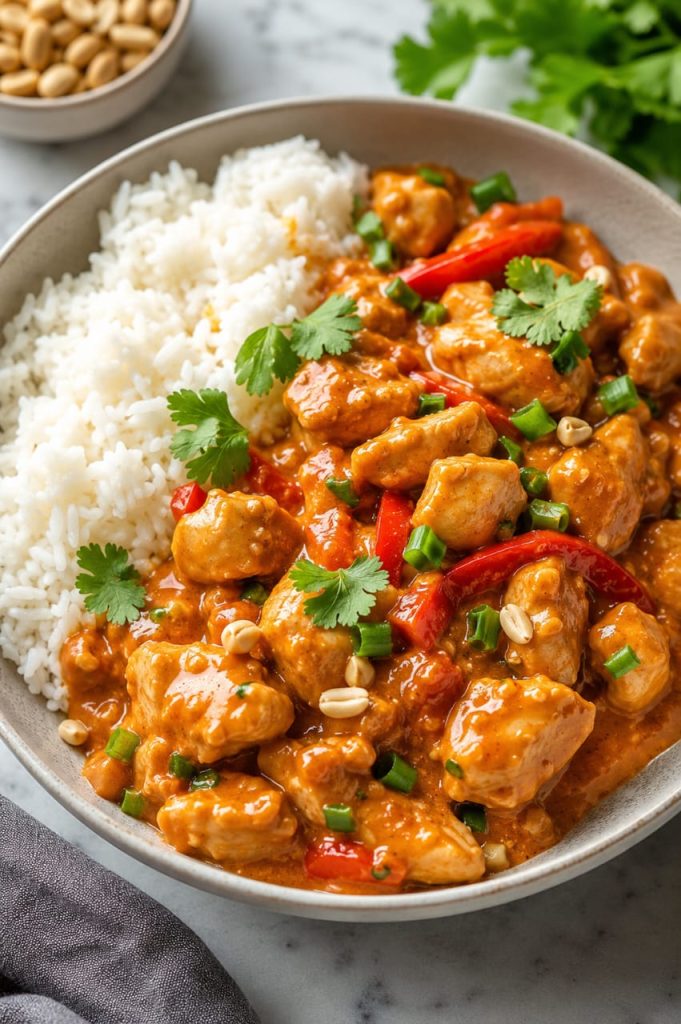
Serve the Thai Peanut Chicken immediately while the sauce is at its most glossy, creamy, and beautifully coating the chicken. Spoon it generously over steamed jasmine rice or toss it with cooked rice noodles for an equally wonderful but slightly different presentation. Scatter a generous handful of roughly chopped roasted peanuts over each portion for crunch and extra nutty flavour. Add fresh cilantro leaves, sliced spring onions, fresh red chili slices, and toasted sesame seeds. Serve with lime wedges on the side and a small drizzle of chili oil for those who want extra heat.
Helpful Tips to Make It Perfect Every Time
Use natural peanut butter. Natural unsweetened peanut butter, the kind made with just peanuts and salt, produces a much more authentic, more balanced, and more flavourful peanut sauce than sweetened, commercial peanut butter. Sweetened peanut butter makes the sauce overly sweet and can throw off the careful balance of flavours that makes a great Thai peanut sauce so special. Natural peanut butter gives you full control over the sweetness level through the honey or sugar you add separately.
Do not skip the fish sauce. Fish sauce is one of those ingredients that people sometimes hesitate to use because of its strong smell straight from the bottle. But once it is cooked into the sauce with all the other ingredients, it loses that pungent raw smell entirely and instead contributes an irreplaceable depth of savoury, slightly briny umami flavour that is absolutely central to the authentic Thai character of this dish. There is genuinely no substitute that produces the same result. If you are cooking for someone with a fish allergy or who does not eat fish, you can replace it with additional soy sauce plus a tiny splash of Worcestershire sauce, though the flavour will be noticeably different.
Use chicken thighs for the juiciest result. Boneless, skinless chicken thighs have more fat than chicken breasts and stay significantly juicier and more flavourful through the high heat cooking process and the time spent in the sauce. They are also more forgiving if cooked slightly longer than intended, which makes them the more reliable choice for a dish like this where you want the chicken to be perfectly tender and moist throughout. If you prefer chicken breasts, they work perfectly well but cook them carefully and do not overcook them as they can become dry and tough quickly.
Keep the sauce over gentle heat. The coconut milk in the peanut sauce is sensitive to high heat. If the sauce boils too aggressively, the fat in the coconut milk can separate from the liquid and leave the sauce looking greasy and broken rather than smooth and creamy. Always keep the heat at a moderate simmer when heating and cooking the sauce and you will maintain that gorgeous, glossy, emulsified consistency throughout.
Taste and adjust the sauce before cooking it. The Thai peanut sauce should taste bold and well-balanced when you make it in the bowl before it goes anywhere near the heat. Tasting it at this early stage gives you the opportunity to make adjustments with no time pressure, adding more lime for brightness, more soy for saltiness, more honey for sweetness, or more curry paste for heat until it tastes exactly right to you. Once it is in the pan and heating up, adjustments become more difficult to make precisely.
Use full-fat coconut milk. Full-fat coconut milk creates a sauce that is significantly richer, creamier, and more luxurious in texture than light coconut milk. It also emulsifies more stably with the peanut butter and is less likely to split when heated. For the best possible peanut sauce, always reach for the full-fat version.
Add fresh lime juice at the very end. Lime juice added during cooking loses most of its bright, fresh citrus character as the acids break down under heat. Adding a final squeeze of fresh lime right at the end of cooking preserves that brightness and gives the finished dish a vibrant, fresh quality that makes the peanut sauce taste less heavy and far more alive and exciting.
Storage Tips
Refrigerating: Store leftover Thai Peanut Chicken in an airtight container in the refrigerator for up to three days. The peanut sauce thickens significantly as it chills because of the peanut butter and coconut milk it contains. When reheating, add a small splash of coconut milk or water to the chicken and sauce before warming it gently in a pan over medium-low heat, stirring regularly until the sauce loosens back to its original creamy consistency and everything is heated through. Avoid high heat when reheating as it can cause the coconut milk to separate.
Freezing: Thai Peanut Chicken freezes reasonably well, though the texture of the sauce can change very slightly upon thawing as coconut milk-based sauces sometimes separate when frozen. Allow the dish to cool completely before transferring it to freezer-safe containers. Freeze for up to two months. Thaw overnight in the refrigerator and reheat gently in a pan over medium-low heat, adding a small splash of fresh coconut milk and stirring vigorously to bring the sauce back together if it has separated slightly.
Storing the peanut sauce separately: The Thai peanut sauce stores exceptionally well on its own in a sealed jar in the refrigerator for up to one week. It thickens considerably as it chills but loosens back to a pourable consistency when warmed gently or left at room temperature for fifteen minutes. Having a jar of this sauce ready in the fridge is one of the most useful things you can do for quick weeknight dinners. Use it as a dipping sauce for spring rolls or satay, as a dressing for a noodle salad, as a sauce for grilled meat or tofu, or to make fresh batches of this chicken dish in under twenty minutes.
What to Serve With Thai Peanut Chicken
This dish is versatile and pairs beautifully with a wide range of accompaniments:
- Steamed jasmine rice, the most classic and most satisfying pairing that allows every drop of that gorgeous peanut sauce to be scooped up and enjoyed completely
- Rice noodles tossed with a little sesame oil for a lighter, slightly different presentation that makes the dish feel more like a noodle bowl
- A simple Thai cucumber salad made with thinly sliced cucumber, rice vinegar, a little sugar, and fresh chili for a cool, refreshing contrast to the rich, nutty sauce
- Steamed or wok-fried Asian greens like bok choy, Chinese broccoli, or pak choi dressed with a little garlic and oyster sauce alongside
- Fresh Vietnamese-style summer rolls on the side as a light, fresh starter that complements the Thai flavours of the main dish beautifully
- A simple mango salad with lime dressing and fresh mint for a fruity, bright side that cuts through the richness of the peanut sauce with wonderful effect
Frequently Asked Questions
Can I make this recipe vegetarian or vegan?
Yes, absolutely. Replace the chicken with firm tofu pressed and cut into cubes, or use a combination of tofu and your favourite vegetables such as broccoli, bell peppers, and mushrooms. Replace the fish sauce with additional soy sauce plus a small piece of nori seaweed briefly soaked in warm water and then removed, which replicates some of the oceanic, briny depth of fish sauce without any fish. Use maple syrup instead of honey to keep the dish fully vegan. The resulting dish is genuinely delicious and satisfying as a plant-based version.
Can I use almond butter or another nut butter instead of peanut butter?
Yes. Almond butter makes a very good substitute and produces a sauce that is slightly milder and less intensely nutty than peanut butter but still beautifully creamy and flavourful. Cashew butter is another excellent option that creates an even creamier, slightly sweeter sauce that works wonderfully with the Thai seasonings. Sunflower seed butter is a nut-free alternative for anyone with peanut or tree nut allergies. Each substitute will change the character of the sauce slightly but all produce a genuinely delicious result.
My peanut sauce is too thick. How do I fix it?
Simply add a small splash of coconut milk, chicken broth, or warm water and stir or whisk it through until the sauce reaches your desired consistency. Add the liquid gradually, a little at a time, so you have full control over the final thickness. The sauce should be creamy and pourable enough to coat the chicken generously without being so thick that it clumps or so thin that it does not cling to the chicken at all.
How do I make this dish less spicy for children or people sensitive to heat?
Reduce or completely omit the red curry paste, chili flakes, and fresh chili from the sauce. The remaining ingredients in the peanut sauce, the peanut butter, coconut milk, soy sauce, fish sauce, lime, honey, garlic, and ginger, create a sauce that is deeply flavourful and satisfying without any heat at all. Serve chili oil or sliced fresh chili on the side at the table so adults who want heat can add it to their own portion without affecting anyone else’s.
Can I cook this recipe in a slow cooker?
Yes, with some adjustments. Place the marinated chicken pieces in the slow cooker and pour the peanut sauce over them. Cook on Low for four to five hours or on High for two to three hours until the chicken is very tender and cooked through. The sauce will be thinner after slow cooking because of the liquid released from the chicken. To thicken it, remove the chicken, stir a cornstarch slurry of one tablespoon of cornstarch mixed with two tablespoons of cold water into the sauce, switch to High, and cook uncovered for about fifteen to twenty minutes until the sauce thickens. Add the chicken back and serve. Skip the searing step when using the slow cooker method.
Final Thoughts
Thai Peanut Chicken is one of those recipes that becomes a fixture in your cooking life quickly and permanently, and it earns that place through sheer, unambiguous deliciousness. The peanut sauce is rich and creamy and nutty and bright and spicy and savoury all at once, and the way it coats every piece of tender, golden chicken in that gorgeous glossy coating makes every single forkful an experience that is deeply, completely satisfying in the most wonderful way.
What makes this recipe so reliable and so rewarding to make at home is how much of it can be prepared in advance and how flexible it is to personalise. Make the peanut sauce a week ahead. Marinate the chicken the night before. Add whatever vegetables you have available. Adjust the heat level to suit your table. Serve it over rice, over noodles, or even over a fresh salad. The dish accommodates all of these variations and always arrives at the table tasting extraordinary.
Whether you are making it for a weeknight dinner when you want something quick, deeply flavourful, and genuinely exciting, a meal prep session where you want a dish that stores well and tastes incredible reheated, or a dinner for friends where you want to serve something that feels impressive and restaurant-quality while being completely manageable at home, this Thai Peanut Chicken is going to exceed every expectation and earn enthusiastic praise from everyone at the table. Make it tonight, serve it generously over jasmine rice with all the garnishes, and enjoy every single rich, nutty, bright, deeply satisfying bite.