Hey there, welcome back to my blog! Today I am bringing you something that is going to add a whole lot of excitement and bold flavour to your kitchen. If you have ever eaten Korean food and found yourself completely obsessed with the flavours — that perfect balance of savoury, slightly sweet, nutty, and deeply umami — then today is your lucky day because we are making Korean Veggie Fried Rice right at home, and it is so much easier than you might think.
This is not your regular everyday fried rice. Korean fried rice has its own personality, its own unique flavour profile, and its own special set of ingredients that make it taste completely different from other fried rice dishes you may have tried before. It is bold, it is satisfying, it is packed with vegetables, and every single bite is loaded with that incredible Korean-inspired flavour that keeps you going back for more.
The best part about this recipe is that it is made entirely with vegetables, which means it is naturally vegetarian, very affordable, and incredibly easy to throw together especially if you have leftover rice sitting in your fridge. In fact, day-old rice is actually the secret to perfect fried rice — and we are going to talk about exactly why that is in just a moment.
Whether you are making this as a main meal, a side dish, or a quick weeknight dinner when you want something fast and flavourful, this recipe is going to completely deliver. Let us get into every detail you need to make this dish perfectly.
What Is Korean Veggie Fried Rice?
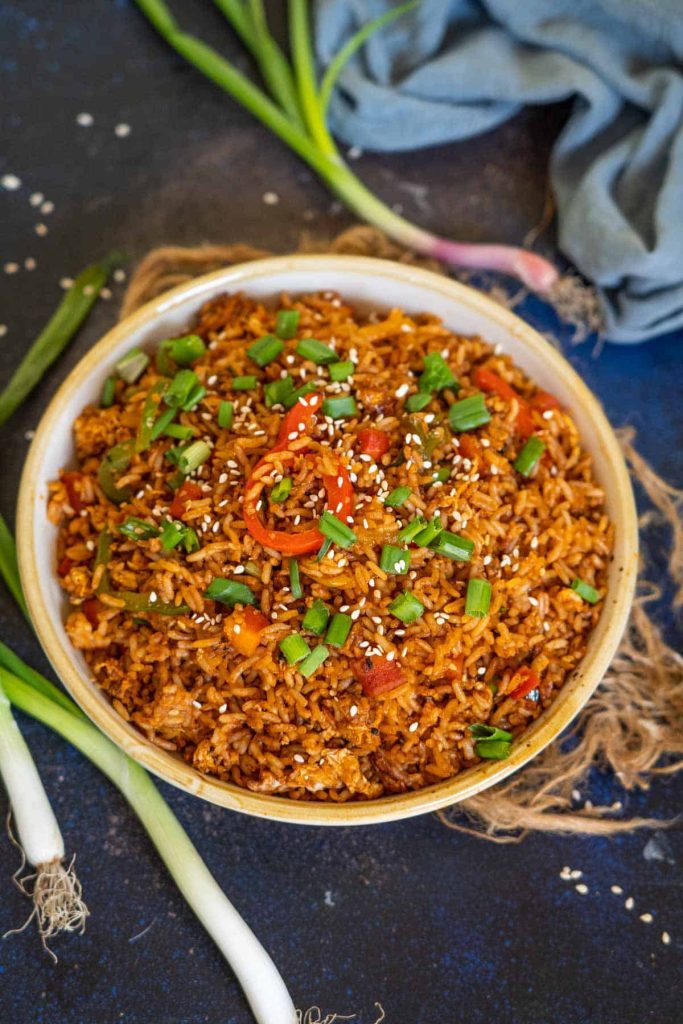
Korean veggie fried rice is a plant-based version of a beloved Korean comfort food dish. In Korean cuisine, fried rice is known as “Bokkeumbap” — which simply means stir-fried rice. It is a dish that has been made in Korean homes for generations, typically as a way to use up leftover rice and whatever vegetables and ingredients are available in the fridge. It is humble, homey, deeply flavourful, and absolutely delicious.
What sets Korean fried rice apart from other versions is the flavour profile. While Chinese fried rice relies heavily on soy sauce and sesame oil, Korean fried rice brings in additional flavours through ingredients like gochujang — a Korean fermented red chilli paste that adds heat, depth, and a subtle sweetness — as well as gochugaru which is Korean red pepper flakes, doenjang which is a fermented soybean paste, and sesame oil which is used generously and adds a wonderfully nutty, aromatic quality to the whole dish.
The vegetables are stir-fried at high heat, which gives them a slight char and a beautifully smoky quality. The rice gets tossed through everything and picks up all those incredible flavours. And the finishing touches — a fried egg on top, a sprinkle of sesame seeds, and sliced green onions — make this dish look and taste absolutely spectacular.
The Secret to Perfect Fried Rice — Day-Old Rice
Before we get into the ingredients and cooking method, we need to talk about the most important element of any great fried rice — the rice itself. And the secret is this: always use day-old rice that has been sitting in the fridge overnight.
Here is why. When rice is freshly cooked, it is full of moisture and the grains stick together easily. If you try to fry fresh rice, it clumps up in the pan, turns mushy, and does not fry properly. The result is a wet, soft, sticky mass rather than the distinct, separate, slightly crispy grains of rice you want in a great fried rice.
When rice has been refrigerated overnight, the moisture evaporates and the grains dry out and firm up. When these dry, cold grains hit a very hot pan, they fry beautifully — each grain stays separate, develops a little toasty flavour on the outside, and absorbs the sauce and seasonings without becoming mushy.
If you do not have leftover rice, cook a fresh batch earlier in the day and spread it out on a baking tray to cool and dry before using. You can also put it in the fridge uncovered for an hour or two to dry it out faster. It is not quite as good as overnight rice but it is much better than using rice that was just cooked.
Short grain white rice is the most authentic choice for Korean fried rice. It has a slight stickiness when cooked that gives the dish a characteristic texture. Medium grain or long grain rice both work as well and give a slightly less sticky, more separate result.
Ingredients You Will Need
For the rice:
- 3 cups of cooked, day-old short grain white rice (cold from the fridge)
- 2 tablespoons of vegetable oil or neutral oil (for frying — do not use olive oil as it has too strong a flavour)
- 1 tablespoon of sesame oil (added at the end for flavour)
For the vegetables:
- 1 medium carrot (peeled and finely diced or julienned into thin matchsticks)
- 1 medium zucchini (finely diced)
- 1 cup of frozen corn kernels (thawed) or fresh corn cut from the cob
- 1 cup of frozen peas (thawed)
- 1 medium onion (finely diced)
- 4 spring onions or green onions (sliced — keep the white and green parts separate)
- 3 cloves of garlic (minced)
- 1 teaspoon of fresh ginger (grated)
- Half a cup of kimchi (chopped — optional but highly recommended for authentic Korean flavour)
- 1 cup of bean sprouts
For the Korean seasoning sauce:
- 2 tablespoons of soy sauce (or tamari for a gluten-free version)
- 1 tablespoon of gochujang (Korean red chilli paste — adjust to your heat preference)
- 1 teaspoon of gochugaru (Korean red pepper flakes — optional but adds authentic flavour)
- 1 tablespoon of oyster sauce (use mushroom sauce for a fully vegetarian version)
- 1 teaspoon of sugar or honey
- 1 tablespoon of sesame oil
- Half a teaspoon of black pepper
For topping and garnish:
- 2 to 4 fried eggs (one per serving — the runny yolk mixed into the rice is absolutely incredible)
- 2 tablespoons of sesame seeds (toasted)
- Sliced green onions
- A drizzle of extra sesame oil
- Nori strips or crumbled seaweed snacks (optional but adds a lovely Korean touch)
- Extra gochujang on the side for those who like more heat
Step-by-Step Cooking Method
Here are the best ways to prepare this delicacy.
Step 1 — Make the Seasoning Sauce
Before anything goes near the pan, mix your seasoning sauce together in a small bowl. Combine the soy sauce, gochujang, gochugaru if you are using it, oyster sauce or mushroom sauce, sugar or honey, sesame oil, and black pepper. Whisk everything together until the gochujang is fully dissolved and the sauce is smooth and well combined.
Taste the sauce. It should be deeply savoury, slightly spicy, a little sweet, and very bold. This sauce is what flavours everything in the dish so get it right at this stage. If it is too spicy for your preference, reduce the gochujang. If you want more heat, add a little more. Set the sauce aside within easy reach of your stove.
Step 2 — Prepare All Your Vegetables
Chop and prepare all your vegetables before you start cooking. Korean fried rice is cooked over very high heat and things move very fast once the pan is hot. There is no time to stop and chop something while the food is cooking. Have your diced carrot, diced zucchini, thawed corn and peas, diced onion, minced garlic, grated ginger, chopped kimchi if using, bean sprouts, and sliced green onions all ready and within arm’s reach of the stove.
Separate the white parts of the green onions from the green parts and keep them in two separate little piles. The white parts go in early with the vegetables because they take a little longer to cook. The green parts go on as a garnish at the very end because they are more delicate and are best used fresh.
Step 3 — Heat the Pan Properly
This step is absolutely critical for great fried rice and it is where many people go wrong. Place your largest pan or wok over the highest heat your stove can produce and let it heat up for a full 2 to 3 minutes before adding any oil. You want the pan to be genuinely, properly hot — almost smoking — before anything goes in.
A properly preheated pan is what gives fried rice that signature slightly smoky, toasty quality known as “wok hei” in Asian cooking. Wok hei refers to the breath of the wok — the slightly charred, smoky, complex flavour that comes from cooking food in a screaming hot pan at very high temperatures. You cannot achieve this with a lukewarm pan. High heat is non-negotiable for good fried rice.
If you have a wok, this is the ideal time to use it. The curved sides of a wok allow you to toss the ingredients easily and the shape distributes heat in a way that is perfect for stir-frying. If you do not have a wok, a very large, heavy-bottomed frying pan works well too. Just make sure it is large enough to hold everything comfortably without overcrowding.
Step 4 — Cook the Vegetables
Once the pan is smoking hot, add the vegetable oil. Swirl it around to coat the surface, then immediately add the diced onion and the white parts of the green onion. Stir-fry them over high heat for about 1 to 2 minutes, tossing constantly. They will soften quickly in the high heat and start to pick up a little colour at the edges.
Add the diced carrot next and stir-fry for another 2 minutes. Carrots are the firmest vegetable in this recipe and they need the most time to cook, which is why they go in before the more delicate vegetables.
Add the minced garlic and grated ginger, stir everything together immediately and cook for about 30 seconds, tossing constantly. Garlic and ginger cook very quickly at high heat and can burn in seconds, so keep things moving.
Add the diced zucchini and stir-fry for 1 to 2 minutes until it just starts to soften. Then add the corn, peas, and bean sprouts. Toss everything together and cook for another 1 to 2 minutes. Everything should be cooked but still have a slight bite and freshness to it — you do not want mushy, overcooked vegetables in fried rice. The vegetables should be vibrant, slightly charred at the edges, and full of life.
If you are using kimchi, add it now and stir it through the vegetables. Let it cook for about 1 minute so the kimchi juices begin to caramelise slightly in the hot pan. This adds an incredible depth of flavour to the dish.
Step 5 — Add the Rice
Add your cold, day-old rice to the pan and immediately start breaking it up and tossing it through the vegetables. Use the back of your spatula or spoon to press down and break apart any clumps of rice, then toss everything together so the rice is evenly distributed among the vegetables.
Spread the rice out into an even layer across the bottom of the pan and let it sit without stirring for about 1 to 2 minutes. This is what gives the rice those lovely slightly toasted, crispy bits on the bottom that make fried rice so texturally satisfying. Once you hear and see the rice starting to sizzle and toast, toss everything together and spread it out again. Repeat this process two or three times.
The rice should be piping hot all the way through, slightly toasted on some of the grains, and well mixed with all the vegetables.
Step 6 — Add the Seasoning Sauce
Pour the seasoning sauce evenly over the rice and vegetables. Toss everything together very well so that every grain of rice and every piece of vegetable is coated in the sauce. The sauce will sizzle as it hits the hot pan and the sugars in it will start to caramelise slightly, adding more depth and complexity to the flavour.
Keep tossing and stirring for about 1 to 2 minutes until the sauce is evenly distributed and the rice takes on a beautiful reddish-brown colour from the gochujang. Taste the rice at this point and adjust the seasoning. Add a splash more soy sauce if it needs more saltiness. Add a tiny bit more sugar if it needs more balance. Add more gochujang if you want more heat.
Step 7 — Finish With Sesame Oil
Take the pan off the heat and drizzle the sesame oil over the rice. Toss everything together one final time. The sesame oil should always go in at the very end, off the heat, because its delicate nutty aroma evaporates quickly at high temperatures. Adding it at the end means you get the full benefit of that wonderful sesame fragrance and flavour in every bite.
Step 8 — Fry the Eggs and Serve
While the fried rice is resting, fry your eggs in a separate small pan with a tiny drizzle of oil. For Korean fried rice, the egg is traditionally fried sunny side up with the white set and the yolk still runny. The runny yolk is not just for show — when you break it over the hot rice and mix it through, it adds a rich, creamy coating to everything that is absolutely incredible and completely transforms the eating experience.
Spoon the fried rice into bowls, place a fried egg on top of each bowl, sprinkle with toasted sesame seeds, sliced green onion tops, and a few strips of nori or crumbled seaweed if you have it. Add an extra little dab of gochujang on the side for anyone who wants more heat. Drizzle a few drops of extra sesame oil over the top and serve immediately.
Helpful Cooking Tips for the Best Results
Always use day-old rice. I said it before and I am saying it again because it is that important. Fresh rice makes soggy, clumpy fried rice. Cold, day-old rice from the fridge makes perfect, separate, slightly crispy fried rice. Plan ahead and cook your rice the day before, or at the very minimum a few hours before you plan to make this dish.
Use the highest heat your stove can produce. Korean fried rice is a high-heat dish. The high heat is what gives the ingredients that slightly charred, smoky, toasty quality that makes fried rice taste so distinctive and so good. Do not be timid with the heat. Get that pan as hot as it can possibly go before you add anything to it.
Do not overcrowd the pan. If your pan is too small for the amount of rice and vegetables, cook in batches. Overcrowding brings the temperature of the pan down and causes everything to steam instead of fry, which leads to soggy, pale, disappointing fried rice. You want everything sizzling and slightly charring, not steaming.
Keep everything moving. Fried rice is a constant motion dish. You are tossing, stirring, and folding continuously throughout the cooking process. This prevents burning, ensures even cooking, and helps develop that wonderful toasty flavour on all sides of every grain of rice.
Do not let the garlic and ginger sit still. Garlic and ginger burn extremely quickly at the high heat you are cooking at. The moment they go into the pan, stir them immediately and keep them moving. Thirty seconds is all they need to become fragrant and cooked. Any longer and they will burn.
Season the sauce before cooking, not during. The cooking process moves so fast that there is no time to be carefully measuring and tasting sauces while everything is in the hot pan. Make the sauce in advance, taste it, get it right, and have it ready to pour in as soon as you need it.
Add sesame oil at the very end. Sesame oil has a low smoke point and its delicate, nutty aroma is very volatile — meaning it evaporates quickly when exposed to high heat. If you add it at the beginning of cooking, by the time the dish is ready you will have lost most of that wonderful sesame flavour. Always add sesame oil as a finishing touch, off the heat.
Use a neutral oil for frying. Vegetable oil, sunflower oil, canola oil, or avocado oil all work perfectly for frying the rice and vegetables at high heat. Do not use olive oil — it has too strong a flavour and a lower smoke point that makes it unsuitable for the high heat required for fried rice.
What Is Gochujang and Where Can You Find It?
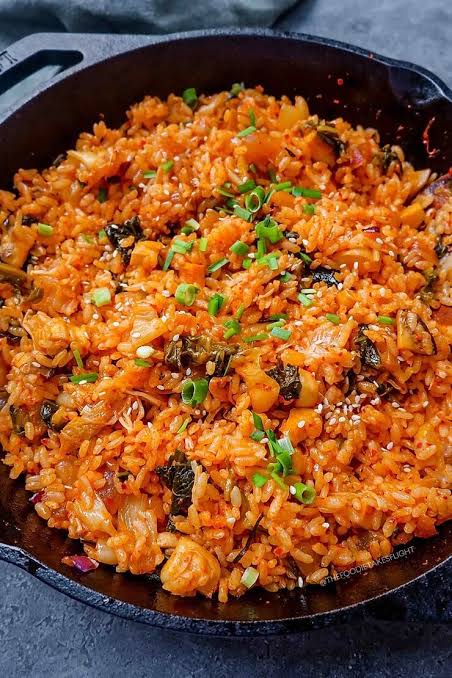
Source: THEFOODIERAKESFLIGHT
Since gochujang is one of the key ingredients that gives this dish its authentic Korean character, it is worth taking a moment to explain what it is in case you have never used it before.
Gochujang is a Korean fermented red chilli paste that has been a staple of Korean cooking for centuries. It is made from red chilli peppers, glutinous rice, fermented soybeans, and salt. The fermentation process gives it a depth and complexity that goes far beyond simple chilli heat — it is simultaneously spicy, sweet, salty, and deeply savoury all at once.
It comes in a bright red paste form and is sold in small tubs or tubes. You can find it in most Asian grocery stores, in the international foods section of many large supermarkets, or online. It keeps in the fridge for a very long time — months, even up to a year — after opening, so it is a very worthwhile ingredient to have on hand.
Different brands vary in their level of heat, so if you are trying gochujang for the first time, start with a smaller amount than the recipe calls for and taste as you go. You can always add more but you cannot take it out once it is in.
If you genuinely cannot find gochujang, you can substitute it with a mixture of sriracha and a tiny bit of miso paste, or a combination of chilli paste and a pinch of sugar. The flavour will not be exactly the same but it will still give the dish heat and depth.
What to Serve With Korean Veggie Fried Rice
Korean veggie fried rice is a very complete and satisfying meal on its own, especially with the fried egg on top. But here are some wonderful things to serve alongside it if you want to make a bigger spread.
Korean cucumber salad — thinly sliced cucumbers dressed with rice vinegar, sesame oil, gochugaru, garlic, and a pinch of sugar — is a wonderfully refreshing side dish that contrasts the richness of the fried rice with cool, crisp, tangy freshness.
Miso soup is a simple, warming, deeply savoury broth that pairs beautifully with Korean and Japanese-inspired rice dishes. It is quick to make and adds a wonderful comforting element to the meal.
Steamed edamame lightly salted is a simple, protein-rich side that complements the flavours of the fried rice without competing with them.
Kimchi served on the side is a very traditional Korean accompaniment. The fermented, spicy, tangy kimchi contrasts wonderfully with the rice and adds even more bold Korean flavour to the meal.
Korean corn cheese — corn kernels mixed with mayonnaise and topped with melted cheese — is a popular Korean snack that makes a fun and indulgent side dish alongside fried rice.
A simple seaweed salad dressed in sesame oil and rice vinegar adds a fresh, oceanic flavour that is very characteristic of Korean cuisine and pairs naturally with sesame-flavoured fried rice.
Tofu — either pan-fried until crispy on the outside or soft silken tofu in a simple sauce — is a great protein addition for anyone who wants to make the meal more filling and nutritious.
How to Store Leftovers
In the fridge: Allow the fried rice to cool completely before transferring to an airtight container. Store in the refrigerator for up to 3 to 4 days. To reheat, place the rice in a hot pan with a tiny drizzle of oil and stir-fry it over medium-high heat for a few minutes until piping hot. Adding a few drops of soy sauce and sesame oil as you reheat it refreshes the flavour beautifully. You can also reheat in the microwave — cover the container and heat in 1-minute intervals, stirring in between. Fried rice actually reheats very well and tastes almost as good the next day as it did when it was first made.
In the freezer: Korean veggie fried rice freezes well. Cool it completely, portion it into freezer-safe containers or zip-lock bags, and freeze for up to 2 months. Thaw overnight in the fridge before reheating in a hot pan with a little oil. Store the fried egg separately and make a fresh one when you are ready to eat — eggs do not freeze or reheat well.
Meal prep tip: This recipe is perfect for meal prepping. Make a big batch at the beginning of the week, portion it into individual containers, and have ready-made lunches or dinners throughout the week. Just make the fried eggs fresh each time you eat — they take only 2 minutes and make such a huge difference to the whole dish.
Variations You Can Try
Kimchi fried rice version: Double the amount of kimchi and add a tablespoon of the kimchi juice — the liquid from the kimchi jar — along with the seasoning sauce. Kimchi juice is incredibly flavourful and adds a wonderful tang and depth to the dish. This version is particularly popular in Korea and is known as Kimchi Bokkeumbap.
Add tofu for extra protein: Press a block of firm tofu to remove the excess water, cut it into small cubes, and pan-fry it in oil until golden and crispy on all sides before starting the rest of the recipe. Remove the tofu, cook everything else as normal, and add the crispy tofu back in when you add the rice. It adds wonderful texture and protein.
Spicy version: Add extra gochujang, extra gochugaru, and a drizzle of chilli oil over the finished dish. For real heat lovers, add thinly sliced fresh chillies to the pan with the vegetables.
Soy butter fried rice: Replace the gochujang in the sauce with an extra tablespoon of soy sauce and add an extra tablespoon of butter along with the sesame oil at the end. This creates a more mild, buttery, deeply savoury version that is less spicy but equally delicious and deeply satisfying.
Add mushrooms: Thinly sliced shiitake mushrooms or oyster mushrooms added to the pan with the carrots add a wonderful earthy, meaty flavour that makes the dish feel even more substantial and deeply satisfying.
Frequently Asked Questions
Can I use freshly cooked rice instead of day-old rice?
You can, but the result will not be as good as using day-old rice. Freshly cooked rice has too much moisture in it and tends to clump and become mushy when stir-fried. If you have no choice but to use freshly cooked rice, spread it out on a large baking tray immediately after cooking and let it cool and dry out at room temperature for at least 30 minutes, or put it in the fridge uncovered for an hour. This helps remove some of the moisture and will give you a better result than using it straight out of the pot.
Is gochujang very spicy? Can I reduce it or leave it out?
Gochujang does have heat but it is a complex, layered kind of heat rather than a blasting, immediate one. The level of spiciness varies by brand — some are milder and some are quite hot. If you are sensitive to spice, start with half a tablespoon instead of a full tablespoon and taste as you go. You can also balance the heat by adding a little more sugar or honey to the sauce. If you want to leave it out entirely, you can replace it with a mild chilli sauce or tomato paste mixed with a pinch of cayenne for some colour and a little warmth, though the dish will taste less authentically Korean without it.
What is the best type of pan to use for fried rice?
A wok is the ideal vessel for making fried rice. Its shape, material, and the way it distributes heat at high temperatures makes it perfect for stir-frying. A large, well-seasoned cast iron pan is the next best option. A large, heavy stainless steel pan also works well. Avoid using a non-stick pan for fried rice — most non-stick pans are not designed for the very high heat that fried rice requires and the coating can be damaged or release harmful fumes when heated above certain temperatures.
Can I make this recipe completely vegan?
Yes, very easily. The only ingredients that are not vegan as written are the fried egg topping and the oyster sauce in the seasoning. Simply skip the fried egg or replace it with scrambled or pan-fried tofu seasoned with a pinch of turmeric and black salt for a similar flavour. Replace the oyster sauce with mushroom sauce or an extra splash of soy sauce. Everything else in the recipe is already completely plant-based.
Can I add egg directly into the fried rice instead of on top?
Absolutely. Many versions of Korean fried rice incorporate scrambled egg directly into the dish rather than serving it as a topping. To do this, push all the rice and vegetables to one side of the pan, add a tiny drizzle of oil to the empty side, crack in 2 eggs, and scramble them quickly with your spatula until just set but still slightly soft. Then fold everything together so the scrambled egg is mixed through the rice. This is a slightly different result from the fried egg on top but equally delicious in its own way.
Final Thoughts
Korean Veggie Fried Rice is one of those dishes that proves beyond any doubt that plant-based cooking can be just as bold, just as satisfying, and just as deeply flavourful as any meat-based dish. This recipe takes a handful of simple vegetables and everyday pantry ingredients and transforms them — through the magic of high heat, the right seasonings, and a few key Korean flavour elements — into something that is genuinely spectacular.
What makes this dish so special is the layering of flavour at every single step. The garlic and ginger bloomed in hot oil at the beginning. The vegetables charred and fragrant from the high heat. The kimchi adding its unique, fermented depth. The gochujang bringing that beautiful, complex, sweet and spicy Korean heat. The rice toasting in the pan and picking up all those incredible flavours. The sesame oil adding its nutty, aromatic warmth at the very end. And then that fried egg on top — broken open and mixed through the hot rice — adding a rich, silky, creamy element that ties absolutely everything together.
This is the kind of recipe you make once and immediately want to make again. It is fast, affordable, endlessly flexible, and the flavours are so bold and so satisfying that it genuinely never gets boring no matter how many times you eat it. Keep a tub of gochujang in your fridge, make sure you always have a portion of leftover rice available, and you will always be just 20 minutes away from one of the most delicious and satisfying meals you can possibly make. Happy cooking!