 Kiekie Folashade
Good morning, sunshine! Or maybe it is afternoon wherever you are reading this — either way, welcome! Today I am sharing a recipe that is going to completely change the way you think about scrambled eggs. I know what you might be thinking — scrambled eggs are just scrambled eggs, right? Wrong. When you add sautéed mushrooms, fresh wilted spinach, and a handful of simple seasonings to the mix, scrambled eggs go from being a basic breakfast to being a full, satisfying, deeply flavourful meal that you will genuinely look forward to making every single morning.
Mushroom Spinach Scrambled Eggs is the kind of recipe that works at any time of the day. It is perfect for breakfast when you want something warm and filling to start your morning right. It is wonderful for brunch when you want to impress without spending hours in the kitchen. It works beautifully for a quick lunch or even a light dinner when you want something nutritious, easy, and delicious without a lot of fuss.
The best part? This whole dish comes together in about 15 minutes from start to finish. You do not need any special equipment, you do not need expensive ingredients, and you do not need any advanced cooking skills. What you do need is a good pan, a few simple ingredients, and the tips in this article that will help you make the most perfect, creamy, flavourful scrambled eggs you have ever tasted.
So whether you are a seasoned cook or someone who is just learning their way around the kitchen, this recipe is made for you. Let us get right into it.
What Makes This Recipe So Special?

Scrambled eggs are one of the most cooked foods in the entire world, but they are also one of the most commonly cooked incorrectly. Most people cook their scrambled eggs too fast, on heat that is too high, and end up with dry, rubbery, flavourless eggs that are barely worth eating. The difference between those eggs and truly great scrambled eggs is technique — and once you learn the right technique, you will never go back.
Adding mushrooms and spinach to scrambled eggs is a move that does several things at once. The mushrooms bring an earthy, savoury, almost meaty quality to the eggs that makes the dish feel much more substantial. The spinach adds freshness, colour, and nutrition that transforms the dish from a simple egg recipe into a genuinely well-rounded meal. Together with perfectly cooked, soft and creamy scrambled eggs, the result is a breakfast that is not only delicious but also genuinely good for your body.
This is also a very flexible recipe. You can keep it simple and minimal, or you can dress it up with cheese, herbs, hot sauce, or extra vegetables depending on what you have available and what you are in the mood for.
Ingredients You Will Need
Everything on this list is simple, affordable, and very easy to find.
For the scrambled eggs:
- 4 large eggs
- 2 tablespoons of whole milk or heavy cream
- A pinch of salt
- A pinch of black pepper
- 1 tablespoon of butter (for cooking the eggs)
For the mushrooms and spinach:
- 150 grams of mushrooms (button mushrooms, cremini, or baby bella — sliced)
- 2 large handfuls of fresh baby spinach (or regular spinach with tough stems removed)
- 2 cloves of garlic (minced)
- 1 tablespoon of butter or olive oil (for cooking the vegetables)
- Salt and black pepper to taste
- A pinch of red pepper flakes (optional)
- Half a teaspoon of dried thyme or a few fresh thyme leaves
Optional additions:
- 2 tablespoons of cream cheese or shredded cheese of your choice (stirred into the eggs for extra creaminess)
- A squeeze of fresh lemon juice (brightens all the flavours beautifully)
- Fresh chives or parsley for garnish
- A few dashes of hot sauce for serving
Step-by-Step Cooking Method
Here are simple steps to follow in preparing the delicious mushroom spinach scrambled eggs delicacy.
Step 1 — Prepare Your Ingredients
Before you start cooking anything, get all your ingredients ready and close at hand. This recipe moves quickly once you start and you do not want to be fumbling around trying to mince garlic while your eggs are sitting in a hot pan. Slice your mushrooms, mince your garlic, rinse your spinach, and crack your eggs into a bowl. Having everything prepared and within reach before you start cooking is one of the most important habits you can build in the kitchen.
Step 2 — Whisk the Eggs
Crack your 4 eggs into a bowl and add the milk or cream, a pinch of salt, and a pinch of black pepper. Whisk everything together very well until the mixture is completely uniform in colour with no streaks of white or yolk remaining. You want the eggs to be fully combined and slightly frothy from the whisking. The milk or cream adds richness and helps create softer, creamier scrambled eggs. Some people prefer their scrambled eggs without any liquid added, and that works too, but the milk or cream version is noticeably creamier and more luxurious.
Set the egg mixture aside while you cook the vegetables.
Step 3 — Cook the Mushrooms
Place a non-stick or stainless steel pan over medium-high heat and add the tablespoon of butter or olive oil. Once the butter is melted and hot, add your sliced mushrooms in a single layer. This is the most important moment in cooking mushrooms — do not touch them. Do not stir them. Do not move them around. Let them sit completely undisturbed on the hot pan for about 2 to 3 minutes.
This patience is what gives you golden, beautifully browned mushrooms instead of pale, watery, steamed ones. When mushrooms are moved too early in a hot pan, they release their water content immediately and start to steam in that liquid rather than making contact with the hot pan surface and browning. So resist the urge to stir and just let them sit.
After 2 to 3 minutes, you will see the edges of the mushrooms turning golden. Now you can stir them around and let them cook for another 2 minutes on the other side. Season them with salt, black pepper, dried thyme, and red pepper flakes if you are using them. The salt should go in after the initial browning — adding salt too early draws out the moisture and prevents the mushrooms from browning properly.
Step 4 — Add the Garlic and Spinach
Once the mushrooms are beautifully golden and fragrant, add the minced garlic to the pan and stir it in immediately. Cook for about 30 seconds to 1 minute, stirring constantly, until the garlic is fragrant. Keep a close eye on it — garlic burns very quickly and burnt garlic tastes bitter and unpleasant.
Add the fresh spinach to the pan right after the garlic. It will look like a huge amount of spinach when it first goes in, but do not worry — spinach wilts down to a fraction of its original volume within seconds of hitting a hot pan. Stir the spinach gently and let it wilt for about 1 to 2 minutes until it is completely wilted and dark green. If there is any excess liquid released by the spinach, let it cook off for an extra minute before moving on.
Once the mushrooms, garlic, and spinach are cooked, transfer them to a plate or bowl and set aside. You will add them back in at the end. Wipe the pan clean quickly with a paper towel so you have a clean surface for cooking the eggs.
Step 5 — Cook the Scrambled Eggs Low and Slow
This is the most important step in the entire recipe and the one that separates truly great scrambled eggs from average ones. The secret to perfect scrambled eggs is low heat and patience.
Place your clean pan back over low heat — genuinely low, the lowest setting your stove has — and add the tablespoon of butter. Let the butter melt slowly and gently. It should melt without sizzling or browning. If the butter is browning and foaming aggressively, your heat is too high.
Once the butter is melted, pour in your whisked egg mixture. Now here is where the technique matters. Use a rubber spatula to gently and slowly push the eggs from the outside edges of the pan towards the centre in large, sweeping, folding motions. Do this slowly and continuously. You are not scrambling the eggs aggressively — you are gently folding them and allowing the curds to form slowly and softly.
The eggs will take longer than you expect on low heat, and that is exactly the point. Slow cooking on low heat creates soft, large, creamy curds that are silky and luscious. High heat creates small, tight, dry curds that are rubbery and disappointing. Take your time with this step. It should take about 3 to 5 minutes on low heat to get to perfectly cooked scrambled eggs.
Pull the pan off the heat while the eggs still look ever so slightly underdone and wet. The residual heat in the pan will continue to cook them for another 30 seconds to a minute, bringing them to the perfect consistency. If you wait until they look completely done in the pan, they will be overcooked by the time they reach the plate.
If you are adding cream cheese or shredded cheese, stir it in during the last minute of cooking while the eggs are still slightly wet. The cheese melts into the eggs and makes them incredibly rich and creamy.
Step 6 — Combine and Serve
Add the cooked mushrooms and spinach back into the pan with the scrambled eggs and fold them in gently using the spatula. You want everything combined but you do not want to break up the soft egg curds too aggressively. A few gentle folds is all it takes.
Taste and adjust the seasoning — add a little more salt or pepper if needed. A squeeze of fresh lemon juice stirred in at this point adds a wonderful brightness that makes all the flavours pop.
Serve immediately on warm plates, garnished with fresh chopped chives or parsley and a few dashes of hot sauce if you enjoy a little heat. Scrambled eggs are best eaten the moment they are made, while they are still hot, creamy, and soft.
Helpful Cooking Tips for the Best Results

Use fresh, good quality eggs. The quality of your eggs matters more in scrambled eggs than in almost any other egg dish because the egg itself is the main event. Fresh eggs have a richer, more vibrant yolk colour and a better flavour. If you can get your hands on free-range or organic eggs, use them — the difference in flavour and colour is genuinely noticeable.
Cook the eggs on the lowest heat possible. This is the single most important tip for perfect scrambled eggs. High heat is the enemy of creamy, soft scrambled eggs. Low and slow is the only way to get those big, silky, luxurious curds that make truly great scrambled eggs so special. If your eggs are setting within the first 30 seconds of hitting the pan, your heat is too high.
Never stop moving the eggs — but move them slowly. Continuously folding and moving the eggs while they cook ensures they cook evenly and prevents the bottom from setting too quickly while the top is still liquid. But move them gently and slowly in large sweeping motions rather than rapid, aggressive stirring which breaks the curds into tiny pieces.
Pull the eggs off the heat just before they look done. The eggs continue to cook from the residual heat of the pan even after you take them off the stove. Always pull them off a little early — when they still look slightly wet and underdone. By the time you plate them and get them to the table, they will be at the perfect consistency.
Cook the vegetables first, always. Never try to cook the mushrooms and spinach in the same pan at the same time as the eggs. The vegetables need higher heat to brown and caramelise properly, while the eggs need very low heat to stay soft and creamy. Cooking them separately and combining at the end is the only way to do both justice.
Do not add salt to the mushrooms until they are browned. Salt draws out moisture from mushrooms. If you salt them as soon as they go into the pan, they release water immediately and steam instead of browning. Always let the mushrooms brown first, then season them.
Use a rubber or silicone spatula for the eggs. A rubber spatula is flexible and gentle and allows you to make those wide, sweeping folding motions through the eggs without tearing the curds. A metal spatula or a wooden spoon is too stiff and rigid for this job.
Warm your serving plates. This is a small trick that makes a real difference. Scrambled eggs cool down very quickly on a cold plate. Running your plates under hot water for 30 seconds and drying them quickly before plating means your eggs stay warm for longer.
Add butter, not oil, to the egg pan. Butter adds richness and a subtle flavour to the eggs that oil simply cannot replicate. It also creates a non-stick surface at low heat that prevents the eggs from sticking to the pan.
Common Mistakes to Avoid
Cooking the eggs on high heat. This is the most common mistake in scrambled egg cooking and it is responsible for most bad scrambled eggs. High heat makes the eggs set too quickly, the curds become small and tight, and the texture turns dry, rubbery, and disappointing. Low heat every single time.
Adding salt to the eggs too early. Salt breaks down the protein structure of eggs and if you add it too early — before cooking — it can make the eggs watery and prevent them from setting into nice curds. Season the eggs right before they go into the pan, not when you first whisk them.
Overcrowding the pan with mushrooms. When mushrooms are piled on top of each other in the pan, they steam in their own moisture instead of browning. Cook them in a single layer with space between the pieces, and if necessary, cook them in two batches.
Squeezing out all the moisture from the spinach. Unlike when you are using spinach in other dishes where you want it as dry as possible, in this recipe the small amount of moisture that the spinach releases as it wilts actually adds a little bit of liquid to the vegetable mixture that is not a problem. Just let any excess liquid cook off before you set the vegetables aside.
Walking away from the eggs while they are cooking. Scrambled eggs need your full attention for the 3 to 5 minutes they are in the pan. Do not try to make toast, check your phone, or do anything else while the eggs are cooking. Stay at the pan, keep the spatula moving gently, and give the eggs your complete attention.
Using a pan that is too large. If you use a very large pan for just 4 eggs, the egg mixture will spread out into a very thin layer and cook through almost instantly even on low heat. Use a pan that is appropriate for the amount of eggs you are making — about 20 to 24 centimetres for 4 eggs is ideal.
Variations You Can Try
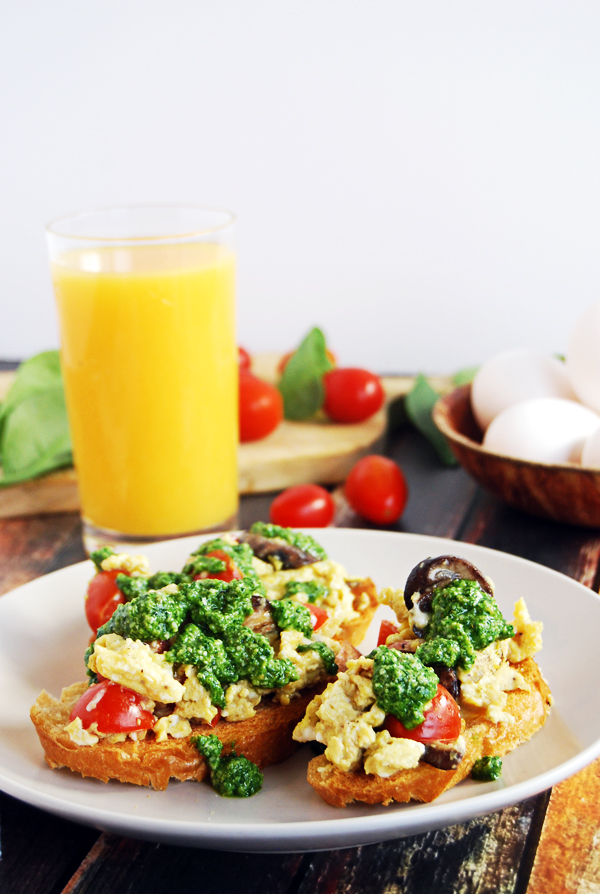
Cheesy mushroom spinach scrambled eggs: Stir in 2 tablespoons of cream cheese, grated cheddar, Gruyère, or crumbled feta during the last minute of cooking the eggs. Each cheese adds a completely different flavour dimension. Cream cheese makes the eggs incredibly rich and velvety. Cheddar adds a sharp, bold flavour. Gruyère adds a nutty complexity. Feta adds a salty, tangy Mediterranean character that is particularly wonderful with the spinach and mushrooms.
Herb scrambled eggs: Add fresh chopped herbs directly into the whisked egg mixture before cooking. Chives, tarragon, basil, and dill all work beautifully with eggs and elevate the dish to something that feels very sophisticated and special.
Spicy version: Add a generous pinch of cayenne pepper to the whisked eggs, double the red pepper flakes in the vegetable mixture, and serve with a good drizzle of sriracha or your favourite hot sauce on top. The heat adds an exciting contrast to the richness of the eggs and the earthiness of the mushrooms.
Sun-dried tomato and mushroom spinach scrambled eggs: Add a few chopped sun-dried tomatoes to the pan when you add the garlic and spinach. The tomatoes bring a concentrated, slightly sweet and tangy flavour that works beautifully with the mushrooms and pairs wonderfully with eggs.
Mediterranean style: Add crumbled feta cheese, a few halved cherry tomatoes, and a sprinkle of dried oregano to the dish. Serve with warm pita bread on the side for a breakfast that feels like a little holiday.
Truffle scrambled eggs: Add a tiny drizzle of truffle oil to the eggs right at the very end, just before serving. You only need a few drops — truffle oil is very powerful. This turns a simple scrambled egg dish into something that feels genuinely luxurious and special.
Add onions: Thinly sliced shallots or a small regular onion, cooked in the pan before the mushrooms until soft and slightly caramelised, add a sweetness to the vegetable mixture that pairs beautifully with the earthy mushrooms and the rich eggs.
What to Serve With Mushroom Spinach Scrambled Eggs
This dish is very satisfying on its own, but here are some wonderful things to serve alongside it to make it feel like a more complete meal.
Toasted sourdough bread is the most perfect companion for creamy scrambled eggs. The thick, slightly tangy, chewy sourdough gives you something to scoop up the eggs with and provides a wonderful textural contrast to the soft, silky eggs.
Toasted English muffins work wonderfully as a base for the scrambled eggs if you want to turn this into more of a substantial breakfast sandwich situation.
Avocado slices or smashed avocado on toast alongside the scrambled eggs make this meal feel very complete and add healthy fats and a creamy, mild flavour that complements the eggs and vegetables beautifully.
Crispy bacon or turkey bacon on the side adds a smoky, salty, crunchy element that contrasts wonderfully with the soft, creamy eggs.
Grilled tomatoes halved and grilled in a pan until soft and slightly charred are a classic accompaniment to scrambled eggs and add a fresh, slightly acidic note that brightens the whole meal.
Fresh fruit on the side — whether it is sliced strawberries, a handful of blueberries, or orange segments — adds a refreshing, sweet contrast to the savoury eggs and makes the whole breakfast plate feel fresh and colourful.
A glass of fresh orange juice or a good cup of coffee alongside this meal makes it feel like the kind of breakfast that sets you up beautifully for the whole day ahead.
Nutritional Benefits of This Dish
This is one of those beautiful recipes where delicious and nutritious are the same thing, and it is worth knowing just how good this meal is for your body.
Eggs are one of the most nutritionally complete foods available. They are an excellent source of high-quality protein, containing all nine essential amino acids that your body cannot produce on its own. They are rich in vitamins B2, B6, B12, and D, as well as selenium, zinc, and choline — a nutrient that is essential for brain health and memory. The yolk contains healthy fats and fat-soluble vitamins A, D, E, and K. Eggs are genuinely one of nature’s most perfect foods.
Mushrooms are low in calories but very high in nutritional value. They are one of the very few non-animal food sources that naturally contain vitamin D, which is essential for bone health, immune function, and mood regulation. They also contain B vitamins, selenium, potassium, and powerful antioxidants that help protect the body from damage and inflammation.
Spinach is a nutritional powerhouse. It is loaded with iron, calcium, folate, vitamin K, vitamin A, and vitamin C. It contains powerful antioxidants including lutein and zeaxanthin, which are important for eye health. It is also high in fibre and very low in calories, making it one of the most nutrient-dense foods you can eat.
Garlic is not just a flavour enhancer — it has real health benefits. It contains allicin, a compound with strong anti-inflammatory and antimicrobial properties. Regular consumption of garlic has been linked to improved heart health, better immune function, and reduced inflammation throughout the body.
Butter used in moderation provides fat-soluble vitamins and adds richness that makes the eggs more satisfying, which means you stay fuller for longer and are less likely to reach for snacks mid-morning.
This is a breakfast that truly nourishes your body while also tasting absolutely incredible. That is a combination worth celebrating.
Frequently Asked Questions
Why do my scrambled eggs always turn out dry and rubbery?
This almost always comes down to cooking temperature. Most people cook their scrambled eggs on medium or medium-high heat because they want breakfast to be ready quickly, but this is what causes dry, rubbery eggs. The high heat makes the proteins in the egg set and tighten very rapidly, squeezing out moisture and resulting in a tough, dry texture. The solution is simple — low heat and patience. Cook your eggs on the lowest setting your stove has, move them slowly and continuously with a rubber spatula, and pull them off the heat just before they look completely done. This technique produces soft, creamy, silky scrambled eggs every single time.
Can I use frozen spinach instead of fresh spinach?
Yes, you can use frozen spinach in this recipe. Thaw it completely first and then squeeze out as much water from it as you possibly can using your hands or a clean kitchen towel. Frozen spinach contains a lot of water and if you add it to the pan without squeezing it out, all that water will release into the pan and make the vegetable mixture very wet. Once it is well squeezed, add it to the pan after the garlic and cook it for just a minute or two to warm through and dry out any remaining moisture. Fresh spinach is always preferable for this recipe because it wilts beautifully and has a brighter flavour, but frozen works well in a pinch.
Can I make this recipe dairy-free?
Absolutely. To make this dairy-free, simply substitute the milk or cream in the egg mixture with a plain, unsweetened plant-based milk such as oat milk or almond milk. Replace the butter used for cooking the eggs with a good quality dairy-free butter or a neutral-flavoured oil like avocado oil. For the vegetables, use olive oil instead of butter. The result will be slightly less rich than the dairy version but still very delicious and creamy.
What type of mushrooms work best in this recipe?
Button mushrooms are the most common and widely available option and they work perfectly in this recipe. Cremini mushrooms, also called baby bella mushrooms, have a slightly deeper, earthier flavour than button mushrooms and are an excellent choice. Shiitake mushrooms are another wonderful option that bring a more intense, savoury, almost smoky flavour to the dish. Portobello mushrooms sliced into strips also work beautifully. You can even use a mix of different mushroom types for a more complex, layered mushroom flavour throughout the dish. Whatever variety you choose, make sure to slice them to a consistent thickness so they cook evenly.
Can I add other vegetables to this recipe?
Absolutely, and this recipe is wonderfully flexible when it comes to adding extra vegetables. Diced bell peppers added to the pan with the mushrooms are a lovely addition. Cherry tomatoes halved and stirred in at the end add juiciness and acidity. Thinly sliced zucchini works beautifully. Caramelised onions or shallots add sweetness. Asparagus cut into small pieces and cooked with the mushrooms is a wonderful springtime addition. Feel free to use whatever vegetables you enjoy and have available — just make sure they are all cooked before you combine them with the eggs.
Final Thoughts
Mushroom Spinach Scrambled Eggs is one of those recipes that proves beyond any doubt that simple food, made with care and the right technique, can be genuinely extraordinary. This is not a complicated dish. It does not have a long list of exotic ingredients. It does not require any fancy equipment or advanced skills. What it requires is a little bit of attention, a willingness to take your time with the eggs, and the understanding that the difference between average scrambled eggs and truly wonderful scrambled eggs comes down almost entirely to heat and patience.
The combination of earthy golden mushrooms, vibrant wilted spinach, fragrant garlic, and those soft, creamy, silky scrambled eggs is something that manages to be both comforting and exciting at the same time. It is familiar because eggs are something most of us have been eating our whole lives, but it feels new and special because of the care that goes into cooking each component properly and bringing them together at just the right moment.
Whether you make this for a quiet breakfast alone, a weekend brunch with family, or a quick and easy weeknight dinner when you want something light and nourishing, this recipe is going to deliver every single time. Master the low-and-slow egg technique, learn to brown your mushrooms properly without touching them too early, and add the spinach at the right moment, and you will have a breakfast dish that you are genuinely proud of. Try it tomorrow morning and see for yourself just how good simple food can be when it is made with love and the right approach. Happy cooking!