Hello friend, welcome to kiekie’s place! Oh, I am so excited about today’s recipe because this one is a real hidden gem — the kind of dish that most people have never tried at home but absolutely fall in love with the very first time they taste it. If you have ever had polenta in any form and enjoyed it, then what I am about to share with you today is going to completely blow your mind. And if you have never had polenta before, then welcome to one of the most wonderful food discoveries you are ever going to make.
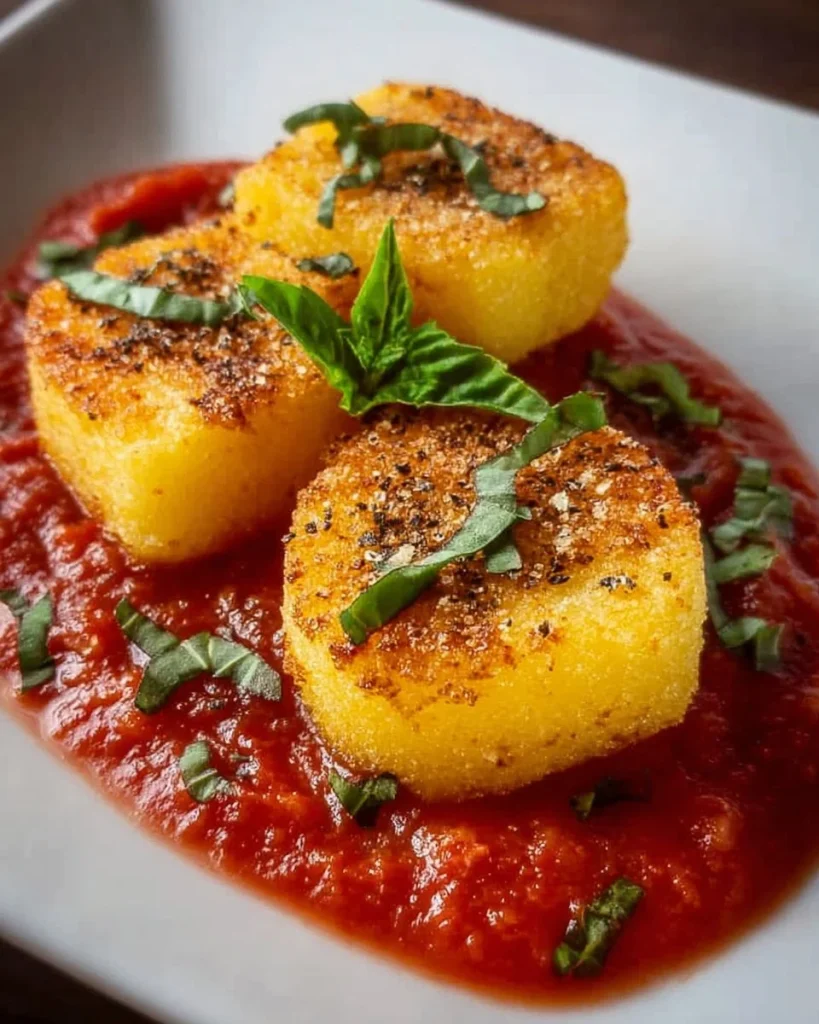
Fried Polenta With Marinara Sauce is one of those recipes that is simple, humble, and made from very affordable ingredients, yet manages to deliver a result that feels genuinely special and restaurant-worthy. We are talking about thick, golden, crispy-on-the-outside, creamy-on-the-inside slices of polenta that are pan-fried until they develop the most beautiful golden crust you have ever seen, served alongside a rich, deeply flavoured homemade marinara sauce that is so good you will want to eat it with a spoon straight from the pan. Together they create something that is bold, satisfying, and completely irresistible.
This dish works beautifully as an appetiser, a side dish, a light dinner, or even a snack. It is naturally gluten-free, vegetarian, and made from ingredients that are incredibly affordable and easy to find. By the end of this article you will know everything you need to make this dish perfectly — from understanding what polenta is and how to cook it, to frying it to golden perfection, to making a marinara sauce that is genuinely outstanding. Let us get into it.
What Is Polenta?

Before we get into the recipe itself, let us talk about polenta because if you have never cooked with it before, understanding what it is will help you work with it much more confidently.
Polenta is a dish made from ground dried corn — specifically a type of corn that has been dried and coarsely ground into a meal. It is a staple food that has been eaten in northern Italy for centuries, particularly in regions like Veneto, Lombardy, and Friuli, where it was historically the everyday food of rural and working-class communities. It is sometimes called Italian cornmeal, and if you have ever had grits — the southern American dish — you already have a good sense of what polenta is, because the two are very closely related.
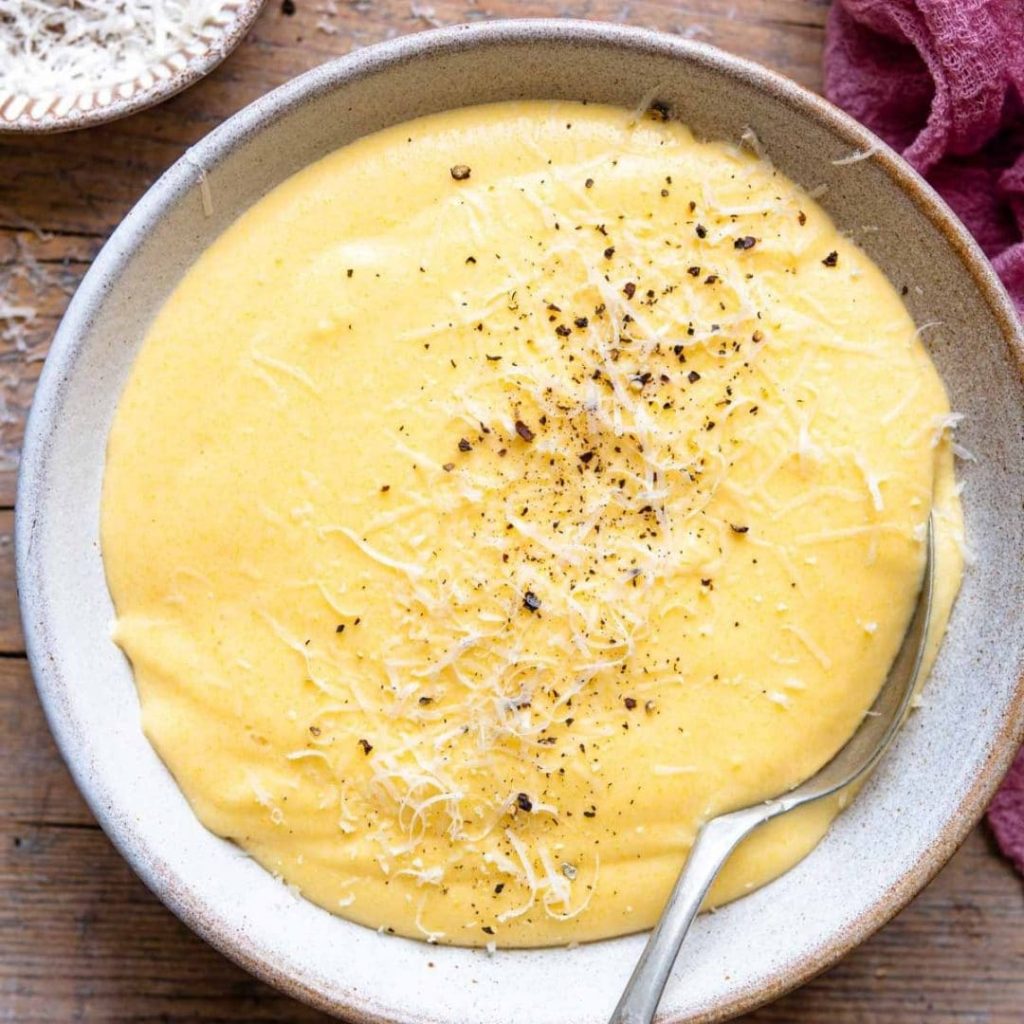
Polenta can be served in several different ways. When freshly cooked and hot, it has a soft, creamy, porridge-like consistency that is wonderful served as a base for braised meats, stews, or roasted vegetables. This is called soft or wet polenta. When it is allowed to cool and set, it solidifies into a firm, sliceable block — almost like a savoury cake — that can then be sliced and fried, grilled, or baked. This is the form we are working with today.
The fried version of polenta takes everything that is wonderful about the soft version — the mild, slightly sweet corn flavour, the creamy interior — and adds a completely new dimension. The outside becomes deeply golden and crispy while the inside stays soft and yielding, creating a textural contrast that is deeply satisfying and incredibly delicious.
Understanding the Two Methods for Making Fried Polenta

There are two ways to approach making fried polenta at home and both are completely valid depending on how much time you have.
Method one — making polenta from scratch: You cook polenta from raw cornmeal on the stovetop, pour it into a dish to set, then slice and fry it. This method gives you complete control over the flavour, thickness, and seasoning of the polenta, and the result is absolutely outstanding. It requires some planning ahead since the polenta needs time to cool and set before it can be sliced and fried — ideally at least 2 hours in the fridge, or overnight.
Method two — using pre-cooked polenta: Most supermarkets sell pre-cooked polenta in a tube or log form that is already firm and ready to slice and fry. This is a fantastic shortcut for weeknight cooking because you can go from opening the package to having golden fried polenta on the table in about 20 minutes. The flavour is slightly less nuanced than homemade but it is still very good and perfectly fine for everyday cooking.
This article will cover both methods so you can choose based on your time and preference.
Ingredients You Will Need
For homemade polenta (from scratch):
- 1 cup of coarse-ground yellow polenta or cornmeal (not instant polenta — use the proper coarse-ground variety for the best texture and flavour)
- 4 cups of water or chicken or vegetable broth (using broth instead of water adds significant flavour)
- 1 teaspoon of salt
- 2 tablespoons of butter
- Half a cup of freshly grated Parmesan cheese
- Half a teaspoon of garlic powder
- Black pepper to taste
- Optional — a few fresh thyme or rosemary leaves stirred in at the end
For frying the polenta:
- 3 to 4 tablespoons of olive oil (or a combination of olive oil and butter for extra richness and flavour)
- Salt and black pepper to taste
- Optional — a light dusting of plain flour or cornstarch before frying for an even crispier crust
For the homemade marinara sauce:
- 2 cans of good quality crushed tomatoes (800 grams total — San Marzano tomatoes are the gold standard if you can find them)
- 1 medium onion (very finely diced)
- 5 cloves of garlic (minced)
- 2 tablespoons of tomato paste
- 3 tablespoons of good quality extra virgin olive oil
- 1 teaspoon of dried oregano
- Half a teaspoon of dried basil
- Half a teaspoon of sugar (balances the acidity of the tomatoes)
- A pinch of red pepper flakes
- Salt and black pepper to taste
- A large handful of fresh basil leaves (added at the very end)
- Half a cup of water or vegetable broth (to adjust consistency)
For serving and garnish:
- Freshly grated Parmesan cheese
- Fresh basil leaves
- A drizzle of good extra virgin olive oil
- Fresh thyme sprigs (optional)
- Flaky sea salt for finishing
Step-by-Step Cooking Method
Step 1 — Make the Polenta From Scratch
If you are using pre-cooked tube polenta, skip to Step 3. If you are making polenta from scratch, start here and plan to do this at least 2 to 3 hours before you want to eat, or the night before.
Bring your water or broth to a boil in a large, heavy-bottomed saucepan over high heat. Add the salt. Once the liquid is boiling, reduce the heat to medium and slowly pour the polenta into the liquid in a thin, steady stream while whisking continuously with a whisk or stirring with a long-handled wooden spoon. Pouring slowly and stirring constantly is essential — if you dump all the polenta in at once it will clump immediately and become very difficult to smooth out.
Once all the polenta is added and the mixture is smooth, reduce the heat to the lowest possible setting. Switch from a whisk to a wooden spoon. Now begins the stirring phase. Polenta needs to be stirred regularly — every 3 to 5 minutes — for about 30 to 45 minutes as it cooks. This extended cooking time and regular stirring is what develops the creamy, smooth texture that makes polenta so wonderful. As it cooks it will bubble and spit, which is why a long-handled spoon is important. It will gradually thicken from a thin porridge to a very thick, heavy paste that pulls away from the sides of the pan.
The polenta is done when it is very thick, smooth, and comes away from the sides of the pan cleanly when you stir. Stir in the butter and let it melt completely. Add the Parmesan, garlic powder, and black pepper and stir everything in thoroughly. Taste and adjust the seasoning.
Pour the hot, cooked polenta immediately into a lightly greased baking dish, loaf pan, or any container that will give you a layer about 2 to 3 centimetres thick. Use a spatula to smooth the surface completely flat. Let it cool at room temperature for 30 minutes, then cover with cling film and refrigerate for at least 2 hours or overnight until it is completely firm and cold all the way through.
Step 2 — Slice the Polenta
Once the polenta is completely set and cold, remove it from the fridge and turn it out onto a cutting board. Using a sharp knife, cut it into slices, rounds, triangles, or rectangles — whatever shape appeals to you. Slices about 1 to 1.5 centimetres thick are ideal for frying. Too thin and they can fall apart in the pan. Too thick and they take longer to heat through and the exterior can overcook before the centre is properly warmed.
If you are using pre-cooked tube polenta, simply remove it from the packaging and slice it into rounds of the same thickness.
At this point, if you want an extra-crispy crust on the outside, dust each slice lightly on both sides with a thin coating of plain flour or cornstarch, shaking off any excess. This is optional but it does create a noticeably crispier exterior.
Step 3 — Make the Marinara Sauce
The marinara sauce can be made while the polenta is chilling in the fridge, or it can be made ahead of time since it stores well in the fridge for up to a week. In fact, marinara sauce always tastes even better the next day after the flavours have had more time to develop, so making it ahead is a wonderful strategy.
Heat the olive oil in a medium saucepan over medium heat. Add the finely diced onion and cook for about 6 to 8 minutes, stirring occasionally, until it is completely soft, translucent, and just beginning to turn golden at the edges. Take your time with this step — a properly softened onion forms a sweet, rounded base for the sauce that an under-cooked onion cannot provide.
Add the minced garlic and the red pepper flakes. Stir immediately and cook for about 1 to 2 minutes, stirring constantly, until the garlic is fragrant and very lightly golden. Be careful not to let the garlic burn — burnt garlic tastes bitter and will ruin the flavour of the entire sauce.
Add the tomato paste and stir it through. Cook for 2 minutes, stirring and moving it around so it makes contact with the hot oil and caramelises slightly. You will see it darken from a bright red to a deeper brick-red colour. This caramelisation step removes the sharp, raw taste from the tomato paste and gives it a much richer, deeper flavour.
Pour in the crushed tomatoes. Add the dried oregano, dried basil, sugar, salt, and black pepper. Stir everything together well. Add the water or broth to adjust the consistency — the sauce should be thick but pourable, not a solid paste. Bring to a gentle boil, then reduce the heat to low.
Let the sauce simmer uncovered for at least 25 to 30 minutes, stirring every 5 to 8 minutes. The longer it simmers the more the flavours deepen and meld together. The sauce will reduce slightly and become thicker and more concentrated as it cooks. If it becomes too thick, add a splash more water or broth. If it seems too thin after 30 minutes, raise the heat slightly and let it reduce for a few more minutes.
After simmering, remove from the heat and stir in the fresh basil leaves. Let them wilt into the hot sauce and release their fragrance. Taste the sauce and adjust the seasoning one final time. The sauce should be rich, slightly sweet from the cooked tomatoes and onion, fragrant with oregano and basil, and have a depth that makes it taste like it has been cooking for hours. Set aside and keep warm while you fry the polenta.
Step 4 — Fry the Polenta
This is the step that transforms the firm, cold polenta slices into something golden, crispy, and absolutely irresistible. Heat the olive oil in a large, non-stick or cast-iron skillet over medium-high heat. Let the oil heat up properly before adding the polenta — the oil should be hot and shimmering but not smoking.
Add the polenta slices to the pan in a single layer. Do not overcrowd the pan — if necessary, fry in two batches. Overcrowding drops the temperature of the oil and causes the polenta to absorb too much oil and become greasy rather than crispy.
Now here is the most important rule for frying polenta — do not touch it once it is in the pan. Leave it completely undisturbed for 4 to 5 minutes. This extended contact with the hot pan is what builds the beautiful golden, crispy crust on the bottom. If you try to move or flip the polenta before the crust has fully formed, it will stick to the pan and break apart. You will know it is ready to flip when it releases easily from the pan with a gentle nudge from a spatula — if it resists, give it another minute.
Once the bottom is deeply golden and crispy, carefully flip each slice using a wide spatula. Season lightly with salt and pepper. Cook the second side for another 3 to 4 minutes until equally golden and crispy. Both sides should be a deep, beautiful golden-brown colour.
If you want extra crispiness on both sides, you can add a tablespoon of butter to the pan after flipping the polenta. The butter will foam and baste the polenta as it cooks, adding richness and helping develop an even more beautiful golden colour and flavour on the second side.
Remove the fried polenta slices from the pan and place them briefly on a paper towel to absorb any excess oil. Season with a final pinch of salt immediately after removing from the pan — seasoning right out of the oil is when it adheres most effectively.
Step 5 — Assemble and Serve
Warm your serving plates or a large serving platter. Spoon a generous pool of hot marinara sauce onto each plate, spreading it out slightly. Arrange the golden fried polenta slices on top of or alongside the sauce. Alternatively, place the polenta on the plate first and spoon the marinara generously over the top and around the sides.
Top with a generous shower of freshly grated Parmesan cheese — use a microplane or fine grater for a light, snow-like dusting rather than chunky pieces. Tear a few fresh basil leaves and scatter them over the top. Add a sprig of fresh thyme if using. Finish with a pinch of flaky sea salt and a final drizzle of your very best extra virgin olive oil over everything.
Serve immediately while the polenta is hot and crispy and the sauce is warm. The contrast between the golden, crispy exterior of the polenta and the rich, vibrant marinara sauce is what makes this dish so extraordinarily satisfying.
Helpful Cooking Tips for the Best Results
Use coarse-ground polenta, not instant. Instant polenta is pre-cooked and dehydrated and while it is quicker to prepare, the texture and flavour are noticeably inferior to proper coarse-ground polenta. Instant polenta tends to be gummy and lacks the satisfying, slightly grainy texture of the real thing. If you can find it, Italian-imported polenta is worth the extra cost.
Cook the polenta in broth rather than water. This one change makes a very significant difference in the flavour of the final product. Chicken broth, vegetable broth, or even a combination of broth and a splash of white wine gives the polenta a much more complex, savoury, deeply flavourful character than water alone can provide. The mild, slightly sweet corn flavour of the polenta is enhanced rather than diluted when cooked in a well-seasoned liquid.
Add Parmesan and butter while the polenta is still hot. The residual heat of the freshly cooked polenta is what melts the butter and cheese smoothly and evenly into the mixture. If you add them after the polenta has cooled, they will not incorporate as smoothly. Stir them in vigorously immediately after taking the polenta off the heat.
Refrigerate the polenta completely before frying. The polenta needs to be cold and completely firm all the way through before you slice and fry it. Polenta that is only partially chilled or still slightly warm in the centre will fall apart in the pan. Give it the full 2 hours minimum in the fridge — overnight is even better.
Keep the frying temperature at medium-high. Too low and the polenta will absorb too much oil and become greasy without developing a proper crust. Too high and the outside will burn before the inside warms through. Medium-high heat gives you the golden, crispy exterior and the warm, creamy interior at the same time.
Use a non-stick or cast-iron pan. Polenta can be tricky in a regular stainless steel pan because it tends to stick, especially before the crust has fully formed. A non-stick pan is the most practical and forgiving option. A well-seasoned cast-iron skillet also works beautifully and gives the most extraordinary golden crust of all.
Do not flip the polenta too early. The single most common mistake when frying polenta is flipping it before the crust has formed. A properly formed crust releases naturally from the pan — an under-cooked bottom sticks and breaks. Be patient, trust the process, and wait for that natural release.
Make the marinara sauce ahead. Marinara sauce genuinely improves with time. Making it the day before allows the flavours to deepen and become more integrated overnight. Reheat gently before serving. This also removes the time pressure of making the sauce and frying the polenta simultaneously.
Common Mistakes to Avoid
Using instant polenta for frying. Instant polenta simply does not have the same firm, sliceable texture after setting as proper coarse-ground polenta. The texture is mushier and does not hold together as well in the pan, making it much harder to get a proper crispy crust.
Not cooking the polenta long enough. Undercooked polenta is gritty, grainy, and starchy rather than smooth and creamy. It should cook for a full 30 to 45 minutes with regular stirring. You will know it is done when it is very thick, completely smooth, and pulls away cleanly from the sides of the pan.
Skipping the setting time. Polenta that has not had enough time to set and firm up in the fridge will fall apart when you try to slice it and will disintegrate in the hot oil. Always give it the full minimum 2 hours and ideally overnight.
Adding polenta to the liquid all at once. Always pour polenta slowly in a thin stream while stirring continuously. Dumping it all in at once creates lumps that are nearly impossible to remove and result in an uneven, grainy texture.
Burning the garlic in the marinara. Once the garlic goes into the oil for the marinara, it needs continuous attention. Burnt garlic has a harsh, bitter flavour that permeates the entire sauce. Keep the heat at medium, stir constantly, and add the tomatoes quickly after the garlic has had just 1 to 2 minutes in the oil.
Over-salting the polenta. Polenta is cooked in salted water or broth and then Parmesan — which is very salty — is added at the end. It is easy to over-salt if you are not tasting as you go. Always taste before adding more salt at any stage.
What to Serve With Fried Polenta and Marinara Sauce
As a starter or appetiser: Serve 2 to 3 slices per person alongside a small bowl of warm marinara for dipping. This format works beautifully at a dinner party and looks very impressive on the table.
As a side dish: Fried polenta makes a wonderful side dish alongside braised short ribs, osso buco, roasted chicken, grilled sausages, or any Italian-inspired main course. The crispy polenta acts as both a starch component and a textural contrast to saucy, tender meat dishes.
As a vegetarian main course: Serve a generous portion of fried polenta with a big ladle of marinara sauce and a side salad for a completely satisfying vegetarian dinner. Add some sautéed mushrooms, wilted spinach, or roasted vegetables on top of the marinara for a more substantial meal.
With a simple green salad: A salad of arugula dressed with lemon juice and olive oil is a wonderfully fresh, slightly bitter contrast to the richness of the fried polenta and marinara that makes the whole meal feel very balanced.
With roasted vegetables: Roasted cherry tomatoes, zucchini, eggplant, or bell peppers alongside the fried polenta and marinara creates a very Mediterranean-inspired meal that is both beautiful and delicious.
With a fried or poached egg on top: For a brunch or breakfast version, top each slice of fried polenta with a fried or poached egg. The runny yolk mixes with the marinara and creates an incredibly rich, satisfying sauce that is absolutely wonderful.
With burrata or fresh mozzarella: Place a piece of creamy burrata or fresh mozzarella on each slice of hot fried polenta and let it melt slightly from the heat. The cool, creamy cheese against the hot, crispy polenta and rich marinara is one of the most wonderful combinations imaginable.
Variations You Can Try

Herb and cheese polenta: Add a generous tablespoon of fresh chopped rosemary, thyme, or sage to the polenta while it is cooking. Swap the Parmesan for pecorino Romano for a sharper, more assertive flavour. The herbs add a wonderful fragrance and the different cheese changes the character of the whole dish.
Spicy polenta: Add a generous pinch of cayenne pepper and extra red pepper flakes to both the polenta mixture and the marinara sauce. The heat builds beautifully and contrasts with the mild sweetness of the corn polenta in a very exciting way.
Grilled polenta instead of fried: Instead of pan-frying, brush the polenta slices with olive oil and cook them on a preheated grill or grill pan over high heat for 3 to 4 minutes per side. The grill creates beautiful char marks and adds a wonderful smoky quality that pairs beautifully with the marinara.
Baked polenta: Arrange the polenta slices on a baking sheet, brush generously with olive oil, and bake at 220 degrees Celsius for 20 to 25 minutes, flipping halfway, until golden and slightly crispy. This method uses less oil and is a great option if you are cooking for a large group and do not want to stand over the stove frying in batches.
Add toppings: Top the fried polenta and marinara with sautéed mushrooms, caramelised onions, crispy pancetta, roasted red peppers, or any other toppings you enjoy. Fried polenta is a wonderful base for endless creative variations.
Polenta fries: Instead of slicing the set polenta into rounds or rectangles, cut it into thick sticks like french fries. Fry them in the same way and serve them standing upright in a glass or on a board with the marinara sauce in a bowl alongside for dipping. This format is incredibly fun and makes a wonderful snack or party food.
Creamy polenta base instead of fried: Make a big batch of soft, creamy polenta — the kind that is still warm and pourable — and serve it in bowls topped with marinara sauce and whatever toppings you like. This creates a completely different but equally wonderful dish from the same base ingredients.
Frequently Asked Questions
What is the difference between polenta and grits?
Polenta and grits are very similar — both are made from ground dried corn and cooked into a porridge-like consistency. The main differences are in the type of corn used and the grind. Polenta is traditionally made from a specific type of yellow flint corn that is coarsely ground, giving it a slightly firmer texture and a more pronounced corn flavour. Grits are traditionally made from hominy — corn that has been treated with an alkali solution — and are usually ground more finely, giving them a softer, creamier texture. In terms of cooking and using them interchangeably, they behave very similarly and coarse-ground grits can absolutely be used as a substitute for polenta in this recipe.
My polenta is very lumpy. How do I fix it?
Lumpy polenta almost always happens because the polenta was added too quickly to the liquid without enough stirring, or because the liquid was not hot enough when the polenta was added. To fix lumpy polenta, use an immersion blender and blend it directly in the pot — this breaks up the lumps very effectively. Alternatively, push it through a fine mesh strainer with the back of a spoon. Going forward, always add polenta in a slow, steady stream while stirring constantly with a whisk, and make sure the liquid is at a full boil before you begin adding.
Can I make the fried polenta in an air fryer?
Yes, the air fryer works beautifully for fried polenta and produces a wonderfully crispy result with significantly less oil. Brush each polenta slice generously with olive oil on both sides, place in the air fryer basket in a single layer, and cook at 200 degrees Celsius for 15 to 18 minutes, flipping halfway through. The result is crispy, golden, and delicious. You may need to work in batches depending on the size of your air fryer. This method is particularly convenient if you are making a large quantity and do not want to stand over the stove frying in multiple batches.
Can I add meat to the marinara sauce to make it more substantial?
Absolutely. Adding crumbled Italian sausage, ground beef, or ground pork to the marinara turns it into a meat sauce that makes this dish even more hearty and satisfying. Brown the meat thoroughly in the pan before adding the onions, drain off any excess fat, and then proceed with the sauce recipe as written. The meat marinara poured over crispy fried polenta is an incredibly comforting and deeply satisfying combination that works wonderfully as a main course.
How long does polenta keep once it has set in the fridge?
Set, unfried polenta wrapped tightly in cling film or stored in an airtight container keeps in the refrigerator for up to 5 days. This makes it a very practical ingredient to prepare ahead of time — make a batch on the weekend and you have the base for a quick and easy weeknight dinner whenever you need it. Simply slice and fry directly from the fridge whenever you are ready to eat. The marinara sauce also keeps in the refrigerator for up to a week and freezes for up to 3 months, making both components excellent candidates for batch cooking.
Final Thoughts
Fried Polenta With Marinara Sauce is one of those recipes that is impossible not to love. It is humble and simple in its origins, made from ingredients that are inexpensive and widely available, and yet it delivers a result that is genuinely extraordinary. The moment you pull those golden, crispy slices of polenta from the pan and lay them alongside that rich, fragrant, deeply flavoured marinara sauce, you will understand exactly why this combination has been cherished in Italian cooking for generations.
What makes this dish so special is the beautiful contrast it creates in every single bite. The exterior of the polenta is deeply golden and satisfyingly crispy — it shatters slightly when you cut into it and has that wonderful roasted corn flavour from the caramelisation in the hot pan. The interior is soft, creamy, and yielding — warm and comforting and mild. The marinara sauce brings acidity, sweetness, depth, and that unmistakable richness that only a properly made tomato sauce can deliver. The Parmesan on top adds a sharp, salty note. The fresh basil brings fragrance and brightness. Every element is doing exactly what it should and nothing is competing with anything else.
Whether you make it as a starter for a dinner party, a side dish for a bigger Italian-inspired meal, or a complete vegetarian dinner on its own, this recipe is going to impress everyone who tries it and make you feel genuinely proud of what you have created. Make the marinara the day before, set the polenta overnight, fry it fresh right before serving, and enjoy one of the most satisfying and delicious dishes in this entire blog. Happy cooking!