Hello dear, welcome to kiekie’s place! Pull up a chair and get comfortable because today I am bringing you one of the most exciting, most flavourful, most soul-satisfying recipes I have ever shared on this blog. If you have been looking for a dinner that is bold, hearty, deeply seasoned, packed with colour and texture, and the kind of thing that fills your whole kitchen with the most incredible aroma while it is cooking, then today is absolutely your day. We are making Jambalaya and I could not be more excited about it.
Shrimp and Sausage Jambalaya is a legendary dish from the heart of Louisiana in the southern United States. It is a one-pot rice dish that is packed with juicy shrimp, smoky sausage, the holy trinity of Creole cooking, and rice that absorbs every single drop of that incredible spiced, flavourful cooking liquid as it cooks. The result is a dish that is so deeply, unapologetically delicious that it genuinely makes you close your eyes on the first bite and just sit with how good it is.
The beauty of this recipe is that everything happens in one single pot. One pot means one set of washing up, which is always a win. But more importantly, one pot means every single ingredient gets to share space and exchange flavours throughout the cooking process, which is exactly what makes jambalaya taste the way it does — bold, complex, deeply layered, and absolutely unforgettable.
Whether you are making this for your family on a weeknight, cooking for a crowd on the weekend, or meal prepping a big batch to enjoy throughout the week, this recipe is going to deliver every single time. Let us get into every detail you need to make the most incredible jambalaya of your life.
What Is Jambalaya?
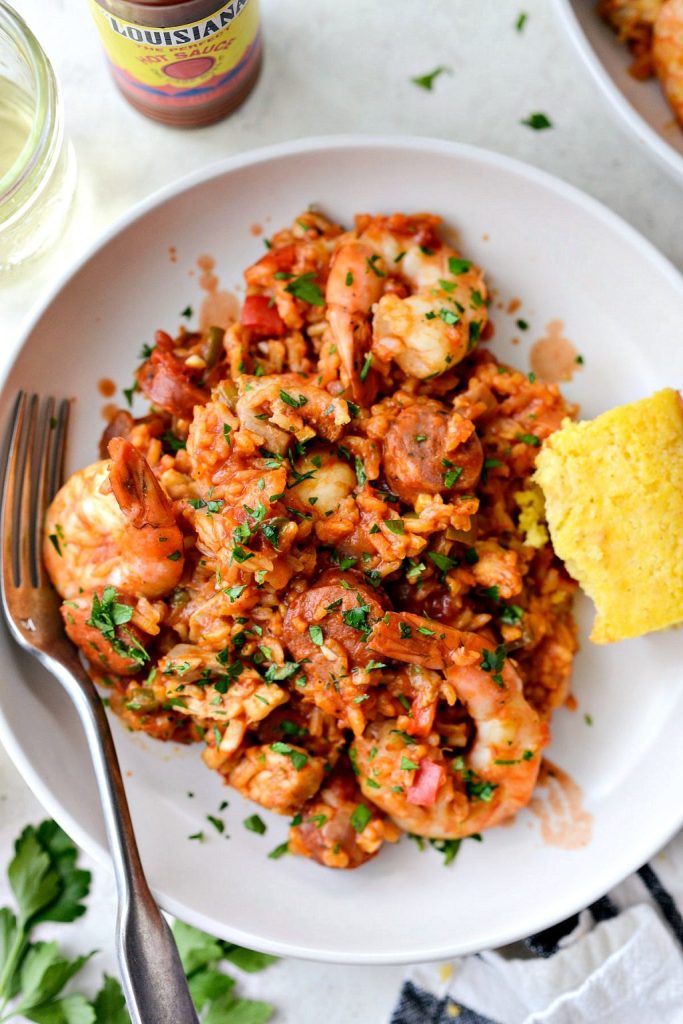
Before we get into the ingredients and cooking method, let us talk about what jambalaya actually is because understanding the dish makes you a much better cook of it.
Jambalaya is a rice-based dish that originated in Louisiana and is one of the most beloved and iconic dishes in Creole and Cajun cooking. It has roots that stretch back centuries and draw from Spanish, French, West African, and Native American culinary traditions that all came together in the melting pot of Louisiana’s unique cultural history. The dish is thought to have evolved as a Louisiana take on the Spanish dish paella, adapted over generations using locally available ingredients like andouille sausage, shrimp, and the vegetables that grow abundantly in the region.
There are two main styles of jambalaya that you will encounter. Creole jambalaya — sometimes called red jambalaya — includes tomatoes in the recipe, which gives the dish a reddish colour and a slightly tangy, tomato-forward flavour. This is the version most commonly found in New Orleans and is the style we are making today. Cajun jambalaya — sometimes called brown jambalaya — does not include tomatoes and gets its dark, rich colour from the deep browning of the meat and the fond that builds up in the pot. Both are absolutely delicious and both are authentic — they just represent different regional traditions within Louisiana cooking.
The holy trinity of Creole cooking — onion, celery, and bell pepper — forms the aromatic base of jambalaya just as it does in so many other Louisiana dishes. The rice is cooked directly in the seasoned broth and tomato mixture, absorbing all that incredible flavour as it cooks. The proteins — typically a combination of smoked sausage and shrimp in this version — are added at different stages to ensure each one reaches its perfect level of doneness.
Choosing Your Proteins
The two main proteins in this jambalaya are smoked sausage and shrimp, and the choices you make in each category will significantly impact the final flavour of the dish.
For the sausage: Andouille sausage is the most traditional and most authentic choice for jambalaya. It is a heavily smoked, spiced pork sausage that originated in France but became a defining ingredient of Louisiana Creole and Cajun cooking. It has a bold, slightly spicy, deeply smoky flavour that is absolutely fundamental to the character of a proper jambalaya. If you can find andouille sausage at your local store or butcher, use it — the difference it makes to the final dish is very significant.
If andouille is not available in your area, smoked kielbasa is the best substitute — it has a similar smoky character though it is milder in spice. Smoked turkey sausage is a good lower-fat option. Regular smoked sausage or chorizo can also work well and each gives the dish a slightly different character. Whatever sausage you choose, make sure it is fully cooked and smoked — this is not a recipe for raw, fresh sausage.
For the shrimp: Large or extra-large shrimp work best in jambalaya. Small shrimp cook through too quickly and can easily become overcooked and rubbery during the final stage of cooking when they are added to the hot rice mixture. Large shrimp can withstand a few minutes of cooking in the hot pot without losing their juiciness and texture. Peeled and deveined shrimp make things much easier — you can leave the tails on for presentation or remove them for easier eating.
Ingredients You Will Need
For the proteins:
- 400 grams of andouille sausage or smoked sausage (sliced into rounds about 1 centimetre thick)
- 400 grams of large shrimp (peeled and deveined — tails on or off based on preference)
- Salt and black pepper to taste
- Half a teaspoon of smoked paprika (for seasoning the shrimp)
- 1 tablespoon of olive oil or vegetable oil
For the holy trinity and aromatics:
- 1 large onion (finely diced)
- 3 stalks of celery (finely diced)
- 1 large green bell pepper (finely diced)
- 1 large red bell pepper (diced — not traditional but adds sweetness and colour)
- 6 cloves of garlic (minced)
- 3 spring onions (sliced — white and green parts separated)
For the rice and sauce:
- 2 cups of long grain white rice (rinsed well under cold water)
- 1 can of diced tomatoes (400 grams)
- 2 tablespoons of tomato paste
- 3 cups of chicken broth (low sodium)
- Half a cup of water (for adjusting consistency if needed)
- 1 tablespoon of Worcestershire sauce
- 1 tablespoon of hot sauce (Louisiana-style hot sauce like Tabasco or Crystal is ideal)
- 2 bay leaves
For the Cajun seasoning blend:
- 2 teaspoons of smoked paprika
- 1 and a half teaspoons of dried oregano
- 1 teaspoon of dried thyme
- 1 teaspoon of garlic powder
- 1 teaspoon of onion powder
- Half a teaspoon of cayenne pepper (adjust based on your heat preference)
- Half a teaspoon of black pepper
- Half a teaspoon of white pepper
- Half a teaspoon of salt
For serving and garnish:
- Fresh parsley (generously chopped)
- Sliced green onion tops
- Extra hot sauce on the side
- Lemon or lime wedges
Step-by-Step Cooking Method
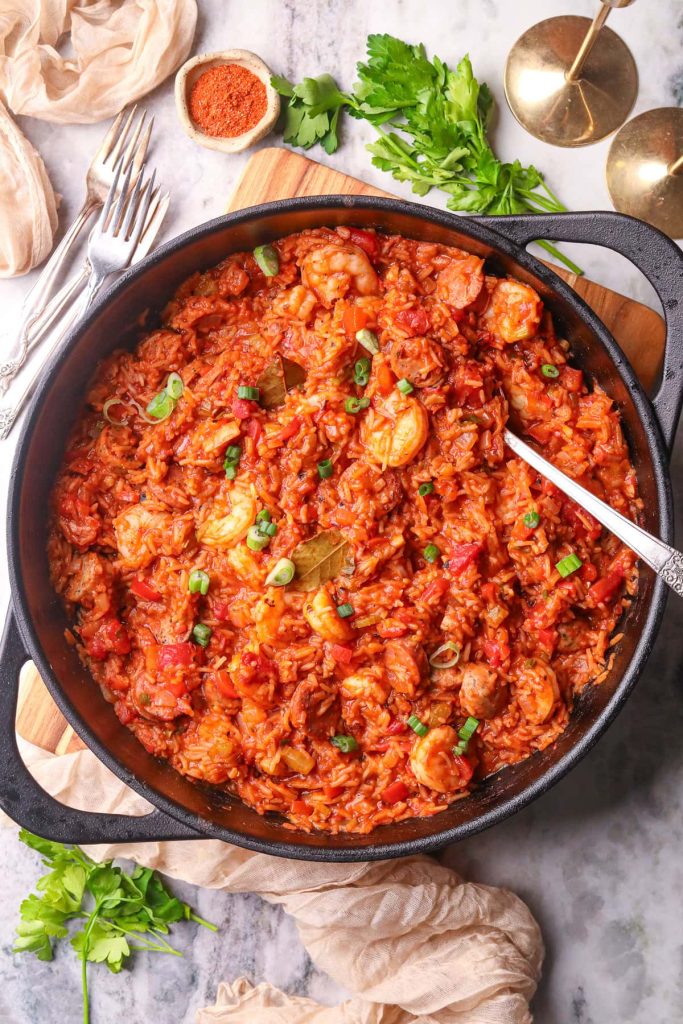
Step 1 — Make the Cajun Seasoning Blend
Start by combining all the spices for the Cajun seasoning blend in a small bowl — smoked paprika, dried oregano, dried thyme, garlic powder, onion powder, cayenne pepper, black pepper, white pepper, and salt. Mix them together thoroughly until you have a unified, fragrant spice blend. Set this aside within easy reach of your stove. You will use this blend at multiple stages throughout the cooking process and having it pre-mixed means you can add it quickly without having to measure individual spices while you are cooking. Having everything measured and ready before you start is especially important for a dish like jambalaya where things move at a steady pace once you begin.
Making your own Cajun seasoning from scratch rather than using a pre-made packet gives you complete control over the heat level and the salt content, and the flavour is significantly more vibrant and fresh than anything pre-packaged. If you want to make a larger batch of this seasoning to keep in your pantry, simply multiply the quantities and store in an airtight jar — it keeps well for several months and is wonderful on grilled chicken, roasted vegetables, fried fish, and many other dishes.
Step 2 — Brown the Sausage
Place your largest, deepest pot — ideally a Dutch oven or a heavy-bottomed pot with a tight-fitting lid — over medium-high heat. Add the tablespoon of oil and let it heat up. Add the sliced sausage in a single layer and let it cook without stirring for about 2 to 3 minutes on the first side until it develops a deep, golden-brown crust. Flip the pieces and brown the other side for another 1 to 2 minutes.
This browning step is one of the most important things you can do for the flavour of your jambalaya. The caramelised surfaces of the browned sausage are packed with flavour compounds and as the cooking liquid is added later those flavours dissolve into the broth and infuse the entire dish. The browned bits — called fond — that stick to the bottom of the pot are equally valuable and will be scraped up and incorporated into the sauce at a later stage.
Once the sausage is nicely browned on both sides, remove it from the pot with a slotted spoon and set it aside on a plate. Leave all the rendered fat and drippings in the pot — you are going to cook the vegetables in those drippings and every bit of that flavour matters.
Step 3 — Cook the Holy Trinity
Reduce the heat to medium. Add the finely diced onion, celery, and green bell pepper — the holy trinity — to the pot with all those wonderful sausage drippings. Stir to coat the vegetables in the fat. Cook for about 6 to 8 minutes, stirring occasionally, until the vegetables are completely soft, the onion is translucent, and everything is starting to turn golden at the edges.
Do not rush this step. The holy trinity needs to be properly softened and slightly caramelised to form the deep, rounded flavour base that jambalaya is known for. Vegetables that are only partially cooked give you a sauce with a raw, sharp vegetable flavour rather than the sweet, mellow, deeply savoury base you want.
Add the diced red bell pepper and the white parts of the spring onions. Stir through and cook for another 2 to 3 minutes until the red pepper begins to soften.
Add the minced garlic to the pot. Stir immediately and keep stirring for about 1 to 2 minutes until the garlic is fragrant and just beginning to turn golden. Garlic can burn in seconds at this heat level so do not walk away.
Step 4 — Add the Tomato Paste and Spices
Add the tomato paste to the pot and stir it through the vegetables. Cook for 2 minutes, stirring and pressing the tomato paste against the bottom of the pan so it comes into contact with the heat and caramelises slightly. This deepens the flavour of the tomato paste significantly and removes any raw, tinny taste.
Add about two thirds of your pre-made Cajun seasoning blend and stir it through everything. Let the spices cook in the oil and fat for about 1 minute, stirring continuously. Cooking the spices in the fat before adding liquid is called blooming and it is a technique that activates the flavour compounds in the spices and makes them significantly more potent and fragrant in the finished dish. Your kitchen should smell absolutely incredible at this point.
Step 5 — Deglaze and Build the Sauce
Pour in the diced tomatoes with all their juices and stir everything together. Use a wooden spoon to scrape up all the golden, caramelised bits from the bottom of the pot — these are the fond we talked about earlier and they add enormous depth to the sauce. Let the tomatoes cook with the vegetables and spices for about 3 to 4 minutes, stirring occasionally.
Add the chicken broth, Worcestershire sauce, hot sauce, remaining Cajun seasoning blend, and bay leaves. Stir everything together very well. Bring the liquid to a boil over high heat, then taste it carefully. This is your last opportunity to adjust the seasoning before the rice goes in. The liquid should taste bold, slightly spicy, deeply savoury, and very flavourful — not bland. If it tastes flat, add more hot sauce, more Cajun seasoning, or more salt until it is properly seasoned. Remember that the rice is going to absorb most of this liquid and will take on whatever flavour is in it, so the liquid needs to be bold enough to season the rice as it cooks.
Return the browned sausage to the pot and stir it into the sauce.
Step 6 — Add the Rice and Cook
Add the rinsed long grain white rice directly into the pot and stir it through the sauce and sausage mixture until it is evenly distributed. Make sure the rice is submerged in the liquid as much as possible. Bring the whole pot back to a boil, then reduce the heat to the lowest setting your stove has. Place the lid on the pot tightly and cook without lifting the lid for 20 minutes.
This is the most hands-off but also most nerve-wracking step for many people making jambalaya for the first time. Trust the process and resist the urge to lift the lid. Every time you lift the lid you release the trapped steam that is cooking the rice evenly. After 20 minutes, lift the lid quickly and check the rice — push a spoon into the pot and check if most of the liquid has been absorbed and if the rice on top looks cooked. If the rice still has a lot of liquid around it, cover and cook for another 5 minutes.
Step 7 — Add the Shrimp
Once the rice is mostly cooked and most of the liquid has been absorbed, it is time to add the shrimp. Season the shrimp with a little salt, black pepper, and smoked paprika. Push the shrimp down into the rice mixture, nestling them in between the rice and sausage so they are mostly submerged.
Replace the lid and cook for another 5 to 7 minutes over low heat until the shrimp are pink and cooked through. Check them after 5 minutes — they should be pink all the way through and have curled into a loose C shape. Do not overcook the shrimp — rubbery shrimp can ruin an otherwise perfect jambalaya. The moment they are pink and cooked through, remove the pot from the heat.
Step 8 — Rest, Fluff, and Serve
Once the shrimp are cooked, remove the pot from the heat and let it rest with the lid on for 5 minutes. This resting time allows the steam to distribute evenly through the rice and any remaining liquid to be absorbed. After 5 minutes, remove the lid and fish out and discard the bay leaves.
Use a large fork to gently fluff the rice from the bottom to the top in wide, sweeping motions. This distributes all the ingredients evenly throughout the pot and separates the rice grains without breaking them up. Fold gently rather than stirring aggressively — you want the shrimp and sausage pieces to remain intact.
Taste one final time and adjust the seasoning. Add more hot sauce if you want more heat. Add a squeeze of lemon juice if it needs brightness.
Scatter the green tops of the spring onions and a generous handful of freshly chopped parsley over the top of the jambalaya. Serve immediately straight from the pot into deep bowls or wide plates, with extra hot sauce and lemon wedges on the side.
Helpful Cooking Tips for the Best Results
Use long grain white rice only. Long grain rice cooks up fluffy and separate, which is exactly the texture you want in jambalaya. Short grain or medium grain rice is too sticky and will give you a clumped, dense result rather than the distinct, separate grains that make proper jambalaya so satisfying. Basmati rice is a good long grain option if that is what you have available, though it will give a slightly different flavour. Never use instant rice — it will dissolve and become mushy in the cooking liquid before everything else is ready.
Always rinse the rice before adding it. Rinsing the rice removes excess surface starch that can make the jambalaya gluey and sticky. Rinse it in a fine mesh strainer under cold running water until the water runs mostly clear, then drain thoroughly before adding to the pot.
Brown the sausage properly. The deep golden crust on the sausage and the fond it leaves behind in the pot are responsible for a very significant portion of the overall flavour of the dish. Do not settle for sausage that is just warmed through and slightly grey — you want deep, golden-brown caramelisation on both sides.
Season the cooking liquid boldly. As I mentioned in the method, the cooking liquid is what seasons the rice from the inside as it absorbs. A boldly seasoned liquid gives you flavourful rice all the way through. A timid or bland liquid gives you rice that tastes of nothing no matter how much sauce is on top. Be generous with the Cajun seasoning, hot sauce, and Worcestershire sauce.
Never lift the lid while the rice is cooking. This is a rule that applies to all rice cooking but is especially important in jambalaya where the heat and steam distribution in a tightly sealed pot is what cooks the rice evenly. Lifting the lid releases steam, drops the temperature, and can result in unevenly cooked rice with some parts done and others still chalky in the centre.
Add the shrimp at the very end. Shrimp cook in just a few minutes and adding them too early guarantees they will be overcooked and rubbery by the time the rice is done. Always wait until the rice is almost fully cooked before adding the shrimp so they have just enough time to cook through without going past that perfect juicy, tender point.
Let the jambalaya rest before serving. The 5-minute rest after removing from the heat is not optional. It allows the last of the moisture to absorb evenly, the temperature to equalize throughout the pot, and the flavours to settle into a more cohesive whole. Serving immediately without resting often results in the bottom being drier than the top.
Use a heavy-bottomed pot with a tight lid. A thin-bottomed pot allows hot spots to develop which can cause the rice at the bottom to burn while the top is still undercooked. A heavy-bottomed pot — cast iron, enamelled cast iron, or thick stainless steel — distributes heat evenly and gives the most consistent result. A tight-fitting lid is essential for trapping the steam that cooks the rice.
Common Mistakes to Avoid
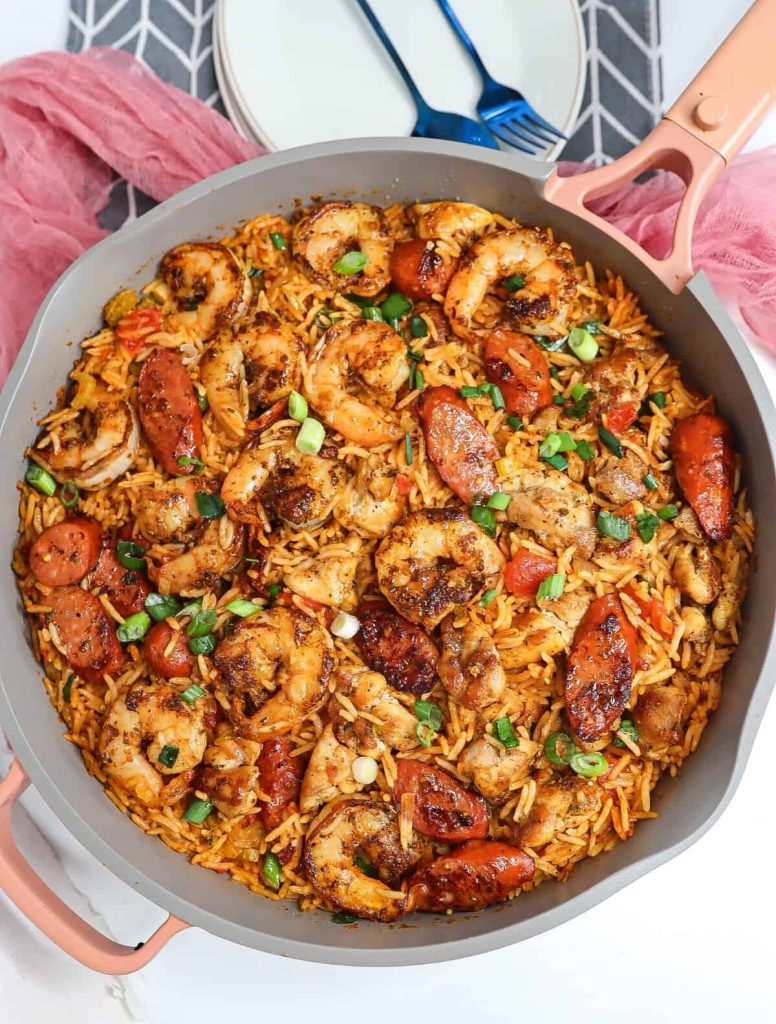
Using too much liquid. Too much liquid in the pot results in wet, soggy, mushy jambalaya where the rice absorbs so much moisture it breaks down and loses its texture. Stick to the ratio in this recipe — 3 cups of broth for 2 cups of rice plus the liquid from the diced tomatoes. This ratio is calibrated to give you perfectly cooked, fluffy rice in the finished dish.
Using too little liquid. Conversely, too little liquid results in crunchy, undercooked rice with a chalky centre. If you find your jambalaya is drying out before the rice is fully cooked, add a splash of warm broth or water, stir gently from the bottom, cover, and cook for a few more minutes.
Skipping the blooming of the spices. Adding the spices to the fat and cooking them briefly before adding liquid is one of the most important flavour-building steps in this recipe. Spices added directly to liquid without first being bloomed in fat taste flat and one-dimensional compared to properly bloomed spices.
Overcooking the shrimp. This is the most common mistake in any shrimp dish and jambalaya is no exception. Overcooked shrimp are rubbery, tough, and flavourless. They should be added right at the end of cooking and given just 5 to 7 minutes — check them at 5 minutes and remove the pot from the heat the moment they are pink and cooked through.
Stirring the rice too much while it cooks. Stirring the rice while it is cooking with the lid on disrupts the steam cooking process and can make the rice gluey and uneven in texture. Once the lid goes on, leave it alone until the cooking time is up.
Under-seasoning. Jambalaya is a bold, generously seasoned dish by nature. Under-seasoning results in something that is flat, bland, and completely lacking the character that makes this dish so legendary. Be generous with the Cajun seasoning, taste at every stage, and do not be afraid to add more hot sauce, more spice, or more salt as needed.
What to Serve With Shrimp and Sausage Jambalaya
Jambalaya is already a very complete, very filling, very nutritionally balanced meal on its own — protein, starch, and vegetables are all included in the pot. But here are some wonderful accompaniments that complement it beautifully.
Cornbread is the most classic Southern accompaniment to jambalaya and for very good reason. The slightly sweet, crumbly, golden cornbread is the perfect foil for the bold, spicy jambalaya and is wonderful for mopping up any sauce in the bowl.
A simple green salad with a light vinaigrette is a refreshing contrast to the richness and spice of the jambalaya. The freshness and acidity of the salad cuts through the bold flavours beautifully and provides a welcome palate cleanser between bites.
Coleslaw — particularly a tangy, vinegar-based coleslaw rather than a creamy one — is a wonderful cold, crunchy contrast to the warm, hearty jambalaya. The acidity of the vinegar dressing also helps balance the richness of the dish.
Crusty French bread or a baguette is perfect for scooping up the flavourful sauce and rice from the bowl. In New Orleans, French bread is a staple at almost every meal and it pairs particularly naturally with Creole dishes like jambalaya.
Steamed okra tossed with a little butter and salt is a very Louisiana accompaniment that adds a mild, slightly sweet flavour and a characteristic texture that pairs naturally with the bold jambalaya flavours.
Fried plantains are a wonderful slightly sweet side that contrasts beautifully with the spicy, savoury jambalaya and reflects the Caribbean influences that are present throughout Louisiana Creole cooking.
A cold beer — particularly a light lager or a crisp pilsner — is the most popular drink pairing for jambalaya and with good reason. The cold, effervescent beer cuts through the richness and spice of the dish perfectly and makes every bite feel fresh again.
How to Store Leftovers
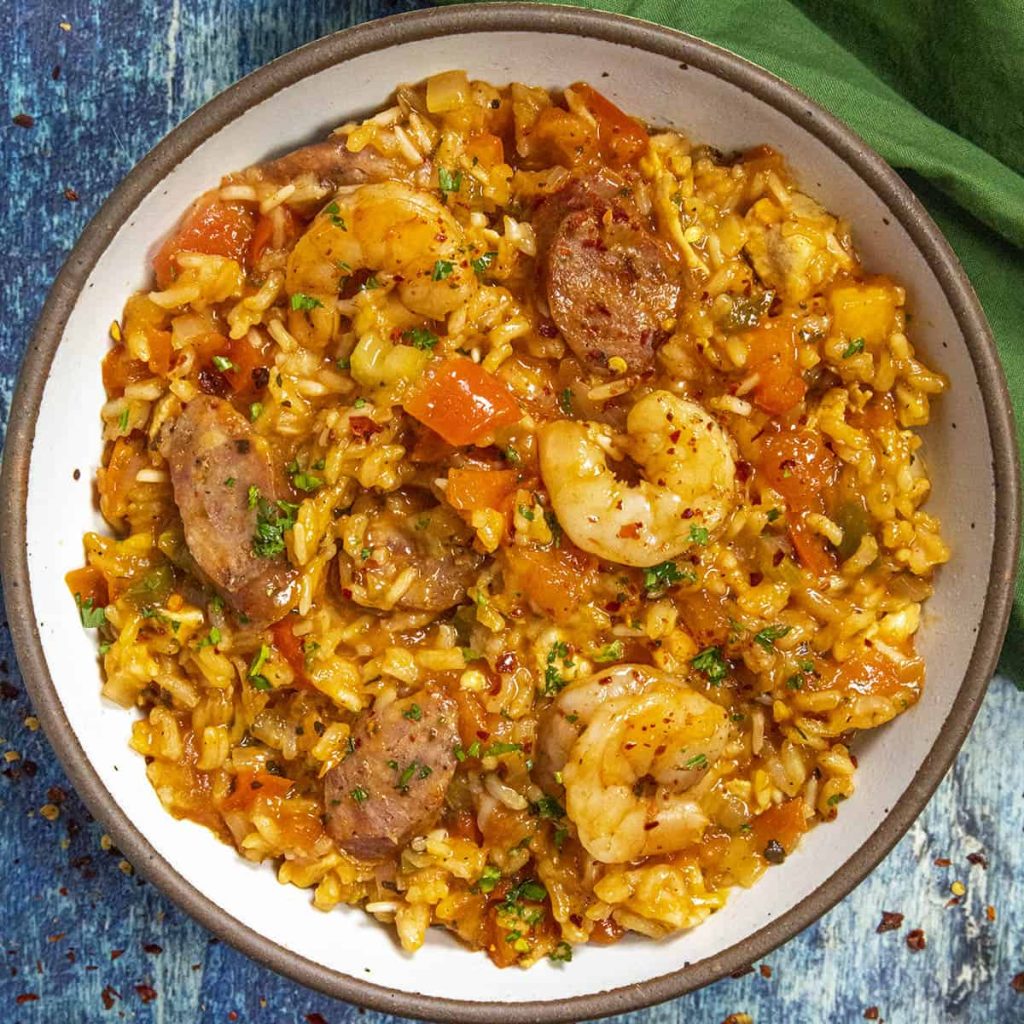
In the fridge: Allow the jambalaya to cool completely before transferring to an airtight container. Store in the refrigerator for up to 4 days. The rice will absorb any remaining liquid as it sits and the jambalaya will become considerably drier and thicker overnight. To reheat, place in a pan over medium-low heat and add a generous splash of chicken broth or water. Stir gently as it heats and the added liquid will rehydrate the rice and loosen the jambalaya back to a satisfying, slightly saucy consistency. You can also reheat in the microwave — cover the container and add a splash of water, then heat in 1-minute intervals stirring in between.
In the freezer: Jambalaya freezes well for up to 2 months, though the texture of the shrimp can change slightly after freezing and reheating — they can become a little more firm. To minimise this, consider freezing the jambalaya without the shrimp and adding freshly cooked shrimp when you reheat. This gives you the best possible texture in the reheated version. Cool the jambalaya completely before portioning into freezer-safe containers. Thaw overnight in the fridge before reheating with a splash of broth.
Meal prep tip: Jambalaya is one of the best dishes for batch cooking. Make a very large pot at the beginning of the week and portion it into individual containers for ready-made lunches and dinners throughout the week. It reheats beautifully and arguably tastes even better after a day or two as the flavours continue to deepen and meld together.
Variations You Can Try
Add chicken: Include diced boneless skinless chicken thighs in the recipe for a more protein-packed version. Cut the chicken into bite-sized pieces, season with the Cajun blend, and brown in the pot before the sausage. Remove and set aside with the sausage and return to the pot at the same time as the sausage in Step 5. The chicken will cook through during the rice cooking stage.
Make it spicier: Double the cayenne pepper in the seasoning blend, add an extra tablespoon of hot sauce to the cooking liquid, and serve with sliced fresh jalapeños on top. This version is for genuine heat lovers only and is an absolute thrill to eat.
Make it milder: Reduce or eliminate the cayenne pepper entirely and use a mild smoked sausage instead of spicy andouille. The dish will still be deeply flavourful and satisfying — just without the heat.
Add okra: Stir in 1 cup of sliced fresh or frozen okra when you add the diced tomatoes. Okra is a traditional jambalaya ingredient that adds a slight earthiness and helps thicken the sauce naturally. Some people love it and some people are not fans of the texture — use it based on your preference.
Seafood jambalaya: Replace the sausage entirely with a combination of different seafood — scallops, crab meat, or crawfish tails alongside the shrimp. This makes a more elegant, very New Orleans-style seafood jambalaya that is absolutely spectacular.
Vegetarian jambalaya: Replace the sausage with sliced smoked tempeh or a plant-based smoked sausage, replace the shrimp with two cans of kidney beans or chickpeas, and use vegetable broth instead of chicken broth. Season boldly with the full Cajun spice blend and the result is a deeply satisfying, flavourful plant-based version of this beloved dish.
Frequently Asked Questions
What is the difference between Creole and Cajun jambalaya?
The most significant difference between Creole and Cajun jambalaya is the presence of tomatoes. Creole jambalaya — the style we are making in this recipe — includes tomatoes, which give the dish a reddish colour and a slightly tangy, tomato-forward flavour. It is associated with the city of New Orleans and the more refined, city-based Creole cooking tradition. Cajun jambalaya does not include tomatoes and gets its dark, rich colour from the heavy browning of the meat and the fond that builds up in the pot. It is associated with the rural Cajun communities of rural Louisiana. Cajun jambalaya is often described as having a bolder, smokier, more intensely meaty flavour while Creole jambalaya has a brighter, more complex flavour from the tomatoes. Both are equally delicious and equally authentic — they just represent different cooking traditions within the same state.
Can I use brown rice instead of white rice?
You can use brown rice but it requires a significant adjustment to the recipe. Brown rice takes much longer to cook than white rice — about 40 to 45 minutes compared to 20 minutes — and absorbs more liquid. If using brown rice, increase the chicken broth to 4 cups and extend the covered cooking time to 40 minutes before checking. You will also need to add the shrimp later — after the brown rice is nearly done — to prevent them from overcooking. The finished dish will have a nuttier flavour and chewier texture than the white rice version, which many people enjoy. It is also more nutritious with significantly more fibre.
My rice came out mushy and wet. What went wrong?
Mushy, wet jambalaya rice is almost always caused by too much liquid in the pot. Double-check that you used the correct ratio — 3 cups of broth for 2 cups of rice, plus the liquid from the canned tomatoes. Also make sure you are using long grain white rice, not a short or medium grain variety which absorbs differently. Cooking on too high a heat after covering can also cause the liquid to boil too aggressively and break down the rice structure. The heat should be at the very lowest setting once the lid goes on. Going forward, always use the exact measurements and low heat for the most consistent result.
Can I make jambalaya in a slow cooker?
Yes, jambalaya can be adapted for the slow cooker, though the method requires some adjustments. Brown the sausage and cook the holy trinity and aromatics on the stovetop first as described in Steps 2 and 3 — this step cannot be done in the slow cooker. Transfer everything to the slow cooker, add the broth, tomatoes, and seasonings, and cook on LOW for 3 to 4 hours or HIGH for 1 and a half to 2 hours. Add the rinsed rice in the last 45 minutes of cooking on HIGH. Add the shrimp in the last 15 minutes. The result is slightly different in texture from the stovetop version but still very flavourful and satisfying.
How spicy is this jambalaya and how do I control the heat level?
As written with the measurements in this recipe, this jambalaya has a moderate heat level — noticeable warmth and a building spice that you feel with every bite but that is not overwhelming or uncomfortable for most people who enjoy spicy food. To make it milder, reduce or eliminate the cayenne pepper from the seasoning blend, use a mild smoked sausage instead of andouille, and use less hot sauce in the cooking liquid. Serve it without extra hot sauce. To make it hotter, double the cayenne, use all hot andouille sausage, double the hot sauce in the cooking liquid, and serve with extra hot sauce at the table. The heat level is very easy to customise because the spices go in at a stage where you can taste and adjust before the rice and shrimp are added.
Final Thoughts
One Pot Shrimp and Sausage Jambalaya is one of the most iconic, most beloved, and most deeply satisfying one-pot meals in the entire world of cooking, and making it at home from scratch is one of the most rewarding cooking experiences you can have. From the moment you start browning that smoky sausage and the kitchen fills with that incredible aroma, to the moment you lift the lid after the rice has cooked and see all those beautiful colours and textures together in the pot, to the first bite of perfectly spiced, deeply flavourful rice with a piece of juicy sausage and a tender shrimp — every stage of making and eating this dish is a genuine pleasure.
What makes jambalaya so extraordinary is the way everything in the pot works together to create something that is infinitely greater than the sum of its parts. The sausage flavours the oil, the oil flavours the vegetables, the vegetables build the sauce, the sauce flavours the broth, the broth cooks the rice, and the rice absorbs all of it. Nothing is wasted, nothing is separate, and by the time you serve it every single ingredient has given something of itself to make the whole dish better.
Whether you are discovering jambalaya for the first time or returning to a beloved dish you have made many times before, this recipe is going to give you results that you are genuinely proud of and deeply satisfied by. Follow the steps, use the tips, season boldly, be patient with the rice, and do not overcook the shrimp. Do all of that and you will have a pot of jambalaya that is worthy of New Orleans itself. Happy cooking!