 Kiekie Folashade
Hey friend, welcome back again to another wonderful recipe topics that we are about to talk about. You know those evenings when you are tired, hungry, and the last thing you want to do is stand over a hot stove stirring pots and watching pans? Today’s recipe was literally made for those exact moments. I am so excited to share this one with you because it is one of those meals that requires almost no effort, uses just one pan, and still delivers a dinner that is colourful, delicious, and satisfying enough to make everyone at the table genuinely happy.
Chicken Sausage and Veggies Sheet Pan is exactly what it sounds like — seasoned chicken sausage and a gorgeous mix of fresh vegetables all tossed together on one baking sheet and roasted in the oven until everything is golden, slightly caramelised, and packed with incredible flavour. The vegetables get beautifully tender on the inside and slightly crispy on the edges, the chicken sausage gets juicy with a gorgeous browned exterior, and the whole thing comes together with minimal prep and minimal cleanup.
This is the kind of meal that works on a busy weeknight, a lazy Sunday, or whenever you want something wholesome and filling without spending a lot of time or energy in the kitchen. It is also very easy to customise — you can use whatever vegetables you have on hand and switch up the seasonings to match your mood. By the end of this article, you will have everything you need to make this recipe perfectly, including tips, variations, storage advice, and so much more.
Let us get right into it.
What Is Chicken Sausage and Veggies Sheet Pan?
A sheet pan meal is exactly what the name suggests — a complete meal cooked on a single baking sheet in the oven. The idea is simple. You arrange your protein and vegetables on one large pan, season everything well, drizzle with oil, and let the oven do all the work. No stirring, no flipping pots, no juggling multiple burners. Just one pan, one oven, and one delicious meal.
Chicken sausage is the star protein in this recipe. Unlike regular pork sausage, chicken sausage is leaner, lower in fat, and still incredibly flavourful, especially when it is well-seasoned. It comes in many varieties — smoked, Italian-style, garlic and herb, spicy, sun-dried tomato, and more — and each variety will give your sheet pan meal a slightly different flavour profile, which means you can make this recipe differently every single time just by switching up the sausage.
The vegetables roast alongside the sausage and absorb all the delicious juices and seasonings as they cook. They become tender, slightly sweet from the roasting process, and develop those beautiful golden, caramelised edges that make roasted vegetables so irresistible. This is a well-balanced, nutritious, and incredibly satisfying meal that feels very complete all on its own.
Ingredients You Will Need

The beauty of this recipe is how flexible the ingredient list is. The vegetables listed below are great starting suggestions, but you can swap or add based on what you enjoy or what you have available.
For the chicken sausage:
- 500 grams of chicken sausage links (about 4 to 6 links depending on size — choose your favourite variety)
For the vegetables:
- 1 medium red bell pepper (cut into chunks)
- 1 medium yellow bell pepper (cut into chunks)
- 1 medium green bell pepper (cut into chunks)
- 1 medium zucchini (sliced into half-moons)
- 1 medium red onion (cut into wedges)
- 200 grams of baby potatoes (halved, or regular potatoes cut into small cubes)
- 150 grams of broccoli florets
- 150 grams of cherry tomatoes (left whole)
For the seasoning and coating:
- 3 tablespoons of olive oil
- 1 teaspoon of garlic powder
- 1 teaspoon of onion powder
- 1 teaspoon of smoked paprika
- 1 teaspoon of Italian seasoning
- Half a teaspoon of black pepper
- Half a teaspoon of dried oregano
- Salt to taste
- Half a teaspoon of red pepper flakes (optional, for heat)
- 1 tablespoon of Dijon mustard (optional but adds a lovely tangy depth)
For garnish:
- Fresh parsley (chopped)
- A squeeze of fresh lemon juice
- Freshly grated Parmesan cheese (optional but delicious)
Step-by-Step Cooking Method

Here are the helpful steps to prepare this wonderful recipe.
Step 1 — Preheat the Oven and Prepare Your Pan
Start by preheating your oven to 220 degrees Celsius, which is about 425 degrees Fahrenheit. A high oven temperature is very important for sheet pan meals because it is what creates those beautifully caramelised, slightly crispy edges on the vegetables and gives the sausage that gorgeous golden-brown exterior. A low temperature would just cause everything to steam rather than roast, and you would lose all that wonderful texture and flavour.
While the oven preheats, line a large baking sheet with parchment paper or aluminium foil. Lining the pan makes cleanup incredibly easy and prevents anything from sticking. If you want extra crispiness, you can skip the liner and just use a bare pan that has been lightly greased with oil, but the liner is perfectly fine and makes the process much simpler.
Make sure your baking sheet is large enough to hold everything in a single, spread-out layer. If you have a smaller pan, use two pans rather than crowding everything onto one. This point is very important and we will talk more about it in the tips section.
Step 2 — Prepare the Sausage
Take your chicken sausage links and slice them into rounds, about 1 to 2 centimetres thick. Slicing the sausage instead of leaving it whole gives you more surface area on each piece, which means more of that delicious caramelised, browned surface when it roasts. It also makes the sausage easier to eat and ensures it cooks evenly alongside the vegetables.
If you prefer to leave the sausages whole or just slice them in half lengthwise, that works too. Whole sausages will just need a slightly longer cooking time to make sure they are heated through completely.
Step 3 — Prepare the Vegetables
Cut all your vegetables according to the sizes listed in the ingredients. Here is something very important to keep in mind — try to cut your vegetables into roughly similar sizes so they all finish cooking at the same time. If some pieces are very large and some are tiny, the small ones will burn before the large ones are cooked through.
For the baby potatoes, if they are small, just halve them. If they are on the larger side, cut them into quarters. Potatoes take longer to cook than most other vegetables, so cutting them smaller helps them keep up with everything else on the pan.
Once all your vegetables are cut, place them in a large mixing bowl along with the sliced sausage. Having everything in one bowl makes it easy to season and coat everything evenly.
Step 4 — Season and Coat Everything
This step is where all the flavour gets built, so do not rush it. Drizzle the olive oil over the sausage and vegetables in the bowl. Add the garlic powder, onion powder, smoked paprika, Italian seasoning, black pepper, dried oregano, red pepper flakes if you are using them, and a generous pinch of salt. If you are using Dijon mustard, add it now as well. The mustard adds a subtle tangy, slightly sharp flavour that works beautifully with the sweetness of the roasted vegetables and the savouriness of the sausage.
Toss everything together very well using your hands or two large spoons, making sure every piece of sausage and every chunk of vegetable is evenly coated in oil and seasoning. Getting your hands in there is honestly the most effective way to coat everything properly. Do not be precious about it — just get in there and mix.
Taste a small piece of the seasoning mixture if you can — you want it to be bold and well-flavoured because the heat of the oven will mellow the seasonings slightly as everything cooks.
Step 5 — Arrange Everything on the Sheet Pan
Spread the seasoned sausage and vegetables out onto your prepared baking sheet in a single, even layer. This is one of the most critical steps in the whole recipe. Make sure there is space between the pieces and nothing is piled on top of anything else. Everything needs its own contact with the hot pan surface to roast properly.
If your pan looks too crowded, split the contents between two pans. I know it seems like a small thing but it makes a very significant difference. A crowded pan causes the food to steam in its own moisture rather than roast, and you end up with soft, pale vegetables instead of golden, caramelised ones. Give everything room to breathe.
Arrange the potatoes so they are spread out well, since they take the longest. Place the sausage slices so their cut sides are facing down against the pan — this maximises the browning on the sausage.
Step 6 — Roast in the Oven
Place the sheet pan in the preheated oven and roast for 20 minutes. After 20 minutes, take the pan out, use a spatula to flip the sausage pieces and gently toss the vegetables around so the other sides get a chance to brown. Push the cherry tomatoes to the edges or add them now if you held them back — they cook faster than the other vegetables and can become too soft if they go in right at the beginning.
Return the pan to the oven and roast for another 10 to 15 minutes, until the vegetables are tender and caramelised at the edges and the sausage is nicely browned all over. The total roasting time is about 30 to 35 minutes, but all ovens are slightly different so keep an eye on things during the last 10 minutes.
The potatoes should be soft all the way through when pierced with a fork, the broccoli florets should have slightly crispy edges, and the bell peppers should be soft and slightly charred at the tips. That is when you know everything is done perfectly.
Step 7 — Finish and Serve
Once everything is beautifully roasted, pull the pan out of the oven and let it sit for about 2 to 3 minutes. Squeeze some fresh lemon juice over the whole pan — this small addition brightens all the flavours and makes everything taste fresher and more vibrant. Sprinkle with freshly chopped parsley and add a dusting of grated Parmesan cheese if you are using it.
Serve it directly from the pan or scoop it into bowls or plates. Either way it looks gorgeous and tastes even better.
Helpful Cooking Tips for the Best Results
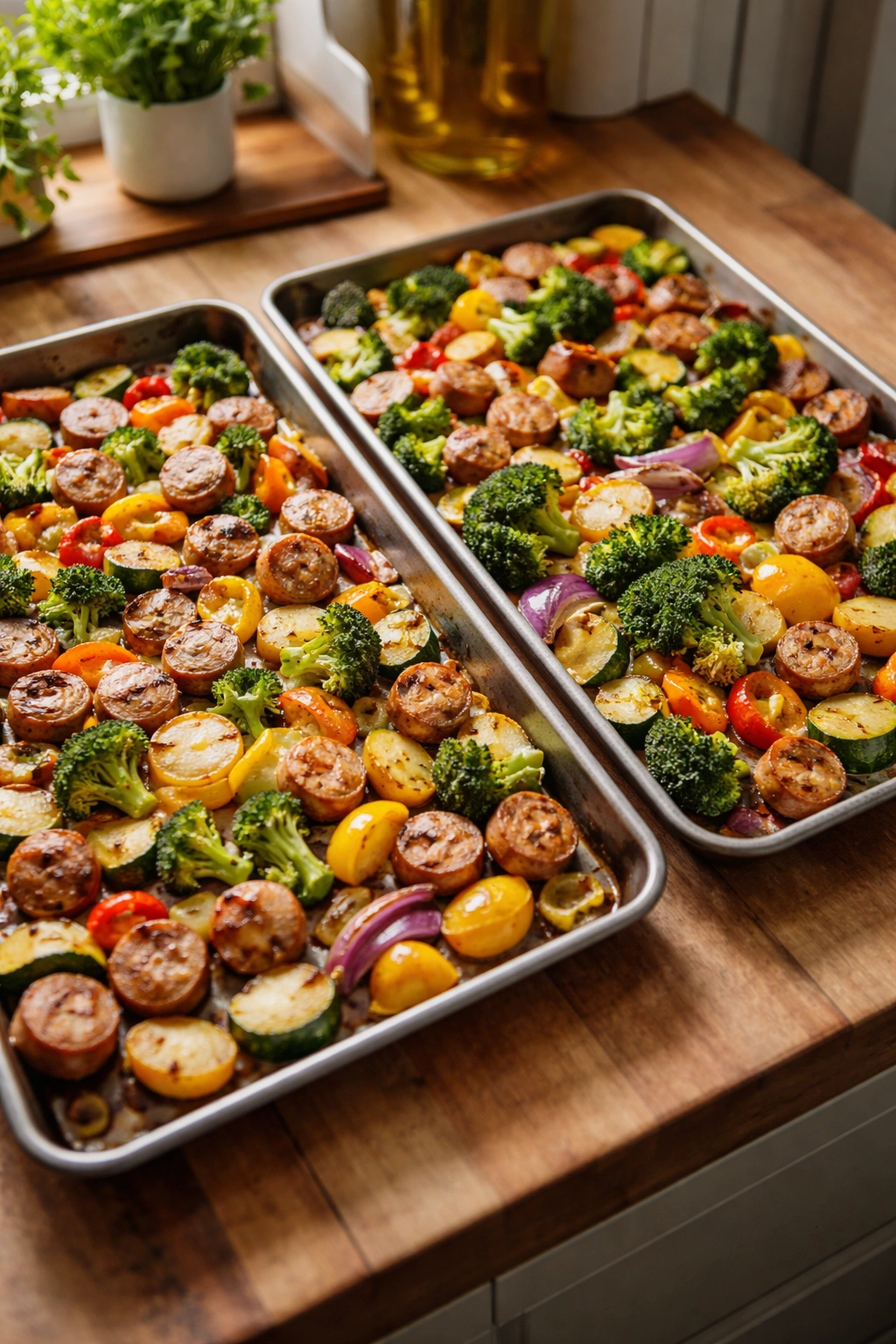
Do not overcrowd the pan. I know I already said this, but it is worth repeating because it is the single most important thing that separates a good sheet pan meal from a great one. Every piece of food on that pan needs direct contact with the hot surface to roast and caramelise properly. Crowding the pan creates steam, and steam makes food soft and soggy rather than golden and crispy. If in doubt, always use two pans.
Cut vegetables to similar sizes. Uniform sizing means everything finishes cooking at the same time. You do not want half the pan overcooked and burnt while the other half is still raw. Take a couple of extra minutes during prep to cut everything to roughly the same size and it will pay off when everything comes out of the oven perfectly cooked at the same time.
Add delicate vegetables later. Some vegetables cook much faster than others. Cherry tomatoes, spinach, asparagus, and thinly sliced zucchini cook quickly and can become mushy if they spend the full cooking time in the oven. Add fast-cooking vegetables about halfway through the roasting time so they stay tender but not overdone.
Pat the vegetables dry before seasoning. If your vegetables have any surface moisture on them from washing, pat them dry with a paper towel before tossing in oil and seasoning. Wet vegetables steam instead of roast, which prevents caramelisation. A dry surface gets golden and crispy.
Use a large enough pan. A standard large baking sheet measures about 45 by 30 centimetres. This is the size you want for a sheet pan meal for 4 people. If your pan is smaller, divide everything between two pans. Sheet pan meals only work well when there is enough space for everything to spread out.
Preheat your oven properly. Make sure your oven is fully preheated before the pan goes in. Placing food in an oven that is still warming up means it starts cooking at a lower temperature and never achieves the right level of caramelisation. Give your oven at least 15 minutes to reach full temperature before roasting.
Use enough oil. Oil is what carries the heat to the surface of the food and is responsible for all that beautiful browning. Do not be too light-handed with the oil. Every piece of food should be coated, though you do not need it to be dripping. Three tablespoons of olive oil for this quantity of food is the right amount — enough to coat everything well without making it greasy.
Choose the right sausage. The variety of chicken sausage you choose will significantly impact the flavour of the whole dish. Italian-style chicken sausage is a classic option that pairs well with most vegetables. Smoked chicken sausage adds a wonderful smokiness. Garlic and herb sausage is fragrant and pairs beautifully with roasted vegetables. Spicy chicken sausage gives the whole dish a kick. Choose based on what flavour profile you are going for.
What to Serve With Chicken Sausage and Veggies Sheet Pan

This dish is genuinely complete on its own, but here are some simple additions if you want to stretch it further or round out the meal.
Rice or quinoa served underneath or alongside the sheet pan meal soaks up all the delicious juices from the roasted vegetables and sausage and turns the meal into an even more filling and satisfying dinner.
Crusty bread or dinner rolls are perfect for mopping up the roasting juices on the pan. Do not leave those flavourful juices behind — they are basically a sauce.
A simple green salad with a light lemon vinaigrette is a refreshing contrast to the warm, rich roasted flavours of the sheet pan meal and adds freshness to the plate.
Mashed potatoes work well as a base under the roasted sausage and vegetables if you are not including potatoes directly on the sheet pan, and it makes the meal feel even more comforting and substantial.
Pasta — particularly a simple garlic butter pasta or a light olive oil pasta — is a wonderful base that pairs naturally with Italian-style chicken sausage and roasted vegetables.
Hummus or tzatziki on the side is a great option if you want a Mediterranean-inspired meal. The creamy dips complement the roasted vegetables beautifully and add a lovely fresh flavour to the dish.
Couscous is quick to prepare and pairs wonderfully with roasted vegetables and chicken sausage, especially if you season the couscous with a little lemon juice, olive oil, and fresh herbs.
How to Store Leftovers

Sheet pan meals store really well and are fantastic for meal prep.
In the fridge: Let everything cool completely before transferring to an airtight container. Store in the refrigerator for up to 4 days. To reheat, spread the leftovers back out on a baking sheet and warm in the oven at 180 degrees Celsius for about 10 to 12 minutes. This brings back some of the crispiness and prevents the vegetables from becoming too soft. You can also reheat in a pan on the stovetop over medium heat, tossing everything gently until warmed through. The microwave works too but the texture of the vegetables will be softer.
In the freezer: Roasted vegetables do not freeze as well as some other foods because the texture can change and become quite soft after thawing. The sausage, however, freezes very well. If you want to freeze leftovers, it is best to separate the sausage from the vegetables when storing. Freeze the sausage for up to 2 months and use the vegetables fresh or refrigerated rather than frozen for the best texture.
Meal prep tip: You can prepare the seasoned and coated sausage and vegetables ahead of time. Toss everything in the oil and seasoning, place it in a container or a zip-lock bag, and refrigerate for up to 24 hours before roasting. When you are ready to eat, just spread it on the pan and roast. This makes weeknight dinners incredibly quick and effortless.
Variations You Can Try

Mediterranean style: Use Italian chicken sausage, cherry tomatoes, red onion, zucchini, olives, and artichoke hearts. Season with oregano, garlic, and a drizzle of lemon juice. Serve with hummus or feta cheese crumbled on top.
Spicy Cajun style: Use spicy chicken sausage and season everything with Cajun seasoning, smoked paprika, cayenne, and garlic powder. Add corn on the cob cut into rounds and sliced okra to the pan for an authentic Southern feel.
Asian-inspired style: Toss the sausage and vegetables in a mixture of soy sauce, sesame oil, ginger, garlic, and a little honey. Add broccoli, snap peas, red bell pepper, and baby corn. Serve over steamed rice with a drizzle of sriracha.
Honey garlic style: Mix together honey, minced garlic, Dijon mustard, and olive oil and use this as the coating for everything on the pan. It creates a slightly sweet, sticky, golden glaze on the sausage and vegetables that is absolutely irresistible.
Autumn harvest style: Use sweet potatoes instead of regular potatoes, add sliced apples, red onion, and brussels sprouts. Season with cinnamon, smoked paprika, garlic, and a drizzle of maple syrup. This version is particularly wonderful in the cooler months.
Low-carb version: Skip the potatoes entirely and load the pan with low-carb vegetables like broccoli, cauliflower, zucchini, bell peppers, asparagus, and mushrooms. All the other elements of the recipe stay exactly the same.
Nutritional Benefits of This Dish

This is one of those meals that is as good for your body as it is good for your taste buds, and knowing what is inside it makes you appreciate it even more.
Chicken sausage is significantly leaner than traditional pork sausage, with less fat and fewer calories while still providing a satisfying amount of protein. It is a great way to enjoy the flavour and heartiness of sausage without as much of the heaviness.
Bell peppers are loaded with vitamin C — in fact they contain more vitamin C per gram than oranges. They are also rich in antioxidants and give the dish its beautiful colour.
Broccoli is one of the most nutrient-dense vegetables you can eat. It is packed with fibre, vitamin K, vitamin C, folate, and compounds that have been linked to reduced inflammation and better immune function.
Zucchini is low in calories, high in water content, and a good source of vitamins B6 and C as well as potassium.
Red onion contains quercetin, a powerful antioxidant that has anti-inflammatory properties and supports heart health.
Tomatoes are rich in lycopene, a compound that becomes even more available to the body when tomatoes are cooked — making roasted cherry tomatoes an especially nutritious addition.
Olive oil is a healthy fat that supports heart health, reduces inflammation, and helps your body absorb the fat-soluble vitamins in the vegetables.
Frequently Asked Questions

Can I use any type of chicken sausage for this recipe?
Yes, absolutely. Any variety of pre-cooked chicken sausage works beautifully in this recipe. Italian-style, smoked, garlic and herb, spicy, and sun-dried tomato are all great options. Each variety will give the dish a slightly different flavour character, so feel free to experiment and find your favourite. Just make sure the sausage you use is already cooked or pre-cooked, as most chicken sausages sold in stores are. If you are using raw chicken sausage, you may need to add a few extra minutes to the roasting time and make sure the internal temperature reaches 74 degrees Celsius before eating.
Can I make this recipe with other proteins instead of chicken sausage?
Yes, this recipe works well with many different proteins. You can use sliced smoked turkey sausage, kielbasa, shrimp (added in the last 8 to 10 minutes only, since they cook very fast), cubed chicken breast or thighs, or even sliced firm tofu for a vegetarian option. Just adjust the cooking time based on the protein you choose and make sure everything is cooked through before serving.
What is the best way to get really crispy vegetables from a sheet pan meal?
There are a few key things that help with getting crispy, caramelised vegetables. First, make sure your vegetables are completely dry before tossing in oil. Second, do not overcrowd the pan — this is the biggest factor. Third, use a high oven temperature of at least 200 to 220 degrees Celsius. Fourth, do not toss or stir the vegetables too often during roasting — let them sit and develop colour before you move them. Finally, roasting on a bare, preheated pan rather than parchment paper can increase crispiness even further, though it does make cleanup a little harder.
Can I prepare this meal ahead of time?
Yes and there are two ways to do it. You can fully roast the dish, let it cool, and refrigerate it for up to 4 days, then reheat when you are ready to eat. Or you can do the prep work ahead of time — cut the vegetables and sausage, toss them in the oil and seasoning, and store the raw, seasoned mixture in the fridge for up to 24 hours. When you are ready to eat, just spread it on the pan and roast. The second option gives you a fresher result since everything is roasted right before eating.
My vegetables came out soggy and soft instead of caramelised. What did I do wrong?
Soggy vegetables in a sheet pan meal usually come down to one of three things. The pan was overcrowded and everything steamed instead of roasted. The oven temperature was too low. Or the vegetables were wet when they went into the oven. Fix these three things and your vegetables will come out golden, crispy-edged, and beautifully caramelised every single time. Use a large pan, preheat your oven to at least 220 degrees Celsius, and dry your vegetables thoroughly before seasoning.
Final Thoughts

Chicken Sausage and Veggies Sheet Pan is one of those recipes that genuinely makes your life easier without sacrificing any of the flavour, satisfaction, or nutrition that you want from a proper home-cooked meal. It is fast, it is simple, it is flexible, and the results are consistently delicious no matter how many times you make it. There is something deeply satisfying about pulling a pan out of the oven and seeing everything golden, caramelised, and fragrant — knowing that it took you less than 15 minutes to prepare and the oven did the rest of the work for you.
What makes this dish so special is that it adapts to you and your life. Have different vegetables in the fridge? Use them. Want a Mediterranean flavour? Change up the seasoning. Feeding a crowd? Double the recipe and use two pans. Short on time? Prep it the night before and just slide it in the oven when you get home. There are very few recipes that offer this much flexibility and this much reward with this little effort, and that is exactly why sheet pan meals have become such a favourite in kitchens everywhere.
Make this recipe your own. Try the different variations, experiment with different sausage flavours, switch up the vegetables with the seasons, and enjoy the freedom and simplicity of one-pan cooking. Once you make this for the first time and taste how good it is, it is going to earn a permanent place in your weekly dinner rotation. Happy cooking!